
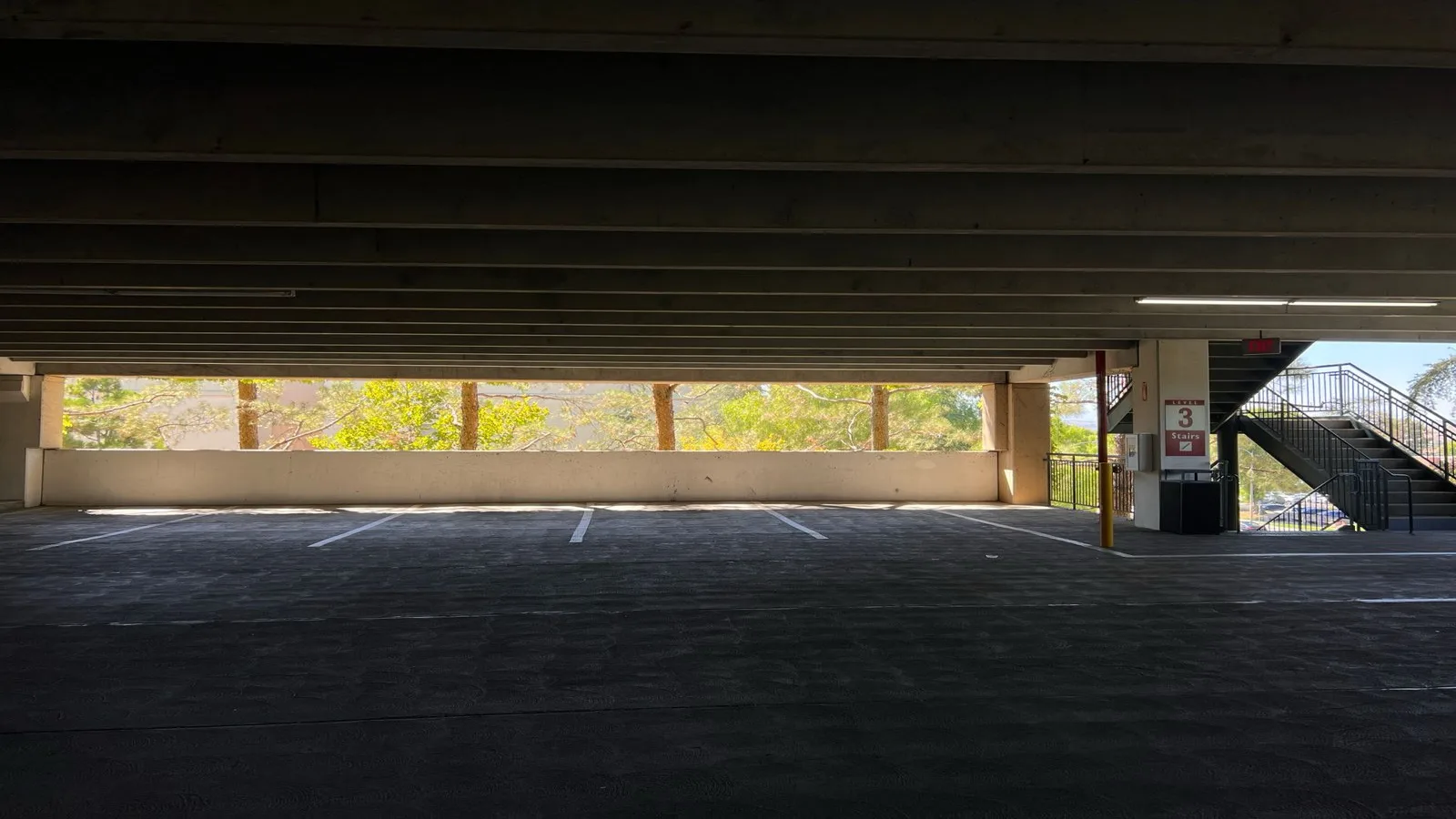
PARKING & GARAGES
CMMS Software for Parking Lots & Garages
A stuck gate arm is a queue onto the street.
Gates, payment terminals, elevators, lighting, and structure maintained across every lot, with staff and patrons able to report a fault from a phone.
- Unattended sites
- Structural inspections
- Cost per lot








WHAT CHANGES
What a CMMS changes across a parking portfolio
Most lots run with no maintenance staff on site at all. These are the four things parking operators tell us they are trying to fix.
A gate arm or payment terminal fails and you hear about it from a complaint.
Staff, patrons, or an attendant report from a QR code at the lane, and it lands in a queue with the lot and the lane attached.
Lighting, drainage, and line marking are handled when somebody notices, which is usually late.
Recurring rounds cover lighting, drainage, striping, and signage on a schedule, with photos as the record.
Structural inspections are a consultant report that sits in a drawer until the next one.
Findings become tracked work with due dates, and condition accumulates per structure instead of resetting each cycle.
Revenue equipment, elevators, and the structure itself are three different vendors and three different email threads.
Vendors are dispatched and sign off in one system, with insurance certificates and contract scope held against them.
RESULTS
Results from facilities operators
Measured across UpKeep customers in an independent Forrester study.
90%
Reduction in technician time spent filing work orders and finding asset information
KEY WORKFLOWS
Maintenance workflows across parking facilities
Revenue equipment, life safety, and structure are one portfolio. These are the hand-offs that matter.
The monthly rounds come due
- Facilities Lighting, drainage, striping, and signage run as a scheduled inspection per level.
- Forms A failed item opens corrective work rather than a note that gets lost.
- Safety Trip hazards and lighting failures carry a liability record with photos and dates.
A structural assessment lands
- CMMS Each finding becomes tracked work with an owner and a due date.
- Capital Planning Condition builds per structure, so the deck repair has a record behind the number.
- Analytics Spend per lot and per structure, for the owner or the municipality.
NOVA
Build the lot report you keep assembling
Nova is UpKeep's AI assistant, and it builds apps. Describe the report or the round you need and Nova builds it against your own lot and equipment data.
See how Nova works- Which lots had the most gate equipment downtime this quarter?
- Show me open corrective actions from the last structural inspection.
- Build a lighting inspection round for a four-level garage.
PRODUCTS
Parking maintenance software features
These are apps, not an edition. Most operators start with the CMMS and Facilities, then add Safety for the liability record.
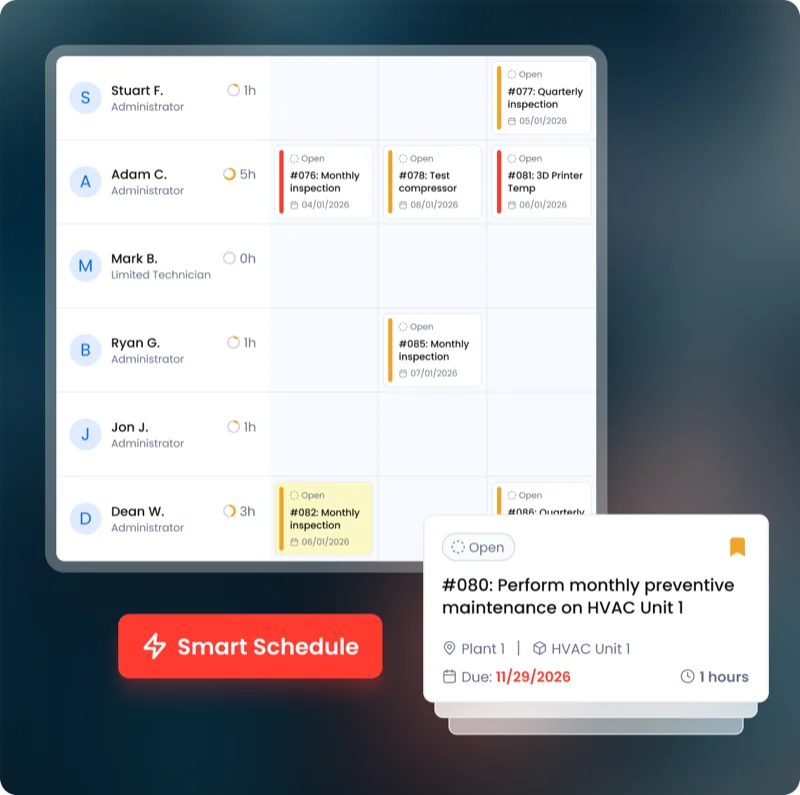 Maintenance CMMS
 Work orders, preventive maintenance, asset history, and parts. The system of record everything else hangs off.
Explore CMMS →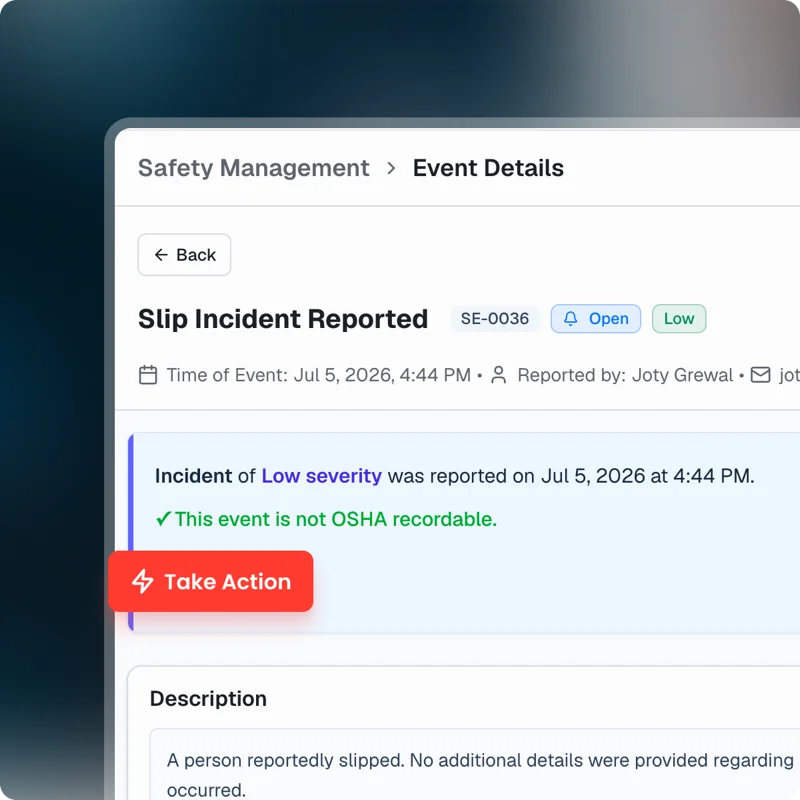 EHS Safety
 Incident capture from the floor by phone or voice, with OSHA 300, 300A, and 301 recordkeeping.
Explore Safety →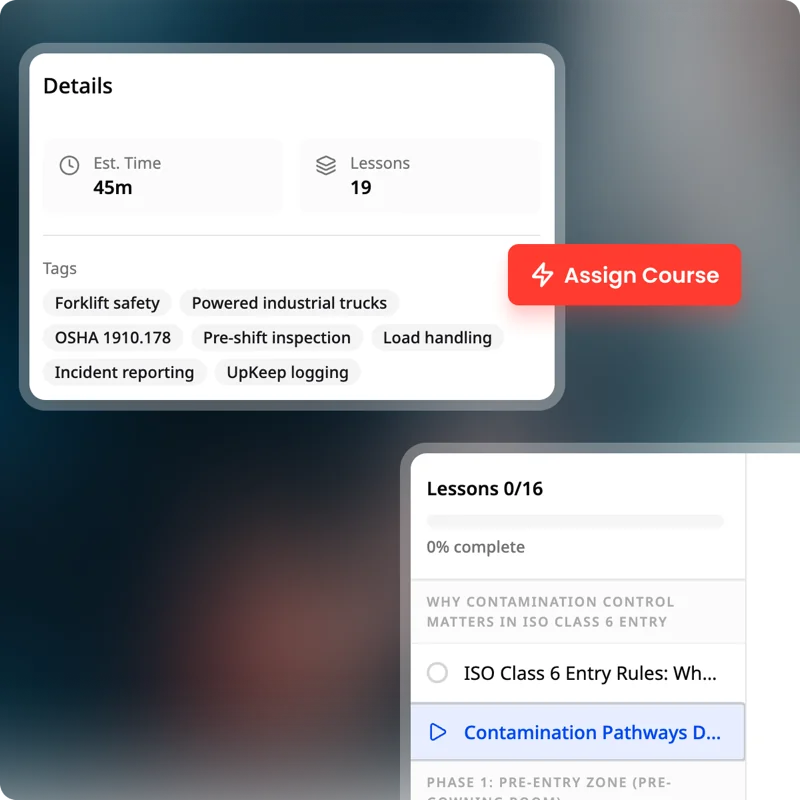 Training Learn
 Procedures, courses, and certifications tied to the people who do the work.
Explore Learn → Facilities Run decks, elevators, lighting, and gates on one plan, so a garage stays open and lit without a complaint first.
Preventive Maintenance Schedule garage equipment preventive maintenance on dates or cycle counts, so gates, elevators, and payment kiosks keep working.
Asset Management Every asset with its history, cost, documents, and hierarchy, from the site down to the component.
Capital Planning Plan deck repair and elevator replacement from condition, so structural spend is scheduled rather than discovered.
Providers Outside contractors working in the same system, with their work visible alongside your own.
Nova The AI assistant that answers questions about your data and builds custom apps from a description.
CUSTOMER STORIES
Teams running maintenance on UpKeep
Keeps kitchen equipment running across a footprint measured in thousands of sites.
Chick-fil-A
Read the story →
One operator runs maintenance across every restaurant he owns from a phone.
McDonald's
Read the story →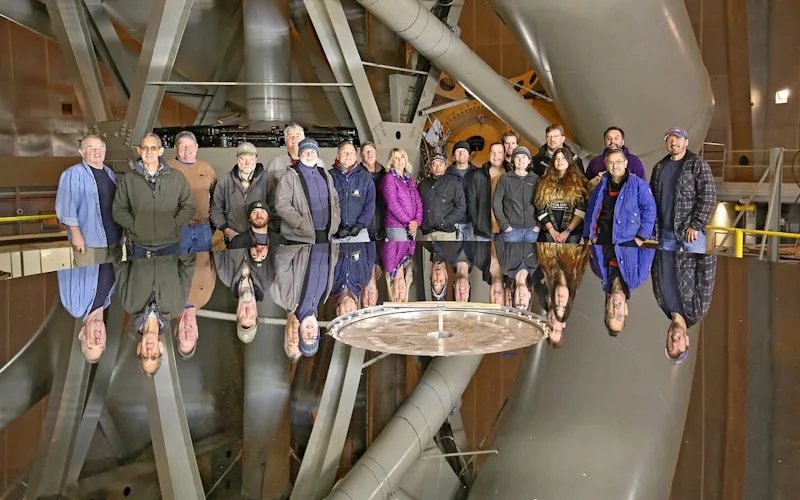
Moved campus crews off paper and onto digital preventive maintenance and work orders.
Caltech
Read the story →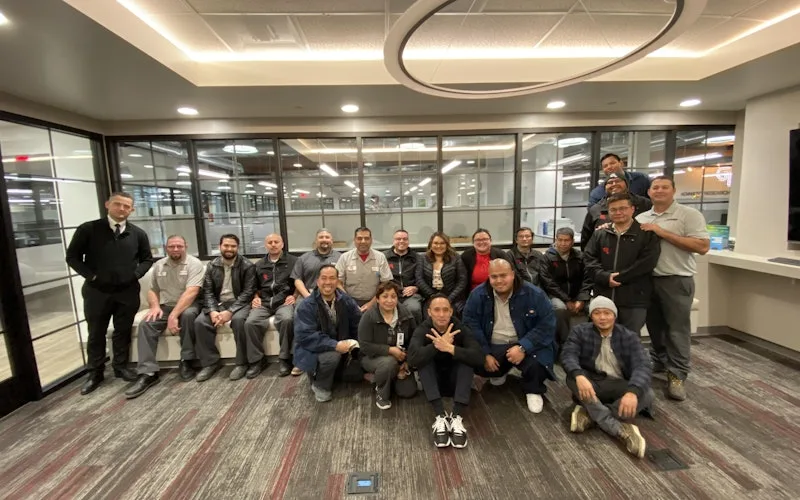
Standardized maintenance across one of the largest custom restorative labs in the world.
Glidewell
Read the story →
Moved from 60% reactive work to 20% by putting every asset on a recurring PM schedule.
Industrial manufacturer
Read the story →
Shifted work from reactive to preventive and brought maintenance costs down with it.
Layfield Group
Read the story →
Replaced paper tracking and manual data entry across the plant using Nova.
Sprinturf
Read the story →
Moved maintenance off paper and onto a system the whole team can see.
Old Trapper
Read the story →Parking maintenance software: common questions
What is parking maintenance software?
It is what an operator runs to keep gates, payment equipment, elevators, lighting, and the structure itself in service across lots that mostly have nobody on site.
It covers two different jobs: revenue equipment, where an hour of downtime is lost transactions, and the structure, where deferred work becomes a capital problem.
Can patrons or staff report a problem without an account?
Yes. A QR code at the lane or in the stairwell lets anyone submit from a phone with no login and no paid seat, and the lot and location come attached to the report.
Does UpKeep handle structural inspections?
It handles the work that comes out of them. Findings from an engineer’s assessment become tracked work with owners and due dates, and condition accumulates per structure over time.
UpKeep does not perform or certify the structural assessment itself. That stays with your engineer.
Can we manage the equipment vendors through it?
Yes, through Providers. Gate, payment, and elevator vendors receive work orders directly and their sign-off lands on the asset, rather than living in an email thread.
Does it help with slip, trip, and lighting liability?
Yes, and this is often the reason operators buy. Recurring rounds produce a dated, photographed record that a lighting level was checked and a hazard was closed, which is what matters when a claim arrives months later.
How much does UpKeep cost for a parking portfolio?
Seats are what you buy, not lots or spaces. That matters here more than in most segments, because a portfolio can be large while the number of people actually closing work stays small. Anyone reporting a fault is free. See the pricing page for tiers.
How long does implementation take?
Weeks. Start with the revenue equipment at one or two lots, put codes at the lanes, and set the lighting and drainage rounds.
Structural condition takes longer to become useful, because it accumulates from the work you do rather than arriving with the system.
FREE RESOURCES
Go deeper on maintenance
Practical guides and research from the UpKeep team. No cost, no sales call required.
 Guide
GuideThe Reliability Playbook: Capturing 20 Years of Know-How Before It Walks Out the Door
A fully staffed plant still loses hours to failures a retired technician would have caught in minutes. This playbook reframes the problem: knowledge is disappearing because no system was built to capture it. It lays out a three-part framework for closing that gap and shows what changed at one plant that stopped hiring its way out and instead started capturing what its people already knew.
Get the guide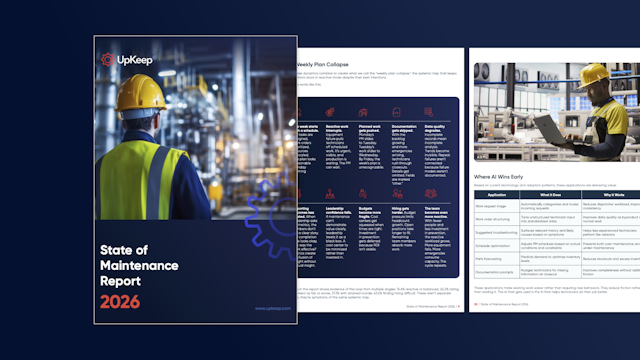 Report
The 2026 State of Maintenance Report
This year's report reflects a fundamental shift in how maintenance creates competitive advantage. While 90% of teams recognize what drives reliability, only 25% can consistently execute it. The gap between knowing and doing has become the defining challenge and opportunity of 2026.
Get the report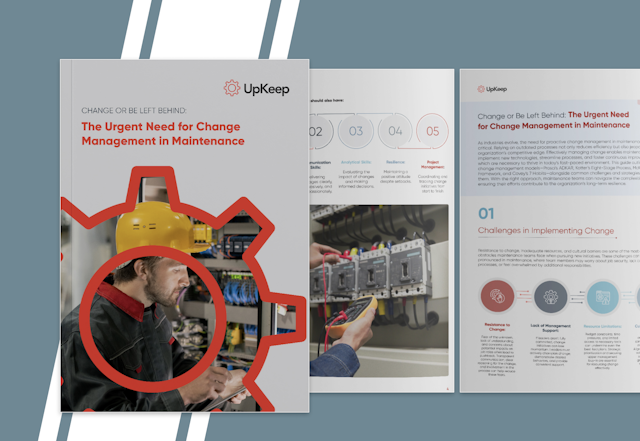 Guide
GuideChange or Be Left Behind: The Urgent Need for Change Management in Maintenance
Effectively managing change enables maintenance teams to implement new technologies, streamline processes, and foster continuous improvement, all of which are necessary to thrive in today’s fast-paced environment. This guide outlines essential change management models
Get the guide
Learning center
Reading for facilities and parking teams
Deferred work on a structure gets expensive quietly. These cover the ground.
- Deferred maintenance What happens to a structure when work is postponed, and how the backlog compounds.
- Facility management How facilities work is planned and measured across a portfolio of buildings.
- Preventive maintenance scheduling Setting the lighting, drainage, and equipment rounds so they actually run.
- Work order basics What belongs on a work order, and why "third level, north side" is not enough.
GET STARTED
See it against your own lots
Bring one garage and its revenue equipment. We will walk through the rounds, the vendor hand-offs, and what the record would show.