
FACILITY MANAGEMENT
CMMS Software for Facility Management
One queue for every building request.
Work requests, preventive maintenance, and building systems across every property you look after, with anyone able to report a problem from a phone.
- Free request submission
- Multi-building by default
- Works on a phone













WHAT CHANGES
What a CMMS changes for a facilities team
Facilities teams are small and the request volume is not. These are the four things they tell us they are trying to fix.
Requests arrive by email, text, hallway conversation, and sticky note. Some get done twice and some never get done.
One intake for everything. Anyone submits from a phone or a QR code on the equipment, and it lands in one queue with the location attached.
Preventive maintenance on building systems slips because reactive work always wins the day.
PMs on HVAC, boilers, and life safety are scheduled work with a visible overdue list, so the slip is obvious before it becomes a failure.
Nobody can say which building costs the most to run, or which asset keeps coming back.
Cost and repeat failures roll up by building and by asset from the work your team already closed.
Contractor work happens off the books, so the building record has a hole in it.
Outside contractors work in the same system, and their work sits on the asset record next to your own.
RESULTS
Results from facilities teams
Published results from UpKeep customers and the Forrester study.
90%
Reduction in technician time spent filing work orders and finding asset information
KEY WORKFLOWS
Maintenance workflows across a facilities portfolio
A facilities team is an intake desk, a maintenance shop, and a compliance function at once. These are the hand-offs that matter.
An air handler is due for service
- CMMS The PM triggers on runtime hours rather than a date, so lightly used units are not over-serviced.
- Parts & Inventory Filters and belts are pulled against the work order, keeping the storeroom count honest.
- Facilities The service history stays on the asset for the next condition assessment.
A contractor is brought in
NOVA
Build the report your director keeps asking for
Nova is UpKeep's AI assistant, and it builds apps. Describe the tracker or report you need in plain language and Nova builds it against your own building and work order data, without waiting on anyone.
See how Nova works- Which buildings had the most emergency calls this quarter, and for what?
- Build a room readiness checklist that a supervisor signs off from a phone.
- Show me maintenance cost per square foot by building for last year.
PRODUCTS
Facility maintenance software features
These are apps, not an edition. Most teams start with the CMMS and add Facilities and Capital Planning as the portfolio grows.
 Maintenance CMMS
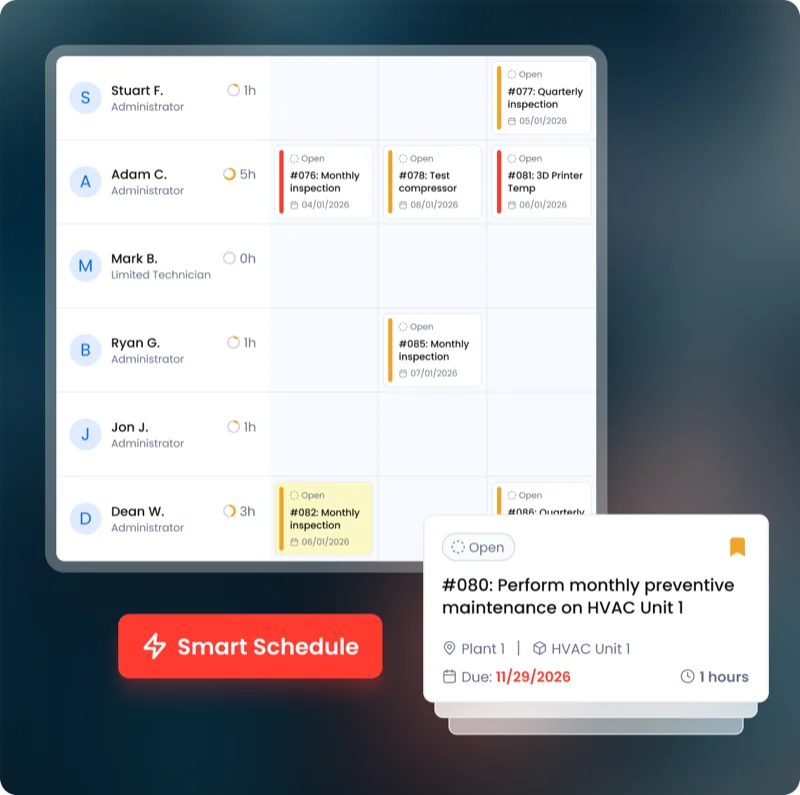
 Work orders, preventive maintenance, asset history, and parts. The system of record everything else hangs off.
Explore CMMS →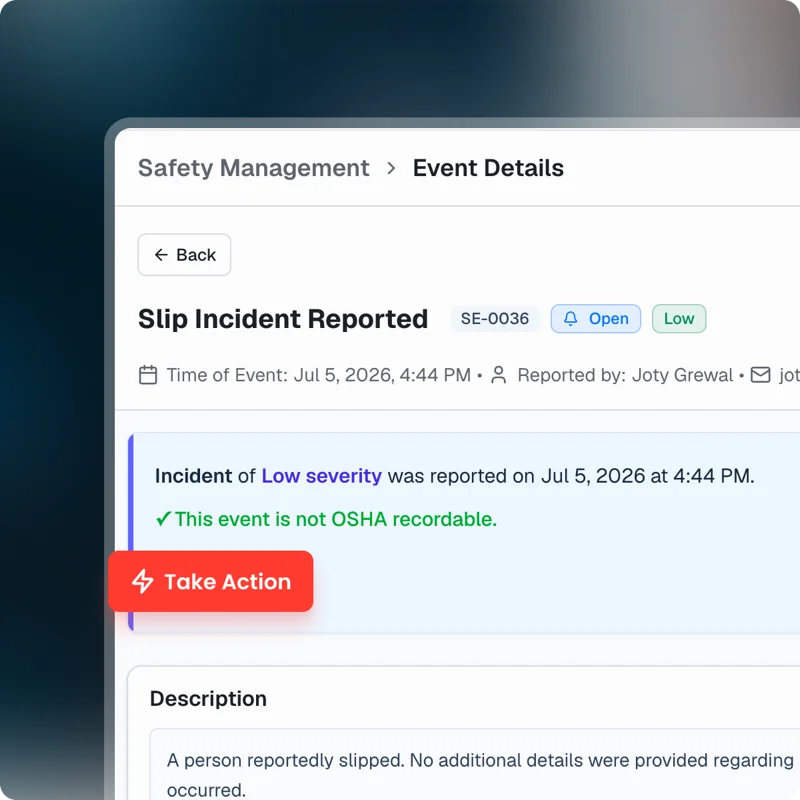 EHS Safety
 Incident capture from the floor by phone or voice, with OSHA 300, 300A, and 301 recordkeeping.
Explore Safety →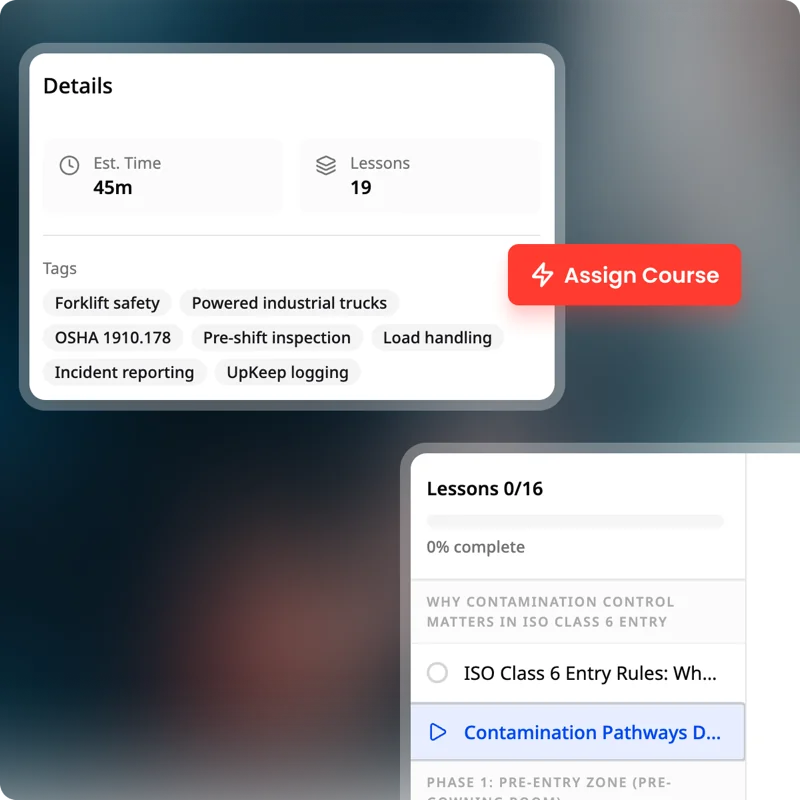 Training Learn
 Procedures, courses, and certifications tied to the people who do the work.
Explore Learn → Work Orders Take requests from tenants and staff in one queue, assign them by building, and keep the record of what was done.
Preventive Maintenance Automate facility preventive maintenance on dates or meter readings, so building systems are serviced before they fail.
Facilities Run every building on one system, from HVAC and elevators to restrooms, with work routed to the team that covers that site.
Asset Management Every asset with its history, cost, documents, and hierarchy, from the site down to the component.
Parts & Inventory Spare parts, stock levels, and reorder points, consumed against the work order that used them.
Workforce Shifts, timecards, and labor cost against the work, so capacity is visible before you commit it.
Capital Planning Asset condition and replacement forecasting, so next year’s budget is based on real history.
Providers Outside contractors working in the same system, with their work visible alongside your own.
Nova The AI assistant that answers questions about your data and builds custom apps from a description.
CUSTOMER STORIES
Facilities teams running on UpKeep

Gave site managers one place to log and close facility work without a maintenance team behind them.
Neighborhood Storage Center
Read the story →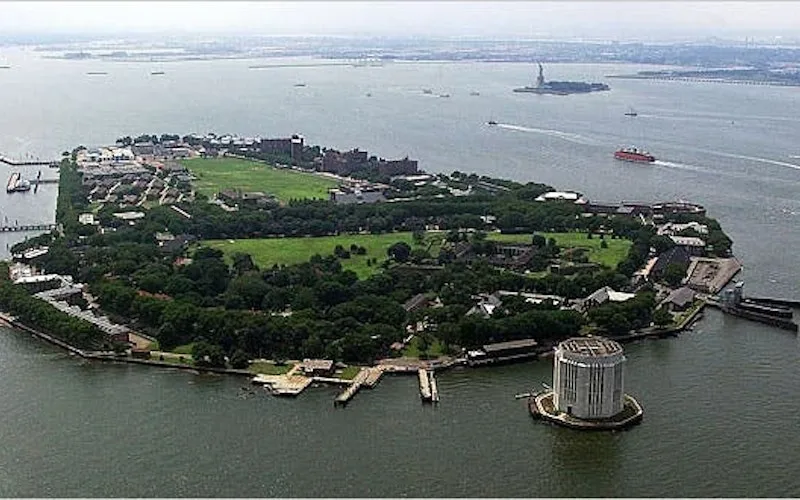
Gained visibility into where the team’s time and vehicle costs were going.
Governors Island
Read the story →
Gave a small facilities team one queue for every building request.
JAFCO
Read the story →
Improved communication between a maintenance team and the people relying on it.
Union Rescue Mission
Read the story →
Went from sticky notes to decisions made on maintenance data.
Camp Fire Heart of Iowa
Read the story →
Runs maintenance, fleet, and inventory together, with every staff member able to submit a request.
Link Associates
Read the story →
Keeps kitchen equipment running across a footprint measured in thousands of sites.
Chick-fil-A
Read the story →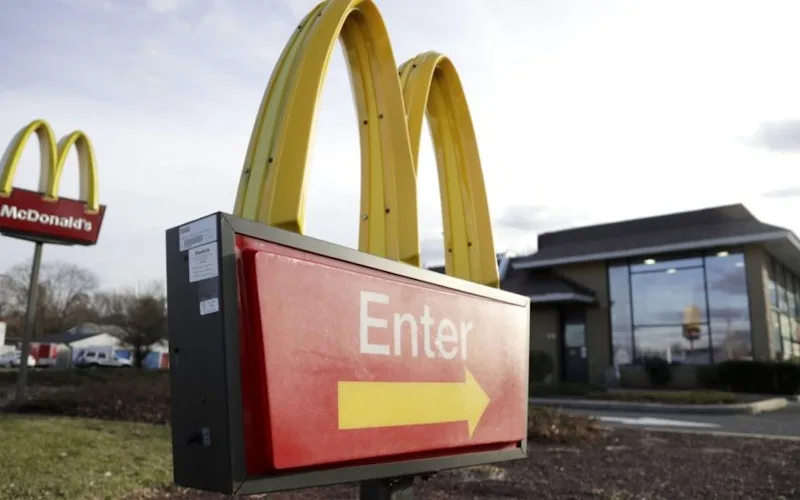
One operator runs maintenance across every restaurant he owns from a phone.
McDonald's
Read the story →Facility maintenance software: common questions
What is facility maintenance software?
It is the system a facilities team uses to take in requests, schedule preventive maintenance on building systems, and keep the record of what was done to each asset.
The defining requirement is intake: most facilities work starts with someone who is not on the maintenance team reporting a problem, so how easily they can do that determines whether the system reflects reality.
What is the difference between a CMMS and an IWMS?
A CMMS maintains the equipment and the building. An IWMS takes a wider view of the real estate itself, leases, space planning, occupancy, and portfolio strategy.
UpKeep covers the maintenance side in full and handles space and occupancy through Facilities. Teams running a formal lease-accounting or space-planning programme usually keep their IWMS and use UpKeep where the work actually happens.
Can occupants submit requests without a license?
Yes. Anyone can submit a request from a phone or by scanning a QR code, with no account and no paid seat. The building, room, and asset come attached, so the request does not need chasing.
How much does facility maintenance software cost?
UpKeep is priced per user per month, based on the people creating and closing work orders rather than the number of buildings or square feet. Requesters are free, which is what makes it practical to open intake to every occupant. See the pricing page for current tiers.
Can UpKeep handle multiple buildings or sites?
Yes, and it is a common reason teams move. Assets are organized by location, so cost, open work, and PM compliance can be viewed for one building or across the whole portfolio, using one naming scheme.
Does UpKeep work for outside contractors?
Yes. Contractors can be assigned work orders directly through Providers, and what they did lands on the asset record next to your own team’s work, so the building history has no gap.
How long does implementation take?
Weeks. Most teams start with one building: import the asset list, set PMs on the systems that cause the most disruption, and open request intake to occupants. Additional buildings reuse the same templates.
FREE RESOURCES
Go deeper on maintenance
Practical guides and research from the UpKeep team. No cost, no sales call required.
 Guide
GuideThe Reliability Playbook: Capturing 20 Years of Know-How Before It Walks Out the Door
A fully staffed plant still loses hours to failures a retired technician would have caught in minutes. This playbook reframes the problem: knowledge is disappearing because no system was built to capture it. It lays out a three-part framework for closing that gap and shows what changed at one plant that stopped hiring its way out and instead started capturing what its people already knew.
Get the guide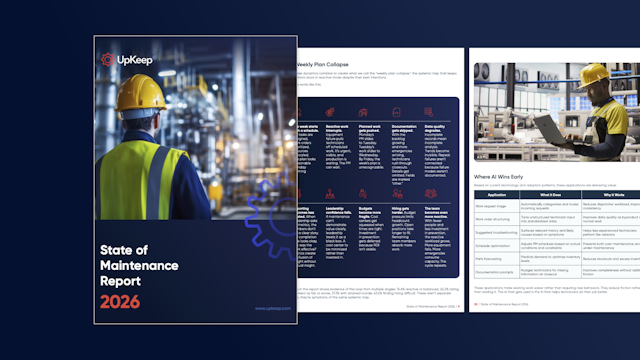 Report
The 2026 State of Maintenance Report
This year's report reflects a fundamental shift in how maintenance creates competitive advantage. While 90% of teams recognize what drives reliability, only 25% can consistently execute it. The gap between knowing and doing has become the defining challenge and opportunity of 2026.
Get the report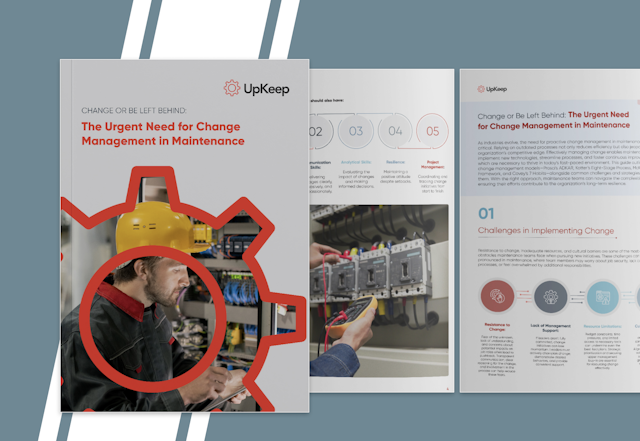 Guide
GuideChange or Be Left Behind: The Urgent Need for Change Management in Maintenance
Effectively managing change enables maintenance teams to implement new technologies, streamline processes, and foster continuous improvement, all of which are necessary to thrive in today’s fast-paced environment. This guide outlines essential change management models
Get the guide
GET STARTED
See it against your own buildings
We will walk through your asset list, your request volume, and the systems that cause you the most callbacks.