
FOR EXECUTIVES
CMMS Software for Executives
Maintenance is a cost line until it can prove otherwise.
Downtime, cost per asset, and capital exposure in numbers you can take to a board, produced by the work rather than assembled for the meeting.
- Multi-site rollup
- Evidence behind the number
- Capital case from real history








WHAT CHANGES
Why maintenance numbers rarely survive scrutiny
The problem is usually not the performance. It is that nobody can show where the figure came from. Four things change that.
The downtime number is an estimate somebody assembled for the meeting.
Downtime is recorded against the asset as it happens, so the figure has a record behind it and survives the follow-up question.
You can see total maintenance spend but not what any site, line, or asset costs.
Labor, parts, and vendor spend roll up by asset, site, and region, which is what makes a trade-off decision possible.
Capital requests arrive as a number with a story attached.
Condition and repair history accumulate from the work, producing a defensible replace-or-repair case per asset.
Each site reports differently, so nothing is comparable.
One system, one set of definitions, and the same measures everywhere, so a comparison between two plants means something.
RESULTS
The financial case, independently measured
Forrester built a Total Economic Impact model on UpKeep customers. These are their figures, not ours.
90%
Reduction in technician time spent filing work orders and finding asset information
KEY WORKFLOWS
Where an executive actually touches the system
Not in a work order. These are the three moments that matter.
The capital plan
- Capital Planning Asset condition and repair history produce a funded and unfunded view by year.
- Analytics Cost of keeping an asset versus replacing it, from its own record.
- Capital Planning A request arrives with the evidence already attached.
A risk question from the board
NOVA
Ask the follow-up question in the meeting
Nova is UpKeep's AI assistant, and it builds apps. Ask it in plain language and it answers from your own operational data, so the second question does not become an action item.
See how Nova works- Which assets cost the most to maintain relative to their replacement value?
- Show unplanned downtime by site for the last four quarters.
- Build a one-page operations summary for the board pack.
PRODUCTS
What leadership teams turn on
These are apps, not an edition. The reporting is only as good as the work underneath it, which is why the CMMS is on this list.
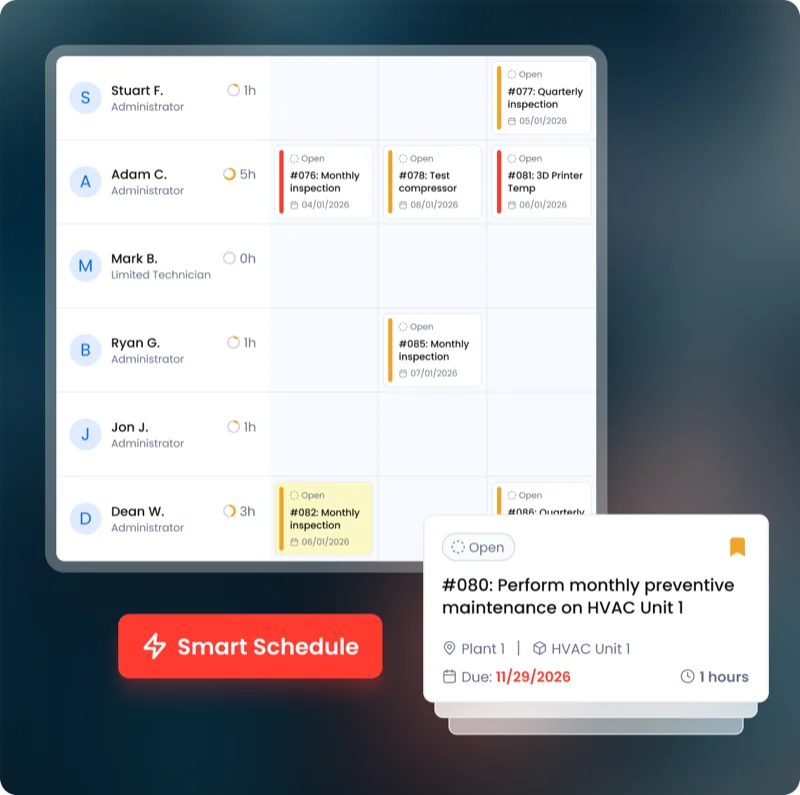 Maintenance CMMS
 Work orders, preventive maintenance, asset history, and parts. The system of record everything else hangs off.
Explore CMMS →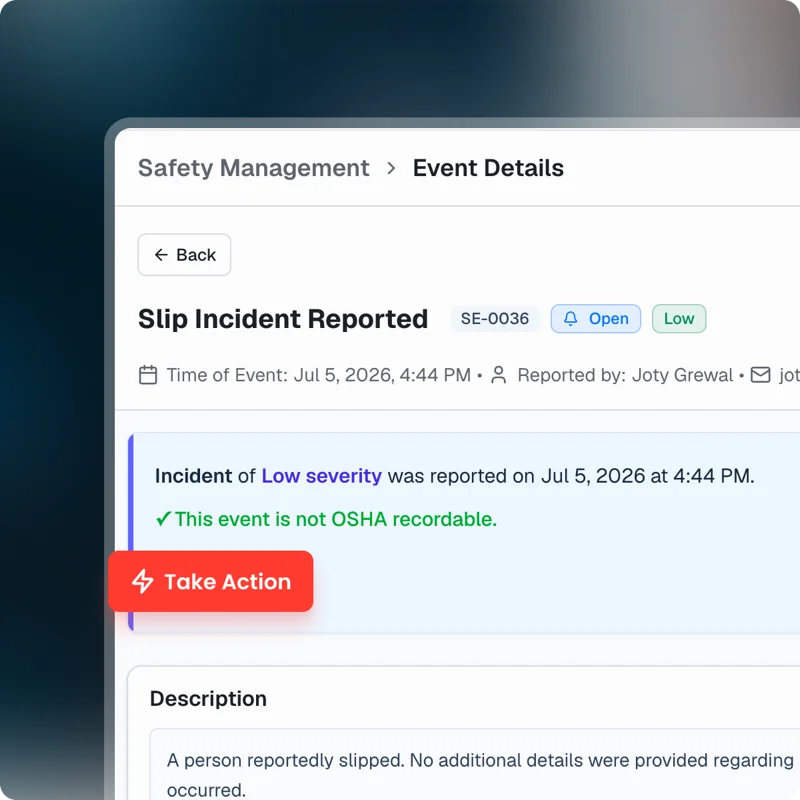 EHS Safety
 Incident capture from the floor by phone or voice, with OSHA 300, 300A, and 301 recordkeeping.
Explore Safety →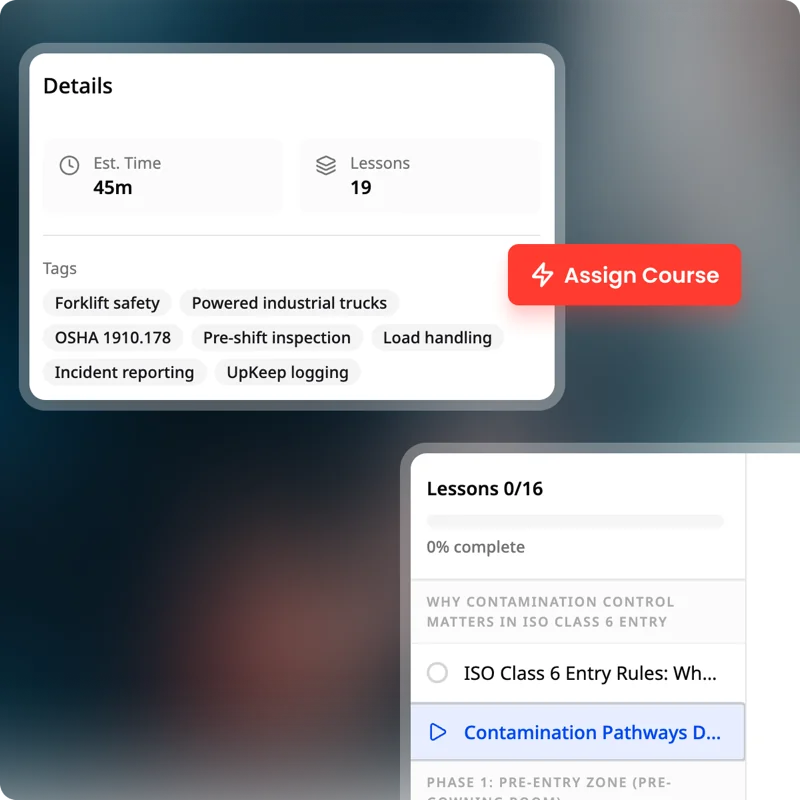 Training Learn
 Procedures, courses, and certifications tied to the people who do the work.
Explore Learn → Analytics & Reporting See cost, downtime, and labor across every site in one view, so a board number does not start as a spreadsheet.
Intelligence Compare sites on the same measures, so the gap between the best and the worst plant is a number rather than an impression.
Capital Planning Build the replacement plan from asset condition and real spend, so capital asks carry the evidence with them.
Asset Management Every asset with its history, cost, documents, and hierarchy, from the site down to the component.
Workforce Shifts, timecards, and labor cost against the work, so capacity is visible before you commit it.
Nova The AI assistant that answers questions about your data and builds custom apps from a description.
CUSTOMER STORIES
Teams running maintenance on UpKeep
Keeps kitchen equipment running across a footprint measured in thousands of sites.
Chick-fil-A
Read the story →
One operator runs maintenance across every restaurant he owns from a phone.
McDonald's
Read the story →
Moved campus crews off paper and onto digital preventive maintenance and work orders.
Caltech
Read the story →
Standardized maintenance across one of the largest custom restorative labs in the world.
Glidewell
Read the story →
Moved from 60% reactive work to 20% by putting every asset on a recurring PM schedule.
Industrial manufacturer
Read the story →
Shifted work from reactive to preventive and brought maintenance costs down with it.
Layfield Group
Read the story →
Replaced paper tracking and manual data entry across the plant using Nova.
Sprinturf
Read the story →
Moved maintenance off paper and onto a system the whole team can see.
Old Trapper
Read the story →Questions executives ask
What return should we expect from a CMMS?
Forrester modelled 315% ROI across UpKeep customers, with $638K attributed to avoided downtime over the study period.
Treat any vendor figure, including ours, as a starting point rather than a forecast. The number that matters for you is your own downtime cost per hour multiplied by the hours you currently lose, and most organizations do not know either figure until the work is being recorded.
How do we know the data is trustworthy?
Because it is a by-product of the work rather than a report someone assembles. A downtime figure traces to the work orders behind it, and you can open them.
That is also the honest caveat: the numbers are only as good as the adoption. A rollout where technicians do not close jobs on the system produces confident nonsense.
Our ERP already has a maintenance module. Why add this?
An ERP records maintenance as cost. It is accurate about what was spent and usually vague about what was done, because the work happens in front of an asset on a phone.
UpKeep does not replace the ERP. Purchase orders, invoices, and the ledger stay where they are; the labor and parts cost flows back. Most organizations run both.
Can we compare performance across sites?
Yes, provided the definitions are shared. One system with one set of measures is what makes a comparison legitimate, and it will surface uncomfortable differences between sites in the first quarter.
How does this support a capital plan?
Condition and repair history accumulate from the work you already do, so an asset arrives at the funding conversation with its own record rather than an anecdote. Capital Planning turns that into a funded and unfunded view by year.
What does implementation actually require from us?
A clean asset list and someone accountable for adoption at each site. The software is the easy part.
Rollouts fail on change management rather than configuration, which is why phasing by site and starting with the equipment that fails most tends to work better than a simultaneous launch.
Is UpKeep secure enough for our IT review?
UpKeep is SOC 2 Type II, GDPR and CCPA aligned, with SSO available on the Enterprise plan. Security documentation and the current certification position live at trust.upkeep.com, which is the right link to hand your IT team.
FREE RESOURCES
Go deeper on maintenance
Practical guides and research from the UpKeep team. No cost, no sales call required.
 Guide
GuideThe Reliability Playbook: Capturing 20 Years of Know-How Before It Walks Out the Door
A fully staffed plant still loses hours to failures a retired technician would have caught in minutes. This playbook reframes the problem: knowledge is disappearing because no system was built to capture it. It lays out a three-part framework for closing that gap and shows what changed at one plant that stopped hiring its way out and instead started capturing what its people already knew.
Get the guide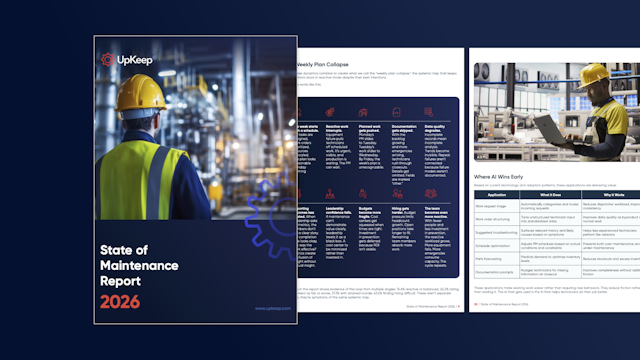 Report
The 2026 State of Maintenance Report
This year's report reflects a fundamental shift in how maintenance creates competitive advantage. While 90% of teams recognize what drives reliability, only 25% can consistently execute it. The gap between knowing and doing has become the defining challenge and opportunity of 2026.
Get the report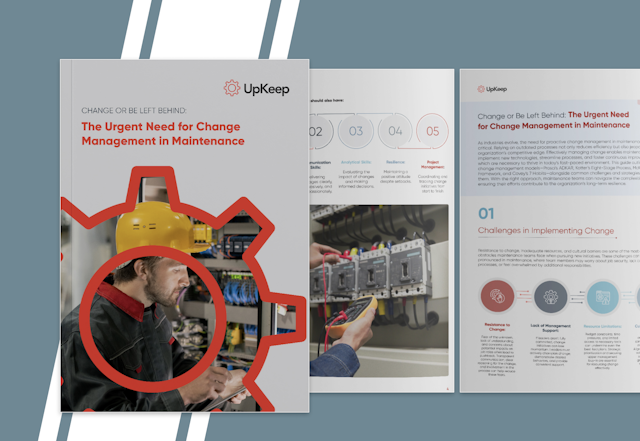 Guide
GuideChange or Be Left Behind: The Urgent Need for Change Management in Maintenance
Effectively managing change enables maintenance teams to implement new technologies, streamline processes, and foster continuous improvement, all of which are necessary to thrive in today’s fast-paced environment. This guide outlines essential change management models
Get the guide
Learning center
Reading for operations leadership
The measures a board will ask about, and what each one is worth.
- Maintenance metrics Which numbers are worth reporting and which sound better than they are.
- Overall equipment effectiveness How OEE is built, and where it misleads if the inputs are estimated.
- Maintenance statistics Published industry benchmarks for downtime, cost, and preventive ratios.
- Deferred maintenance How a deferral becomes a capital problem, and how to quantify it early.
GET STARTED
See it against your own numbers
Bring one site and its worst-performing assets. We will walk through the rollup, and what it would take to make it defensible.