
UPKEEP SOP LIBRARY
The current version, on the asset it belongs to
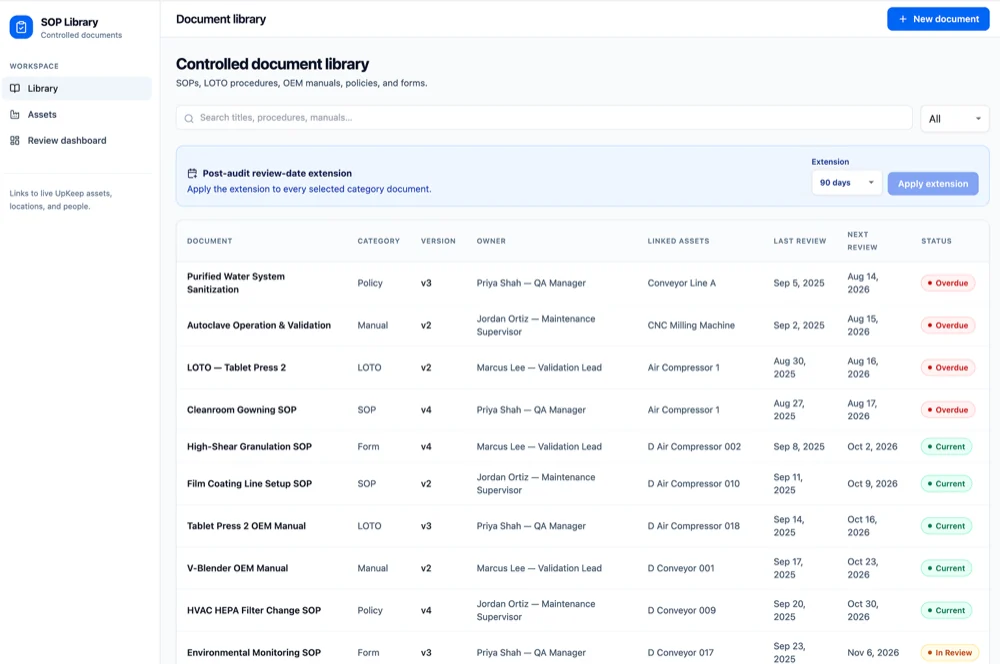
SOPs, LOTO procedures, OEM manuals, and policies, each with a version, a named owner, the assets it governs, and a next review date. What is overdue is the first thing you see, not an audit finding.
- Version and owner on every document
- Review dates that surface early
- Linked to real assets







SOLUTIONS
Documents that can answer whether they are current
A folder of PDFs is not document control. The difference is whether anyone can tell, at the point of work, that they are holding the version in force.
There are four copies of the procedure and the one taped to the wall is from 2019.
One document, one current version, with the superseded ones kept but clearly superseded. What a technician opens is what is in force, and what they signed off against last year is still recoverable.
A technician cannot find the manual for the machine in front of them.
Documents are linked to the assets and locations they belong to, so the procedure is reachable from the asset record and from the work order, or from a code on the machine itself, on a phone, at the machine.
Nobody can say when a procedure was last reviewed.
Every document carries its last review date, its next review date, and a status: current, in review, or overdue. The library sorts by what needs attention rather than alphabetically.
An audit finds thirty documents past their review date and there is a week to respond.
Review dates can be extended in bulk across a category, with who approved the extension, when, and for how long recorded against each document. The finding gets a defensible answer instead of thirty edits made overnight.
The person who owned that procedure left the company.
Ownership is a named field, not folklore. Reassigning an owner moves the review obligation with it, so documents do not become orphaned the week someone hands in their notice.
LOTO procedures live in a binder in a different building.
Lockout and isolation procedures sit on the asset they apply to and open on a phone at the point of work, which is the only place they are any use.
FEATURES
Versions, owners, and the review that keeps them honest
Everything between publishing a procedure and being able to prove it was maintained.
Controlled document library
SOPs, LOTO and isolation procedures, OEM manuals, policies, and forms in one searchable library, filtered by category.
Version control
One current version per document, with superseded versions retained and a record of what changed between them.
Review dates
Last review and next review on every document, with current, in-review, and overdue status driving the dashboard.
Named ownership
An owner per document who carries the review obligation, and reassignment when people move on.
Linked assets and locations
Documents attach to the equipment, line, or building they govern, so they appear where the work happens rather than in a folder tree.
Review workflow
A review is assigned, performed, and recorded, with the new date and the reviewer’s name on the document afterwards.
Bulk review-date extension
Extend review dates across a selected category by a set period after an audit or a reorganization, with the reason and approver recorded per document.
Permissions
Who can publish a version, who can only read, and which sites see which documents, set by role.
Review dashboard
What is overdue and coming due, by category, owner, and site, the report you would otherwise assemble by hand for an audit.
CONNECTED WORKFLOWS
Built to work with the rest of UpKeep
A procedure matters where the work is done and where the training is assigned. These are the hand-offs that put it there.
SOP Library CMMS
The procedure for a job is attached to the asset and appears on the work order, so a technician opens the current version from the job rather than searching for it. A document that has been superseded stops appearing on new work.
Explore UpKeep CMMS →SOP Library Learn
A new version of a procedure is the trigger for retraining. Learn assigns the course or the acknowledgement to the people who work to that procedure and records who has completed it.
Explore UpKeep Learn →SOP Library Quality
Nonconformances and audit findings reference the procedure they were raised against, and a corrective action that changes a procedure lands here as a new version rather than as an untracked edit.
Explore UpKeep Quality →SOP Library Safety
Isolation procedures, permits, and safety policies are the documents an incident investigation reads. Linking them means the investigation cites the version that was in force at the time.
Explore UpKeep Safety →SOP Library Forms
A procedure says how the check is done; a form is the record that it was. Keeping them in one platform means the form and the procedure it enforces do not drift apart.
Explore UpKeep Forms →SOP Library Nova
Ask what is overdue for review, which procedures reference an asset you are about to replace, or what changed in a document since the last audit.
Explore UpKeep Nova →CUSTOMER STORIES
Teams running maintenance on UpKeep
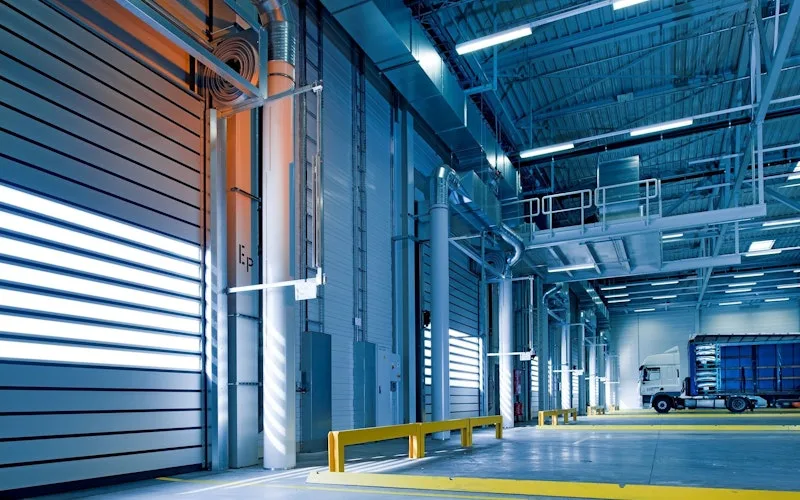
Moved from 60% reactive work to 20% by putting every asset on a recurring PM schedule.
Industrial manufacturer
Read the story →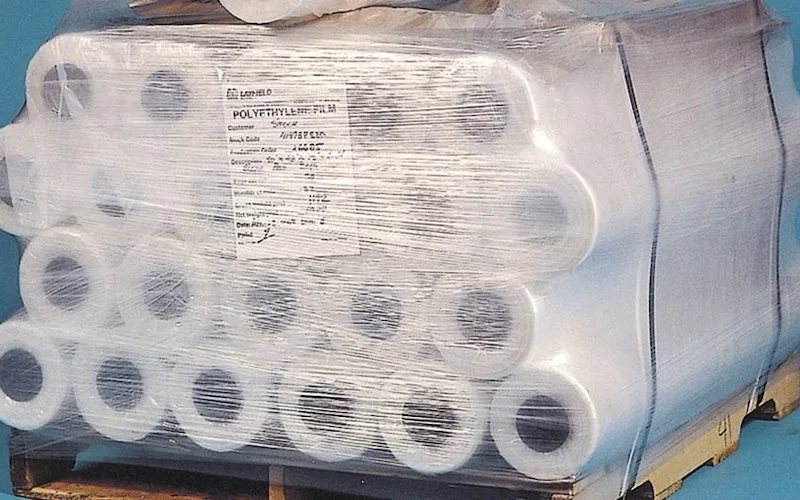
Shifted work from reactive to preventive and brought maintenance costs down with it.
Layfield Group
Read the story →
Replaced paper tracking and manual data entry across the plant using Nova.
Sprinturf
Read the story →
Moved maintenance off paper and onto a system the whole team can see.
Old Trapper
Read the story →
Standardized work orders and asset records across a multi-product distribution operation.
Distribution company
Read the story →
Traced a recurring building problem to its root cause instead of repairing it again.
FMLY
Read the story →
Built a safety-focused culture on the same platform running cleanroom maintenance.
Innovative Micro Technology
Read the story →
Organized technician workload and built a preventive schedule around cold storage equipment.
Columbia Fruit
Read the story →Frequently asked questions
Is this a validated document control system for regulated industries?
No. A validated system under FDA 21 CFR Part 11, electronic signature non-repudiation, immutable audit trails, full validation documentation, is a different and much heavier product, and that is MasterControl, Veeva, and Blue Mountain territory. This is the same boundary UpKeep Quality states, and the two pages agree deliberately. The SOP Library is built for maintenance and operations document control under ISO 9001, food safety schemes, and ordinary internal governance.
How is this different from attaching a PDF to an asset in CMMS?
An attachment is a file. A controlled document has a version, an owner, a review date, a status, and a history of what it replaced. The difference shows up the moment someone asks whether the file on the asset is the current one, an attachment cannot answer that, and this can.
Does publishing a new version trigger retraining?
It can, through UpKeep Learn. A new version can assign an acknowledgement or a course to everyone who works to that procedure, and Learn records who has completed it. Whether a change is significant enough to require retraining is a judgment the owner makes; the system does not decide that for you.
Can technicians open a procedure at the machine?
Yes. Documents are reachable from the asset record and the work order on the mobile app, and a code on the equipment opens straight to what governs it. This is most of the value, a procedure that is only accessible from a desk is a procedure nobody follows.
Who can publish a new version?
Publishing is permissioned by role, usually held by the document owner and a small group of approvers. Everyone else reads. The point is that the current version cannot be changed by whoever happened to open the file.
Is the bulk review-date extension not just a way to hide overdue documents?
It could be, which is why every extension records who approved it, when, and for how long, per document. The honest use is the one it was built for: an audit or a reorganization leaves a category with review dates that no longer make sense, and the alternative is thirty individual edits with no record of who decided. It moves dates; it does not mark anything as reviewed.
Can we import the documents we already have?
Yes, in bulk, with the file, category, and linked assets. Two fields have to be supplied rather than guessed: the owner and the next review date. An imported library where those are blank looks complete and is not, so the import asks for them up front.
Does UpKeep SOP Library capture approval signatures?
A review or approval records the named person, the date, and the version they approved, which satisfies most internal and ISO-style requirements. It is not a compliant electronic signature in the 21 CFR Part 11 sense. If you need that, the validated systems named above are the right answer.
FREE RESOURCES
Go deeper on maintenance
Practical guides and research from the UpKeep team. No cost, no sales call required.
 Guide
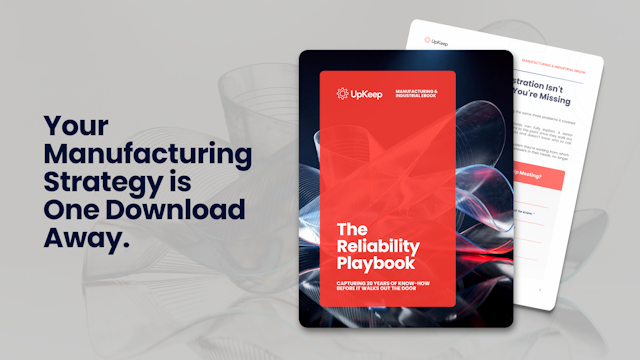
GuideThe Reliability Playbook: Capturing 20 Years of Know-How Before It Walks Out the Door
A fully staffed plant still loses hours to failures a retired technician would have caught in minutes. This playbook reframes the problem: knowledge is disappearing because no system was built to capture it. It lays out a three-part framework for closing that gap and shows what changed at one plant that stopped hiring its way out and instead started capturing what its people already knew.
Get the guide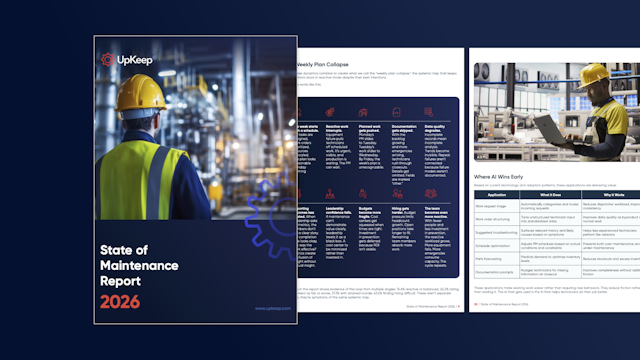 Report
The 2026 State of Maintenance Report
This year's report reflects a fundamental shift in how maintenance creates competitive advantage. While 90% of teams recognize what drives reliability, only 25% can consistently execute it. The gap between knowing and doing has become the defining challenge and opportunity of 2026.
Get the report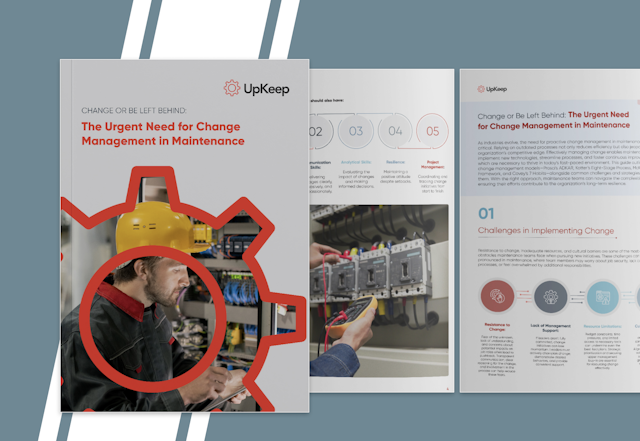 Guide
GuideChange or Be Left Behind: The Urgent Need for Change Management in Maintenance
Effectively managing change enables maintenance teams to implement new technologies, streamline processes, and foster continuous improvement, all of which are necessary to thrive in today’s fast-paced environment. This guide outlines essential change management models
Get the guide
Start with the procedures your last audit asked about
Bring the documents you would have to go and find. We will show what the library looks like with owners, versions, and review dates attached.