
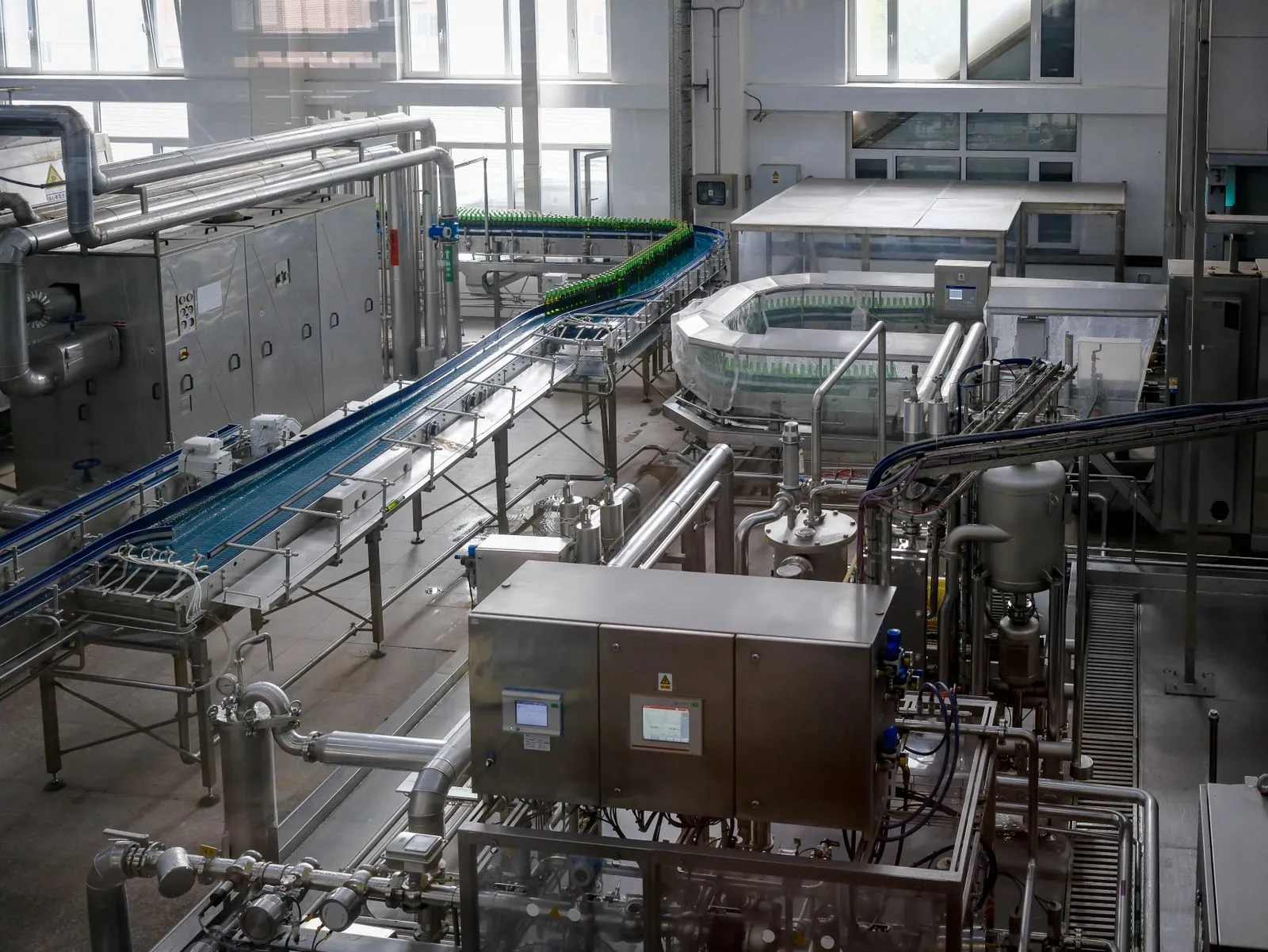
BREWERIES & CRAFT BEVERAGE
CMMS Software for Breweries & Craft Beverage
A failed batch is a month of margin.
Brewhouse, cellar, glycol, and packaging line maintained with CIP records and the traceability an audit asks for.
- CIP records
- Glycol monitoring
- Packaging line uptime







WHAT CHANGES
What a CMMS changes in a brewery
Small teams, biological processes, and a packaging line that decides the week. These are the four things producers tell us they are trying to fix.
Clean-in-place is done consistently and documented inconsistently.
CIP runs as scheduled work with readings and sign-off, so the record exists without a second logbook.
Glycol, chillers, and cellar temperature are watched by whoever walks past.
Sensors flag a drift before a batch is at risk, and the alert opens work against the unit.
The packaging line stops and the same filler jam happens every month with no record of it.
Faults attach to the machine, so a recurring problem becomes a rebuild decision rather than another jam.
An audit asks for maintenance and sanitation records and they take a week to assemble.
Records are retrievable by asset and date, because they were captured as the work happened.
RESULTS
Results from food and beverage producers
Measured across UpKeep customers in an independent Forrester study.
KEY WORKFLOWS
Maintenance workflows across a brewery
Brewhouse, cellar, and packaging run on different clocks. These are the hand-offs.
Glycol or cellar temperature drifts
The packaging line stops
- CMMS The fault is logged against the filler, labeller, or seamer specifically.
- Parts & Inventory Change parts come off stock against the job.
- Production Downtime is attributed to the machine and the shift.
NOVA
Build the record an auditor asks for
Nova is UpKeep's AI assistant, and it builds apps. Describe the log or report you need and Nova builds it against your own production and maintenance data.
See how Nova works- Show me CIP records for this vessel over the last quarter.
- Which packaging machine caused the most downtime this year?
- Build a cellar temperature round with reading capture.
PRODUCTS
Brewery maintenance software features
These are apps, not an edition. Most breweries start with the CMMS, Forms, and Edge on glycol.
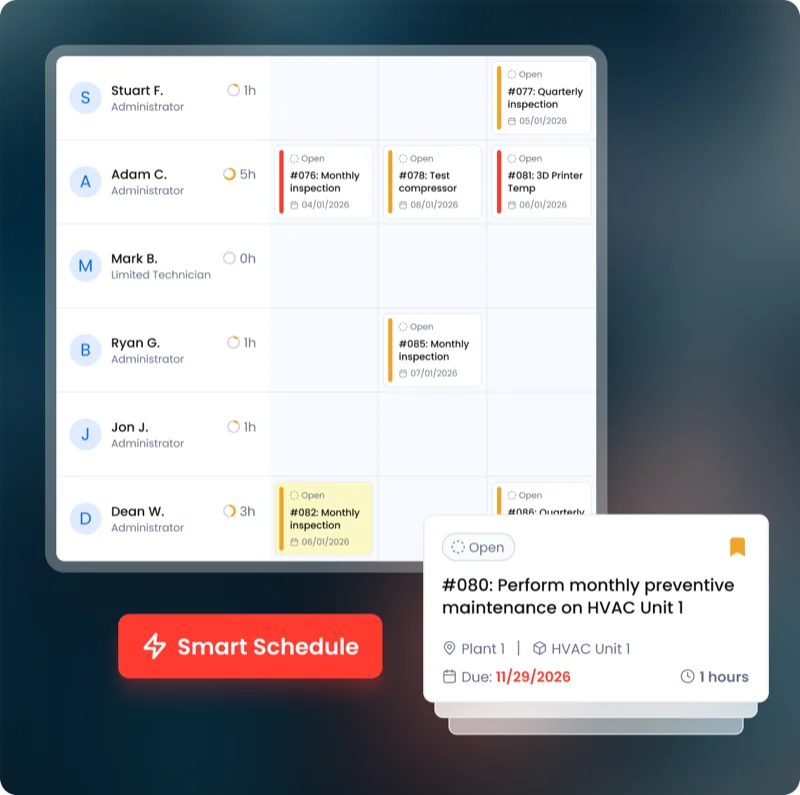 Maintenance CMMS
 Work orders, preventive maintenance, asset history, and parts. The system of record everything else hangs off.
Explore CMMS →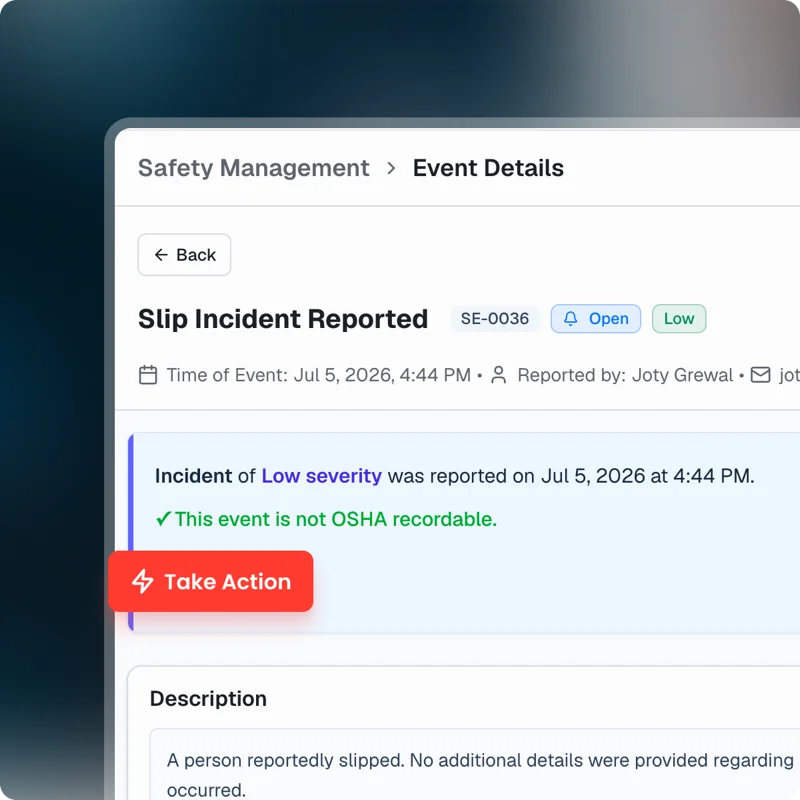 EHS Safety
 Incident capture from the floor by phone or voice, with OSHA 300, 300A, and 301 recordkeeping.
Explore Safety →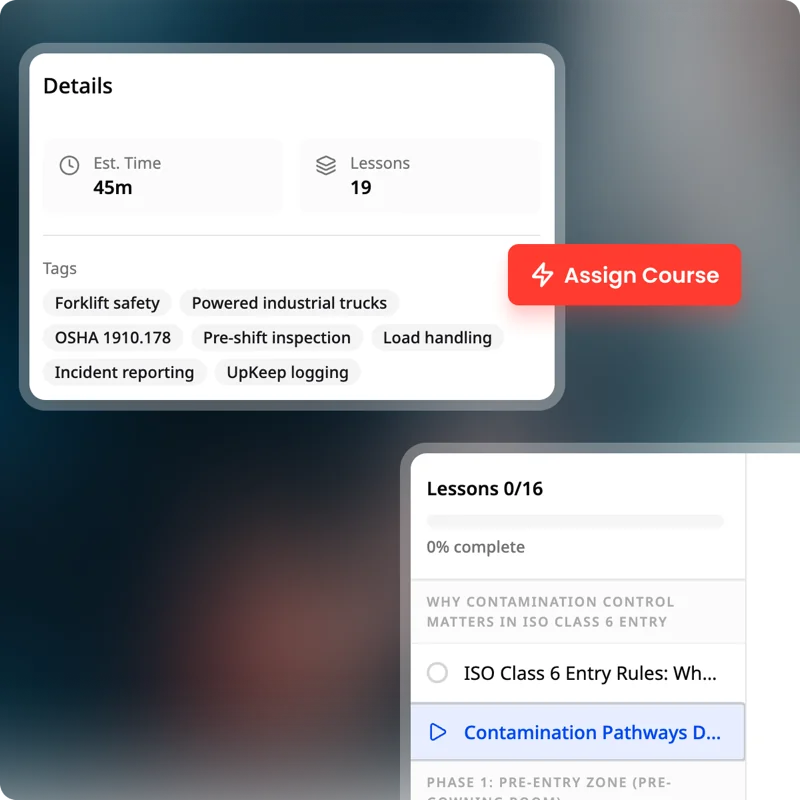 Training Learn
 Procedures, courses, and certifications tied to the people who do the work.
Explore Learn → Edge Sensors Monitor fermentation tanks and glycol with sensors, so a temperature drift is caught while the batch can still be saved.
Preventive Maintenance Schedule brewery equipment preventive maintenance around brew days, so CIP, pumps, and the canning line are serviced between runs.
Production Runtime, downtime reasons, and OEE on the line, connected to the maintenance that affects them.
Quality Record checks and corrective actions against the batch and the tank, so the paperwork is done as the beer is made.
Parts & Inventory Spare parts, stock levels, and reorder points, consumed against the work order that used them.
Nova The AI assistant that answers questions about your data and builds custom apps from a description.
CUSTOMER STORIES
Teams running maintenance on UpKeep
Keeps kitchen equipment running across a footprint measured in thousands of sites.
Chick-fil-A
Read the story →
One operator runs maintenance across every restaurant he owns from a phone.
McDonald's
Read the story →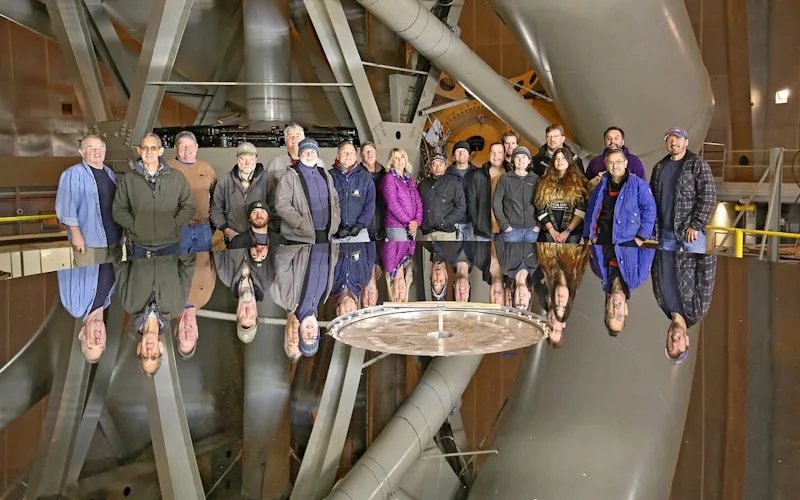
Moved campus crews off paper and onto digital preventive maintenance and work orders.
Caltech
Read the story →
Standardized maintenance across one of the largest custom restorative labs in the world.
Glidewell
Read the story →
Moved from 60% reactive work to 20% by putting every asset on a recurring PM schedule.
Industrial manufacturer
Read the story →
Shifted work from reactive to preventive and brought maintenance costs down with it.
Layfield Group
Read the story →
Replaced paper tracking and manual data entry across the plant using Nova.
Sprinturf
Read the story →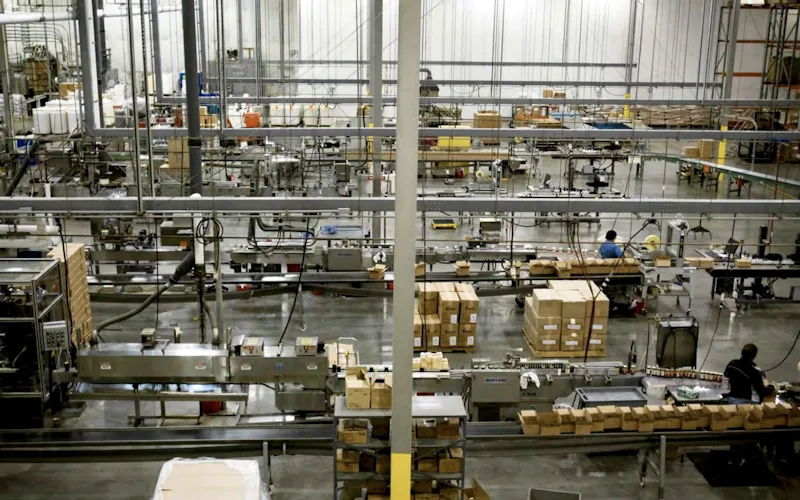
Moved maintenance off paper and onto a system the whole team can see.
Old Trapper
Read the story →Brewery maintenance software: common questions
What is brewery maintenance software?
It is the system a producer uses to maintain the brewhouse, cellar, glycol, and packaging line, and to document sanitation and maintenance in a way an auditor can be shown.
It matters more here than in dry manufacturing because the process is biological: a temperature excursion or a missed CIP costs a batch, not an hour.
Is this different from your Food & Beverage Manufacturing page?
Same platform, different scale and vocabulary. That page is written for larger plants with dedicated reliability functions.
A 30-barrel brewery has a head brewer who is also the maintenance department, and the equipment list is brewhouse, cellar, glycol, and packaging rather than a production line.
Does UpKeep handle CIP records?
Yes, as scheduled work with reading capture (concentration, temperature, contact time) signed and attached to the vessel.
It is not a process control system and does not run the CIP cycle. It records that it happened and to what standard.
Is this a validated system for regulated production?
No. UpKeep is not a validated eQMS and should not be presented as one for 21 CFR Part 11 purposes.
For most craft producers that is not the requirement. What they need is retrievable maintenance and sanitation records, which it does well. State the boundary plainly if your auditor asks.
Can we monitor glycol and fermentation temperature?
Yes, with Edge sensors. Catching a chiller before it takes a batch with it is usually the first thing that pays for the system in this segment.
How much does UpKeep cost for a brewery?
You buy seats for the people closing work, not barrels of capacity. For most craft producers that is the head brewer and one or two others. Cellar and packaging staff reporting a fault are free. Tiers and current rates are on the pricing page.
How long does implementation take?
Days to weeks. Start with the packaging line and glycol, because that is where downtime and batch risk concentrate, then add the brewhouse and the CIP records.
FREE RESOURCES
Go deeper on maintenance
Practical guides and research from the UpKeep team. No cost, no sales call required.
 Guide
GuideThe Reliability Playbook: Capturing 20 Years of Know-How Before It Walks Out the Door
A fully staffed plant still loses hours to failures a retired technician would have caught in minutes. This playbook reframes the problem: knowledge is disappearing because no system was built to capture it. It lays out a three-part framework for closing that gap and shows what changed at one plant that stopped hiring its way out and instead started capturing what its people already knew.
Get the guide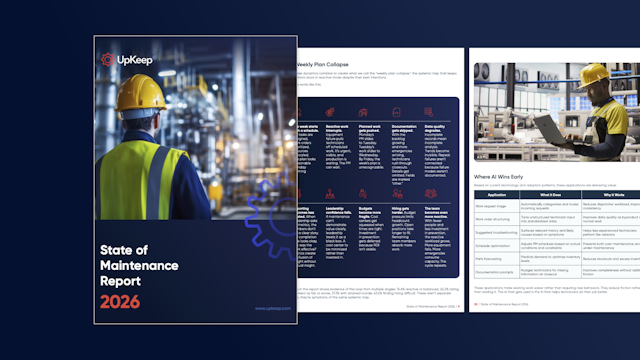 Report
The 2026 State of Maintenance Report
This year's report reflects a fundamental shift in how maintenance creates competitive advantage. While 90% of teams recognize what drives reliability, only 25% can consistently execute it. The gap between knowing and doing has become the defining challenge and opportunity of 2026.
Get the report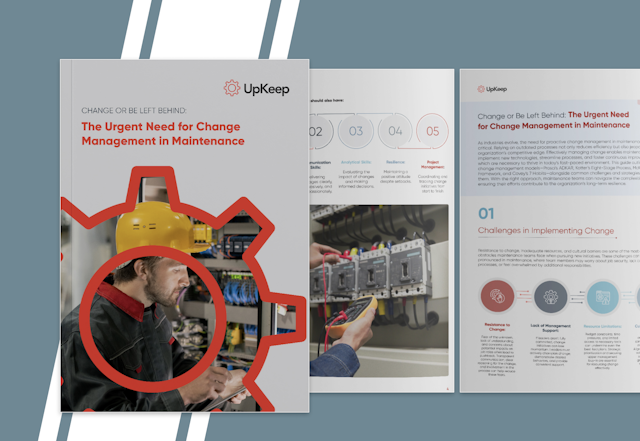 Guide
GuideChange or Be Left Behind: The Urgent Need for Change Management in Maintenance
Effectively managing change enables maintenance teams to implement new technologies, streamline processes, and foster continuous improvement, all of which are necessary to thrive in today’s fast-paced environment. This guide outlines essential change management models
Get the guide
Learning center
Reading for brewery operations
Line uptime, condition monitoring, and sanitation records.
- Condition-based maintenance Acting on a glycol or temperature reading rather than a schedule.
- Total productive maintenance Making cellar and packaging staff part of maintaining their own equipment.
- Overall equipment effectiveness Measuring packaging line performance honestly.
- Standard operating procedures Writing the CIP and changeover procedures people actually follow.
GET STARTED
See it against your own brewhouse
Bring your packaging line and glycol system. We will walk through PMs, sensor alerts, and the CIP record.