Blog Post
How to Calculate, Track, and Improve Preventive Maintenance Compliance
Learn how to calculate, track, and improve your preventive maintenance compliance (PMC). Discover strategies to optimize your PM schedule and reduce unplanned downtime.



Key Takeaways
Preventive maintenance compliance measures how often scheduled PM tasks are completed on time.
The formula is the completed on-time PM tasks divided by total scheduled PM tasks, times 100. A good target PMC is 94% or higher, but the industry average sits closer to 84%.
Common causes of low compliance include missing parts, unclear ownership, understaffing, and rigid schedules that don't match real asset usage.
A CMMS removes much of the manual tracking burden that causes compliance to slip in the first place.
A missed preventive maintenance task might not seem like a big deal. But when it happens again and again, all of those small misses add up to an unexpected breakdown. By tracking preventive maintenance compliance (PMC), you can catch that pattern before it turns into expensive downtime.
This guide covers what PM compliance measures, how to calculate it, and how often to check it. It also breaks down what drives compliance down, what to do about it, and how to use the data to make the case for more resources. Whether you're building a maintenance program from scratch or trying to explain why last quarter's numbers slipped, PMC is an important metric to inform decisions on the floor.
What Is Preventive Maintenance Compliance?
Preventive maintenance compliance measures the percentage of scheduled PM tasks completed within their required time frame. A task finished three weeks late and one finished on the due date can look identical in a basic count; "on time" is the differentiator.
PM compliance is different from PM completion rate. Completion asks whether the work got done at all, while compliance asks whether it got done on schedule. That focus on timing protects equipment from the failure the task was meant to prevent.
Realistically though, real-world scheduling rarely hits the exact completion day. Most teams build in a small tolerance window rather than enforcing a strict due date. A task scheduled every 30 days is typically still counted as compliant if it's finished within a few days on either side.
A CMMS like UpKeep tracks this automatically against the scheduled date. That means no one has to reconstruct it from paper logs or a spreadsheet at the end of the month.
How to Calculate Preventive Maintenance Compliance
The formula for PM compliance is:


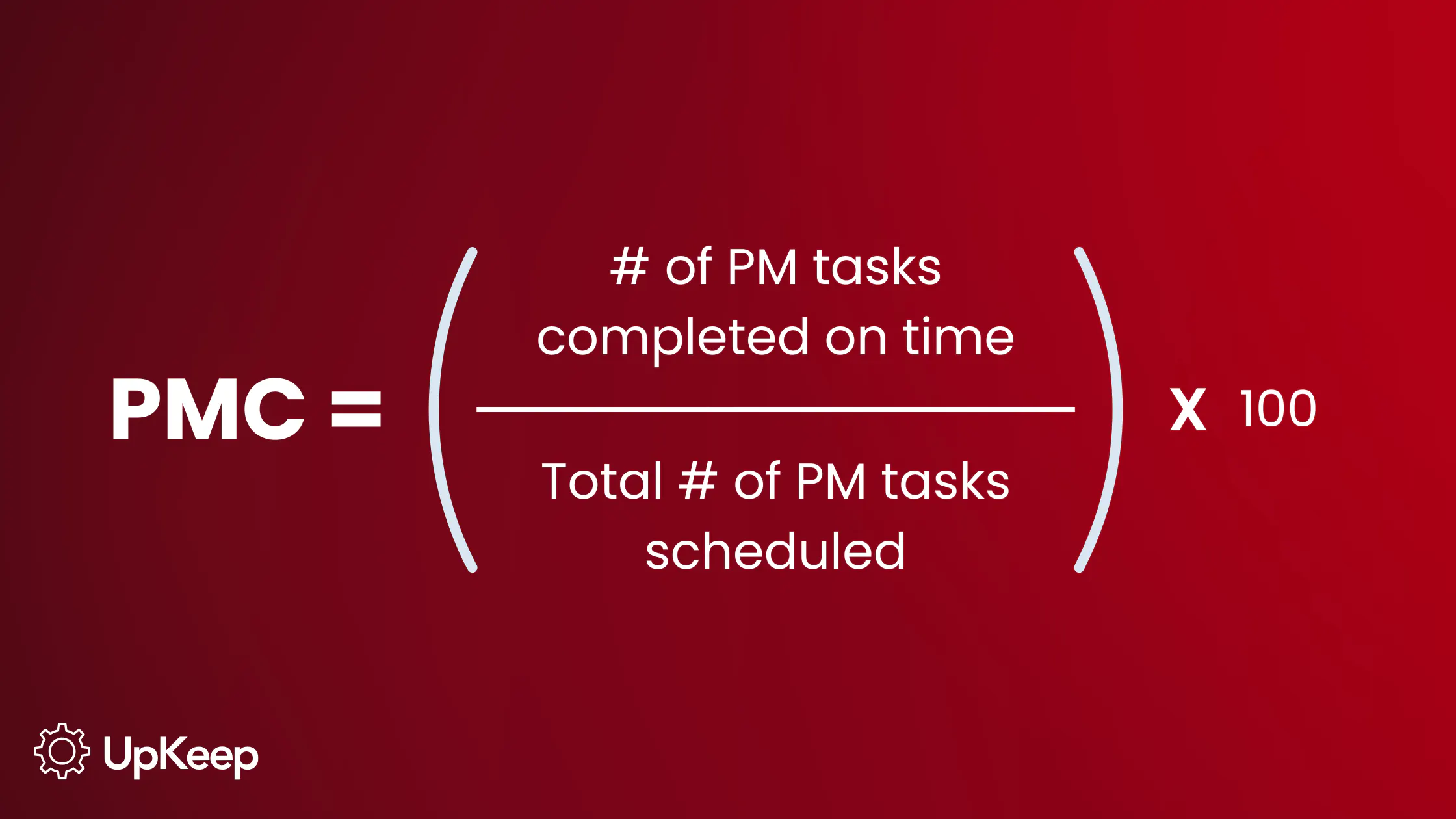
For example, if a facility scheduled 200 PM tasks in a month and completed 180 of them on time, that works out to a 90% PM compliance rate.
Only scheduled preventive tasks belong in this calculation. Reactive repairs and emergency work orders should be excluded because they're unplanned and would skew the number.
As a benchmark, world-class PMC is considered to be at least 90%. Anything above that is generally considered a strong performance indicator.


UpKeep calculates this rate automatically from completed work orders, so there's no manual pull required to know where a team stands.
How Often Should You Review PM Compliance?
PMC needs a weekly check in, not a quarterly one. By the time next quarter’s report indicates a problem, weeks of missed PMs have already compounded.
A weekly check at the supervisor level catches the day-to-day misses: a technician short on time, a part that didn't arrive, or a schedule that's starting to slip before it becomes a pattern.
A monthly review at the manager level provides a fuller picture. This is where a manager would notice compliance declining over time, even if no single week looks alarming on its own.
Quarterly reviews are best reserved for bigger strategic questions, like whether the PM task list itself needs revisiting or if there’s enough staff for the workload.
Treating schedule and PM compliance as weekly, operational metrics gives you reliable data to act on.
Why Preventive Maintenance Compliance Matters
Preventive maintenance compliance is crucial because low compliance is directly tied to unplanned downtime. In fact, research from Siemens and Senseye reported that two-thirds of plants face unplanned downtime at least once every month. Among the companies that tracked their outages, 82% reported averaging four hours and costing roughly $2 million per incident.
Unplanned maintenance also means higher costs. Reactive maintenance and repair costs run about 25%–30% higher than predictive maintenance costs. PM compliance helps a program stay on track in terms of both schedule and budget.
During a regulatory review, compliance data is also the evidence auditors ask for. Standards like ISO 9001 expect organizations to facilitate preventive maintenance measures that anticipate and limit workplace disruptions, keep equipment in good working condition, and maintain product and service quality. UpKeep organizes that documentation as a byproduct of doing the work in the platform, so the audit trail doesn't require a separate reconstruction later on.
Main Causes of Low Preventive Maintenance Compliance
A number of root causes show up again and again when PM compliance declines:
Missing spare parts: Technicians arrive ready to work but can't find or access the part they need. As a result, they either skip the task or complete it with an undocumented workaround.
No named ownership: A task assigned vaguely to "the maintenance team" tends to get delayed or done inconsistently because no individual is accountable for it.
Understaffing or uneven technician workloads: Overworked technicians may not have the time to accomplish PM tasks, leading to a cycle of reactive work, which then takes priority over the next day’s PM tasks.
Rigid schedules that don't reflect actual asset usage: If tasks happen either too often to matter or too rarely to catch anything, that means your PM program isn’t giving results.
There's also a gap between knowing PM matters and actually doing it. UpKeep found that 90% of maintenance professionals see the value in proactive maintenance, but only 25.5% practice it. That implementation problem is more so due to whether a team has the systems in place to make proactive work possible.
How to Improve Preventive Maintenance Compliance
A few practical fixes can help boost your preventive maintenance compliance metric:
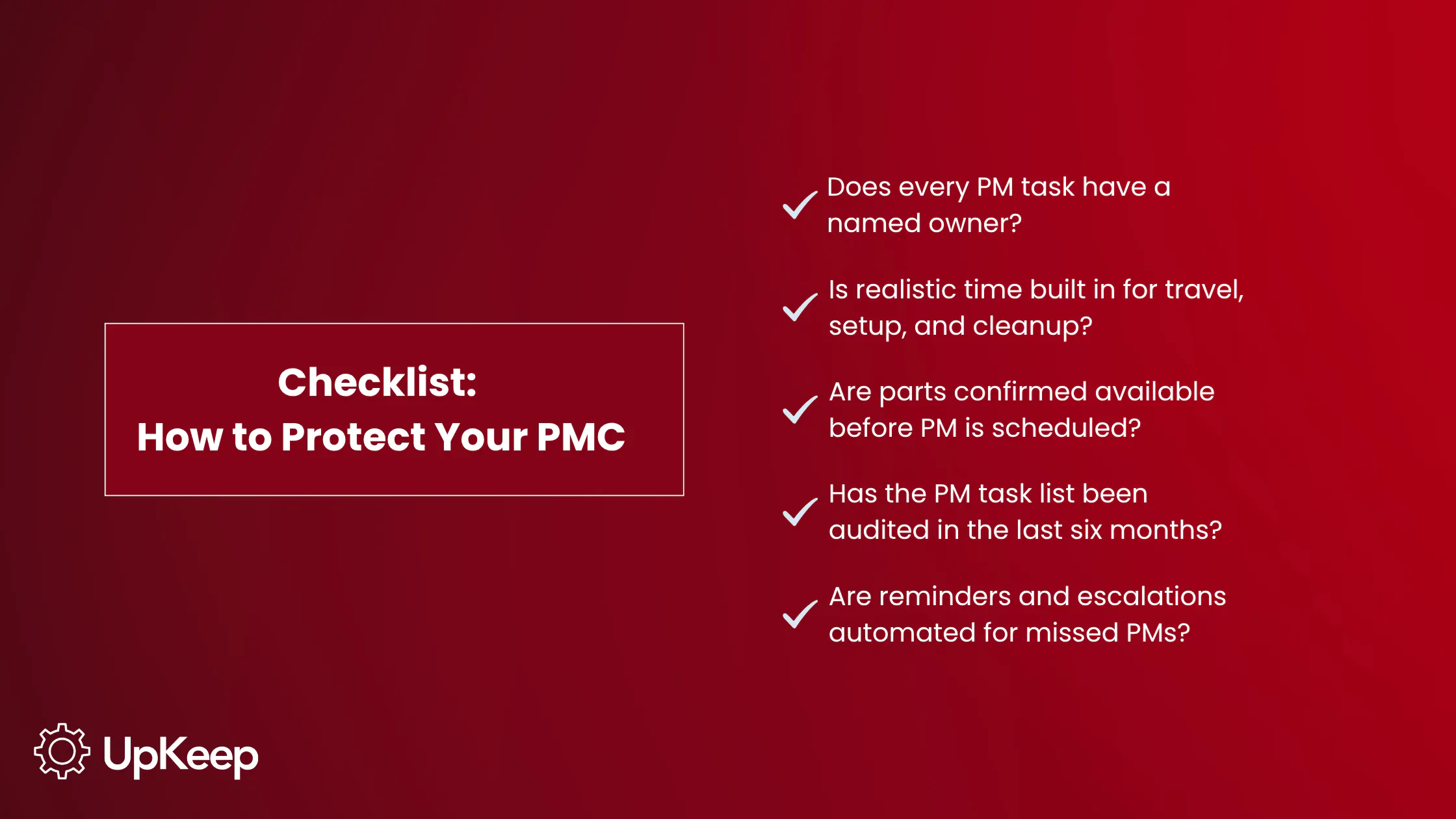
Audit the PM task list before changing anything else. Cut tasks that aren't adding value so the schedule reflects real risk instead of a generic template.
Assign named ownership per task and asset rather than per team so accountability isn’t diffused across a group.
Build realistic time into the schedule for travel, setup, and cleanup. Underestimating task duration is what turns a PM into a rushed job that misses things.
Automate reminders and escalation so a missed PM is recognized immediately.
Give technicians mobile access to submit, update, and close PM tasks from the floor. Tying documentation to a desktop is a sure-fire way to kill adoption and miss tasks. With UpKeep's mobile-first tools and automation, customers are able to close out work orders three times faster, and customers overall see a 26% reduction in equipment downtime.

How a CMMS Makes These Fixes Stick
Most of the tactics above don't work without a system to enforce them. A named owner still needs a way to be notified, and schedules have to remain realistic to a team's actual day-to-day shifts. A CMMS helps turn a one-time policy decision into a process that runs on its own.
It removes the manual tracking burden that causes compliance problems in the first place; scheduling, reminders, and escalation happen automatically instead of depending on someone remembering to check a spreadsheet. The system also creates the audit trail and reporting needed to determine if the other fixes are working. Without a CMMS, teams are left to reconstruct compliance data by hand.
Examples of PMC in the Field by Industry
There’s no single roadmap for PMC across all fields. PM compliance looks different depending on the industry:
Manufacturing: PMC shows up as scheduled lubrication, calibration, and inspection tasks tied to production equipment, where a missed task can directly show up as an unplanned line stoppage.
Fleet operations: PMC tracks scheduled inspections and services tied to a vehicle's mileage or engine hours, since a missed interval can affect both safety and regulatory standing. Fleet operations benefit significantly from this structured vehicle care.
Facilities management: PMC covers HVAC, elevator, and life-safety system checks, where the record of the check matters as much as the check itself for insurance and code compliance purposes. Facilities management operations rely heavily on this precision.
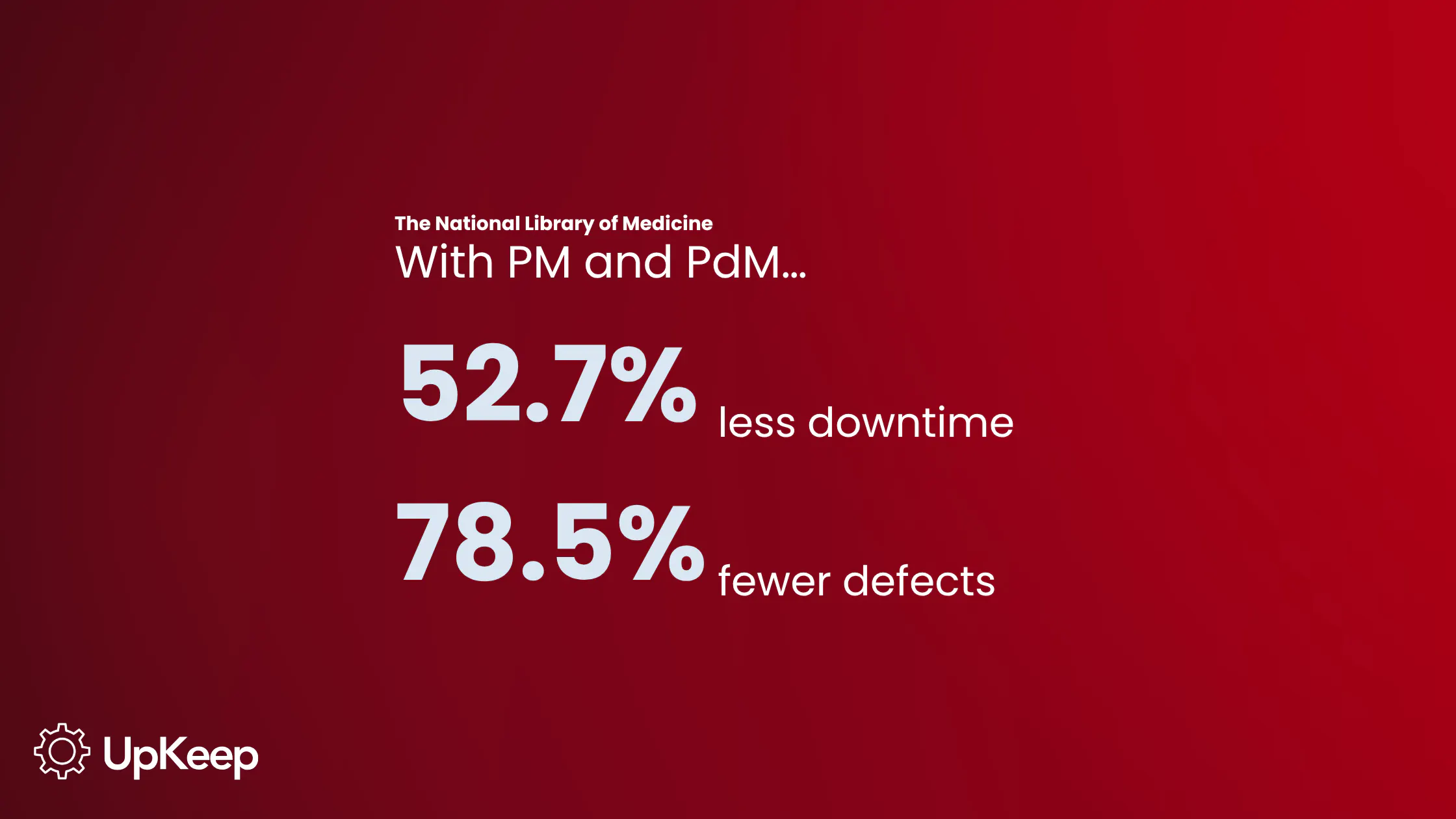
Facilities that rely more on preventive and predictive maintenance report 52.7% less unplanned downtime and 78.5% fewer defects compared to facilities that take a reactive approach. Research backs this up, showing that mature programs that adopt a hybrid approach based on asset level of criticality see less downtime and fewer defects.

Using PMC Data to Drive Maintenance Program Decisions
Even when a team tracks PMC consistently, the real value comes from how they use that data:
Segment PMC by asset criticality instead of reporting one blended number. A critical asset with a poor compliance record needs a different response than a low-priority one. Averaging them together hides that necessity.
Track the trend over time. A program's PMC may be an acceptable 80% right now. But if it dropped from the previous month’s 90%, that's a problem worth flagging.
Pair PMC with downtime and repair cost data when building a case for more head count or budget. A compliance rate on its own is harder to act on than a number next to what missed PMs are actually costing.
Stay in Your Own Preventive Maintenance Lane
Preventive maintenance compliance keeps an ongoing record of whether a maintenance program is protecting equipment the way it's supposed to. However, that value depends on a team calculating it consistently, reviewing it often, and understanding what's actually driving it up or down.
The causes of low compliance, from missing parts to unclear ownership, are fixable once they're visible, and the fixes themselves work best when they're built into a system rather than left to memory. Breaking down compliance data by asset criticality and pairing it with downtime and cost info turns a single number into a defensible action. Get the tracking right, and PM compliance becomes one of the clearest early warning signs for your maintenance team.
Ready to see what consistent PM compliance tracking looks like without the manual work? Sign up for a free demo with UpKeep and discover how it fits into your team's day-to-day experience.
Frequently Asked Questions
What does preventive maintenance compliance mean?
Preventive maintenance compliance measures the percentage of scheduled PM tasks a team completes on time, not just whether the work eventually gets done. It's calculated by dividing on-time PM tasks by total scheduled PM tasks, then multiplying by 100. A high score means a team is staying ahead of the failures those tasks are meant to catch.
How does PM compliance differ from mean time to resolution (MTTR)?
PM compliance and MTTR measure different parts of a program. PM compliance looks forward, tracking whether planned work gets done on schedule before a failure happens. MTTR looks backward, measuring how long it takes to repair an asset once it's broken. Strong PM compliance often improves MTTR, since fewer surprise failures mean less unplanned repair work.
What is a good preventive maintenance compliance score?
A good PM compliance score is generally 90% or higher, with world-class facilities maintaining 94% or above. The industry average sits closer to 84% though, so consistently scoring above 90% indicates strong performance. However, what counts as “good” can shift based on asset criticality; a high score on critical equipment matters more than it does on a lower-value asset.
How is PM compliance different from PM completion rate?
PM completion rate asks if a scheduled task got done, while PM compliance asks whether it got done on time. A task finished three weeks late still counts as completed but not as compliant. Compliance is the stricter, more useful metric because timing often determines whether a PM task actually prevents the failure it was meant to catch.
4,000+ COMPANIES RELY ON ASSET OPERATIONS MANAGEMENT
Leading the Way to a Better Future for Maintenance and Reliability
Your asset and equipment data doesn't belong in a silo. UpKeep makes it simple to see where everything stands, all in one place. That means less guesswork and more time to focus on what matters.






![[Review Badge] Gartner Peer Insights (Dark)](https://www.datocms-assets.com/38028/1673900494-gartner-logo-dark.png?auto=compress&fm=webp&w=336)