On Demand
Rolling Out AI Across Your Team
Duration: 30 minutes
Published on: August 28, 2026
The session starts by naming the three roadblocks that come up again and again: trust (real skepticism about AI accuracy — “how do I know the AI got it right?”), habit (nobody’s sure who does what differently now — is this my job, or still the planner’s?), and training gaps (without a feedback loop that builds confidence, teams try it once, hit a snag, and go back to the old way). From there, Luke lays out a three-phase rollout you can actually follow — pilot one high-value, low-risk use case with a small group; expand by letting the pilot group vouch for the results, adding teams and use cases one at a time; then standardize, the phase most people skip and the one that matters most: making Nova the default way to work, because when it’s optional, adoption plateaus.
The back half is about making it stick: four training principles (15-minute sessions on three prompts beat a one-hour overview; role-specific first use cases for technicians, planners, and managers; one named champion per team so nobody waits on a support ticket; a one-page cheat sheet where the work happens instead of a training deck no one reopens) and four adoption metrics worth tracking — weekly active users, prompts per user, workflows in production, and time saved per workflow, the number that proves value to whoever’s funding the rollout. A live demo follows one technician through a full shift with Nova — summarizing the day’s work orders and flagging priorities at the start, pulling asset history and troubleshooting steps mid-shift, and drafting completion notes and flagging parts to reorder at the end — all without ever leaving the workflow. Audience Q&A covers Nova credits, sharing custom apps, Nova apps on mobile, and linking parts to assets.
You'll leave knowing:
-
The three roadblocks that stall AI rollouts — trust (skepticism about AI accuracy), habit (no clear answer to who does what differently now), and training gaps (no feedback loop, so teams try it once and go back to the old way) — and why naming them out loud is the first step to planning around them.
-
A phased rollout you can actually follow: pilot one high-value, low-risk use case with a small group; expand one team and one use case at a time, letting your pilot group vouch for the results; then standardize by making Nova the default way to work — the step most teams skip, and the reason adoption plateaus when AI stays optional.
-
How to train without slowing your team down: 15-minute sessions on three prompts instead of a one-hour overview, role-specific first use cases for technicians, planners, and managers (train to the job, not the tool), one champion per team to answer questions in the moment, and a one-page cheat sheet that lives where the work happens.
-
The four metrics that tell you adoption is real: weekly active users (your clearest signal it’s becoming a habit), prompts per user (depth of use — several questions a week means reliance, not curiosity), workflows in production (apps and scheduled tasks your team relies on weekly), and time saved per workflow (the number that proves value to whoever’s reviewing or funding the rollout).
-
What a full technician shift with Nova looks like — day’s work orders summarized and priorities flagged at the start, asset history and troubleshooting steps mid-shift without leaving the work order, completion notes drafted and parts flagged for reorder at the end — plus live-demo answers on Nova credits, sharing custom apps, Nova apps on mobile, and linking parts to assets.
Explora más eventos


Evento
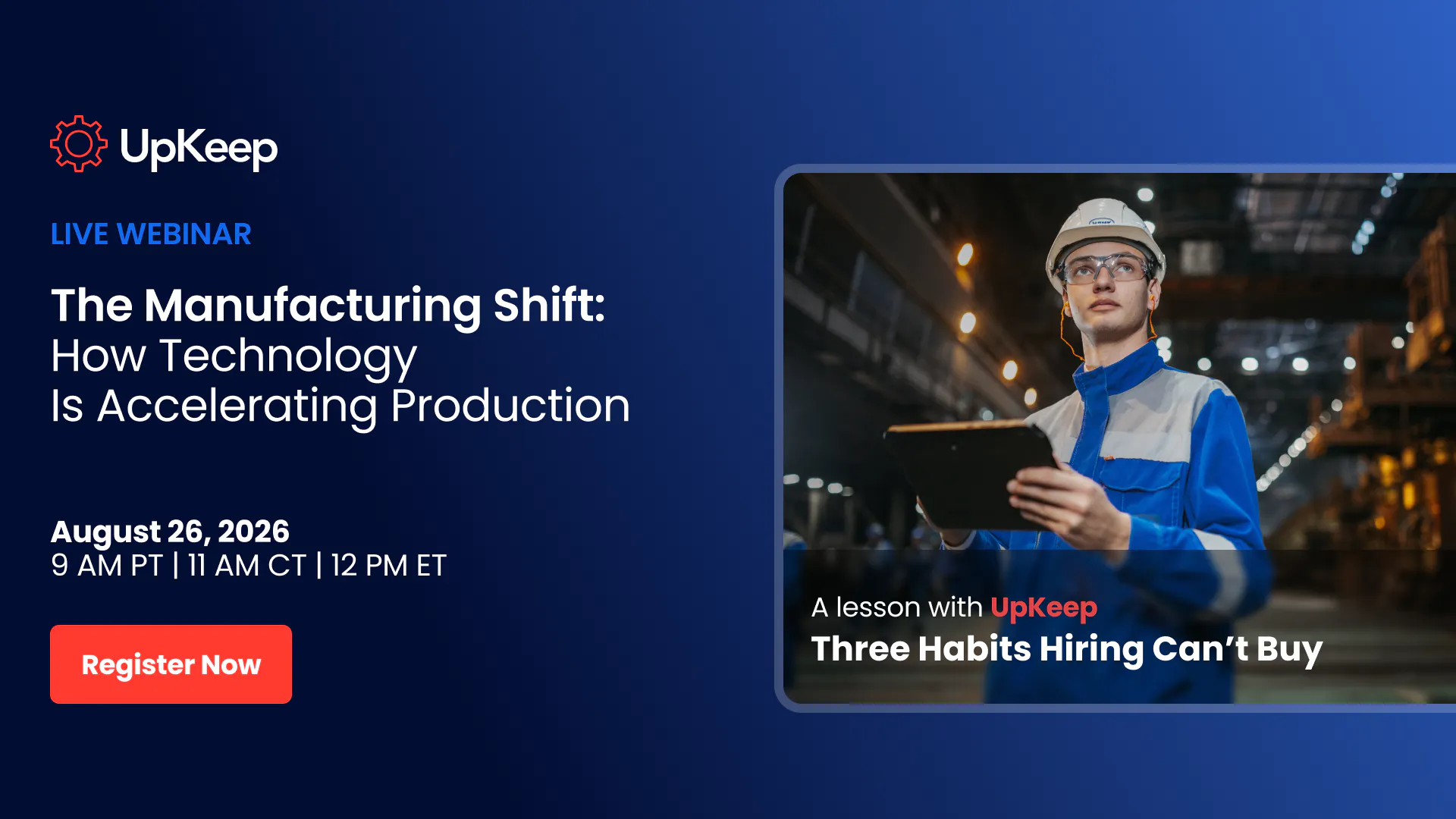
The Manufacturing Shift: How Technology Is Accelerating Production
The last decade of plant technology delivered more than the industry tends to give it credit for. Instrumenting a line went from a capital project to a procurement decision. Sensor data, mobile access, and real-time visibility became table stakes. The operations that adopted early are measurably faster: faster to detect a problem, faster to decide, faster to get a new technician to competence.

Evento
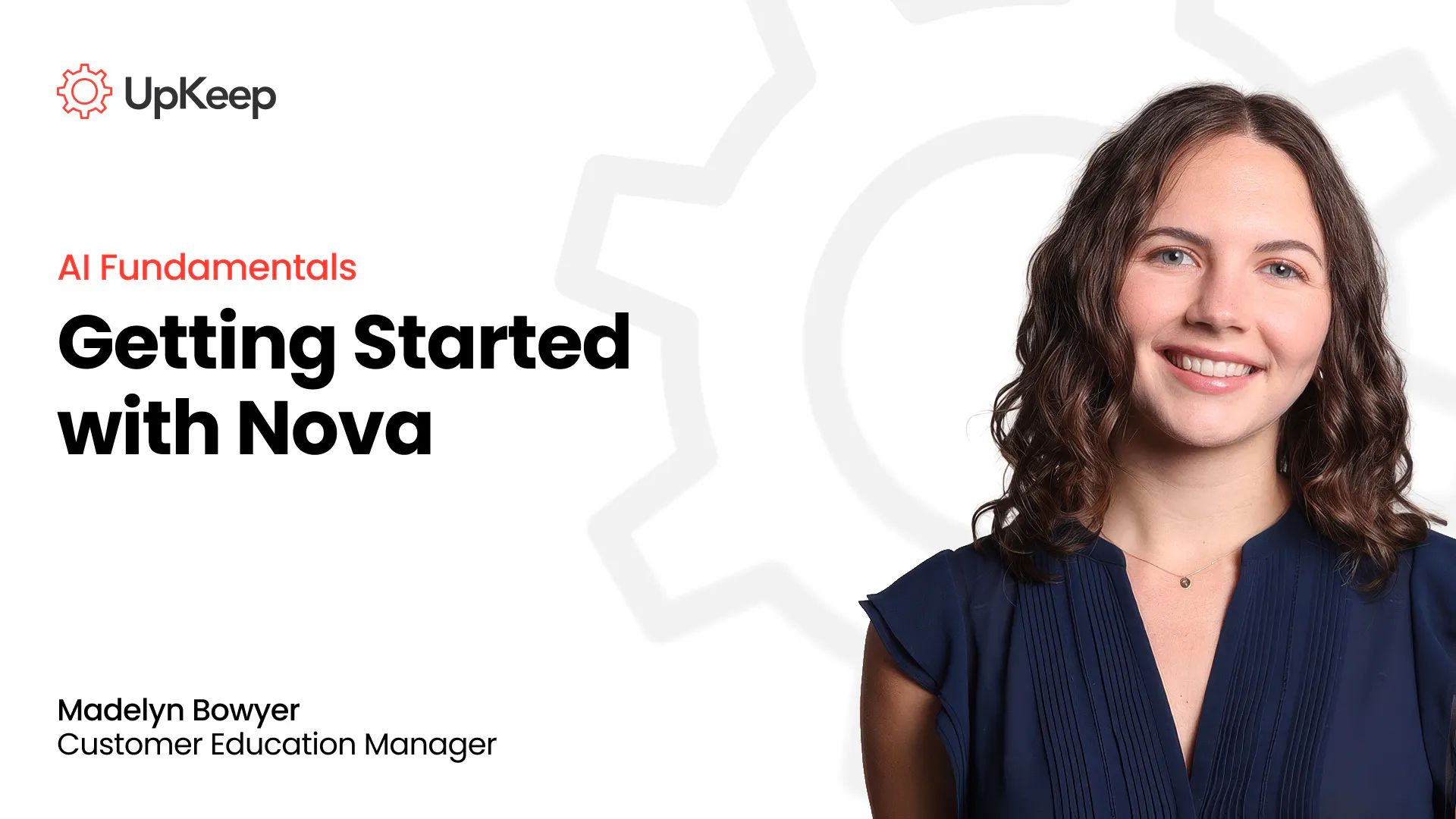
AI Fundamentals – Getting Started with UpKeep Nova
Learn how UpKeep Nova, the AI assistant for maintenance teams, automates work orders, scheduled tasks, and custom CMMS apps. Watch the full webinar recap.


Evento
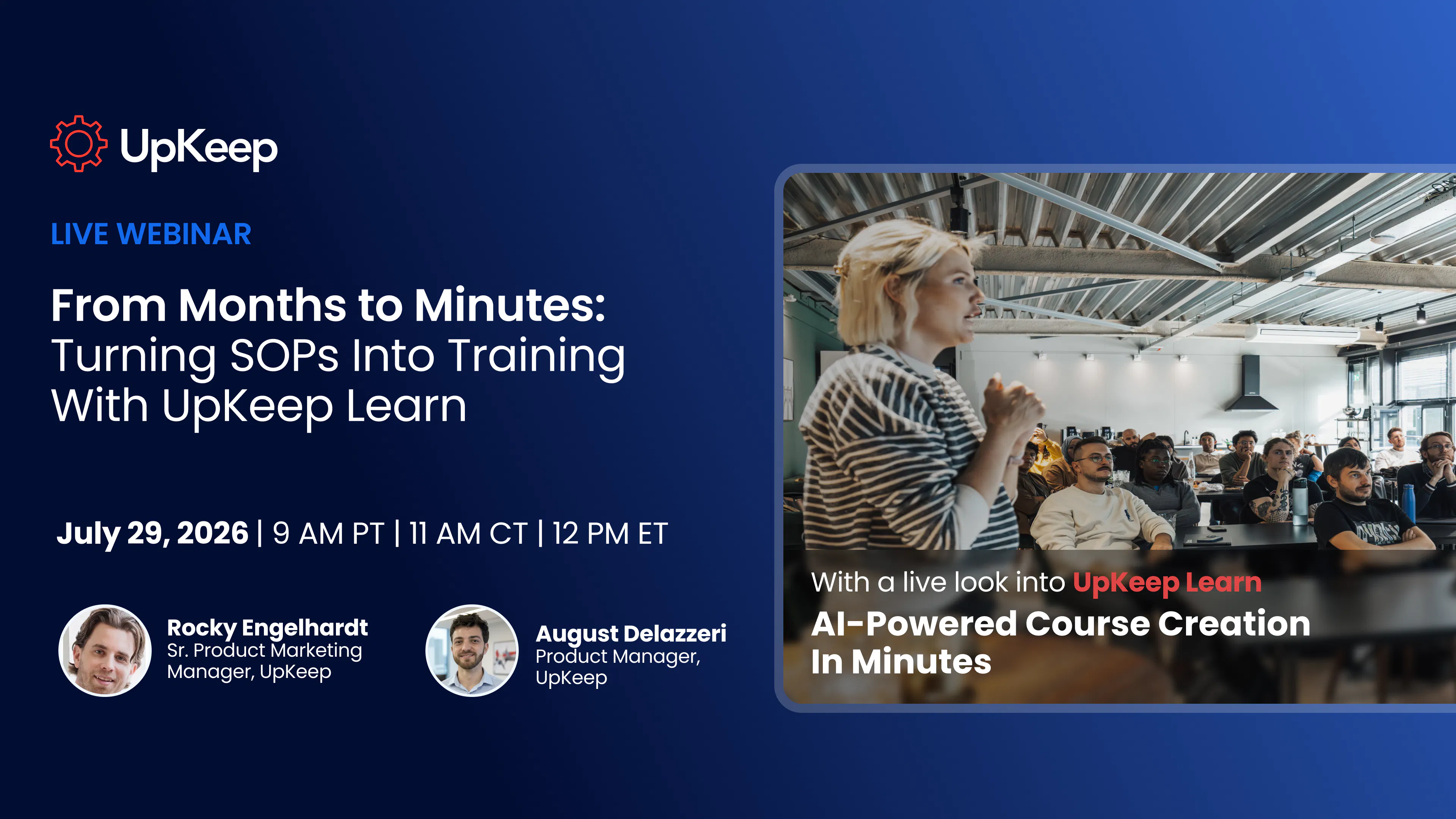
From Months to Minutes: Turning SOPs Into Training With UpKeep Learn
Building one hour of traditional training content typically takes anywhere from 43 to 185 hours. In this live session, Rocky Engelhardt, Sr. Product Marketing Manager, and August Delazzeri, Product Manager, will walk through UpKeep Learn’s upgrades, and demonstrate how its AI engine takes an existing SOP and turns it into a structured course, complete with slides, narration, and a quiz, in a fraction of that time, without leaving the platform you already use for assets and work orders.




![[Review Badge] Gartner Peer Insights (Dark)](https://www.datocms-assets.com/38028/1673900494-gartner-logo-dark.png?auto=compress&fm=webp&w=336)