Entrada en el Blog
La función de la tecnología de sensores en la revolución de la mantención preventiva.
Mientras que las tareas de mantenimiento preventivo siempre tendrán su lugar en un programa de gestión de activos integral, las tecnologías de sensores de mantenimiento predictivo de hoy prometen revolucionar la forma en que se maneja el mantenimiento preventivo y elevar aún más el nivel de rendimient


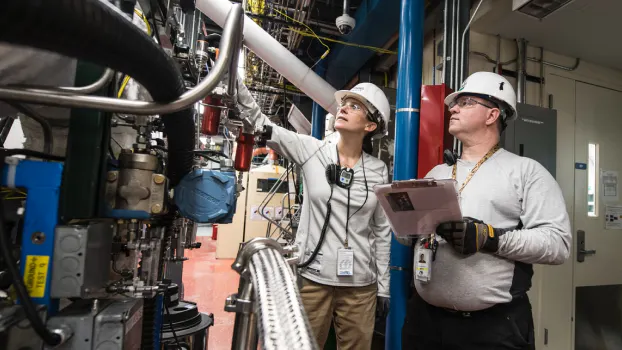
Although sensor technology has been around for decades, beginning with vibration sensors that were in use as early as the 1960s and 1970s, its role in predictive maintenance strategies continues to mature. Today, they are increasingly becoming the norm for organizations aiming to reduce downtime, improve efficiency, and extend asset life. Condition-Based Maintenance (CBM) leverages real-time monitoring to detect early signs of equipment failure, and sensors play a pivotal role in this process. By integrating sensor technology into maintenance strategies, businesses can make data-driven decisions that optimize performance and minimize unexpected failures.
The Role of Sensors in CBM
Sensors are the backbone of CBM, continuously collecting data on various parameters such as temperature, vibration, pressure, humidity, and fluid levels. This data is then analyzed to determine equipment health and predict potential failures before they occur.
The key advantages of using sensors in CBM include real-time monitoring, early fault detection, optimized maintenance intervals, and extended equipment lifespan.
Sensors provide immediate feedback on asset condition, allowing maintenance teams to respond proactively rather than reactively. This real-time monitoring serves as a 24/7 watchdog on the most critical assets, which can lead to identifying potential problems early. Subtle anomalies in machine behavior can be detected well before a catastrophic failure, reducing costly downtime. By addressing issues early, assets can operate longer without requiring major repairs or replacements.
In addition, sensor data enables maintenance to be conducted only when necessary, preventing both over-maintenance and under-maintenance. This is often a far superior maintenance strategy than performing routine maintenance based on fixed schedules, regardless of need.
Types of Sensors Used in CBM
Different types of sensors are utilized in CBM, depending on the asset and operational environment. Some of the most common sensor types include:
Vibration Sensors: Detect misalignment, imbalance, and bearing faults in rotating machinery.
Temperature Sensors: Identify overheating components, which can indicate issues such as lubrication failure or electrical faults.
Pressure Sensors: Monitor hydraulic and pneumatic systems to detect leaks or blockages.
Ultrasonic Sensors: Used to detect early signs of mechanical wear and fluid leaks.
Infrared Sensors: Identify abnormal heat patterns in electrical and mechanical components.
Oil Condition Sensors: Analyze oil quality to determine contamination levels and lubrication effectiveness.
Implementing Sensor-Based CBM
To effectively integrate sensors into a CBM strategy, organizations should follow a structured approach. Companies should begin by identifying critical assets where CBM can deliver the highest return on investment. Although CBM is a powerful maintenance strategy, it is not appropriate for every situation or piece of equipment. Prioritizing the assets where it makes the most sense will maximize a company’s resources.
Once critical assets have been identified, choose the right types of sensors for each asset based on failure modes and operational conditions. Ensure sensors are connected to a centralized data management system, such as a Computerized Maintenance Management System (CMMS), so that data can be collected and shared effectively.
Work with your team to establish baseline operating conditions and define alarm thresholds for abnormal conditions. For example, a food, beverage, or healthcare organization may need to keep certain products within specific temperature and humidity levels. When equipment falls outside the appropriate range, an automated alert can notify maintenance teams of potential failures, enabling proactive interventions before products are compromised.
Finally, set up a process to regularly review sensor data, refine thresholds, and optimize maintenance strategies based on historical trends and new insights.
Challenges and Considerations
While sensor-based CBM offers significant benefits, there are challenges to consider, particularly the initial investment required. Deploying sensors and integrating them with data management systems can be costly upfront.
In addition, managing large volumes of sensor data requires robust analytics and filtering to extract meaningful insights. You’ll want to ensure that your company’s systems can effectively manage the collected data.
Be sure that your organization is aware of any vulnerabilities, especially if sensor data is collected and transmitted through the internet. A strong cybersecurity strategy can help protect sensitive information
Finally, you’ll need the technical expertise to effectively interpret sensor data and act on insights effectively.
The Future of Sensor-Driven CBM
Advancements in artificial intelligence and machine learning will continue to further enhance the effectiveness of sensor-based CBM. Predictive analytics, powered by AI, can recognize complex patterns and provide even more accurate failure predictions. As sensor technology continues to evolve, the adoption of wireless, self-powered, and smart sensors will further simplify CBM implementation and improve asset reliability.
Conclusion
Using sensors in condition-based maintenance transforms traditional maintenance practices by shifting from reactive to proactive strategies. By leveraging real-time data, organizations can optimize maintenance schedules, reduce costs, and improve overall asset reliability. As technology continues to evolve, sensor-based CBM will become an essential component of modern industrial maintenance, ensuring sustainable and efficient operations.
¿Quieres seguir leyendo?
Artículo
La función de la tecnología de sensores en la revolución de la mantención preventiva.
Artículo
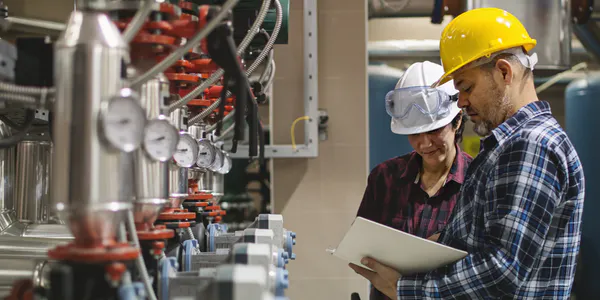
¿Cuáles son los mejores sensores para mi industria?


Artículo
Which Sensors Are Best for My Industry?
MÁS DE 4000 EMPRESAS CONFÍAN EN LA GESTIÓN DE OPERACIONES DE ACTIVOS
Liderando el camino hacia un futuro mejor para el mantenimiento y la confiabilidad
Los datos de sus activos y equipos no pertenecen a un silo. UpKeep simplifica ver dónde se encuentra todo, todo en un solo lugar. Eso significa menos conjeturas y más tiempo para concentrarse en lo que importa.






![[Review Badge] Gartner Peer Insights (Dark)](https://www.datocms-assets.com/38028/1673900494-gartner-logo-dark.png?auto=compress&fm=webp&w=336)