Blog Post
Downtime Reduction Strategies To Improve Your Bottom Line
Production downtime costs your business time and money. Find out what’s causing these issues and solve them with our top downtime reduction strategies.


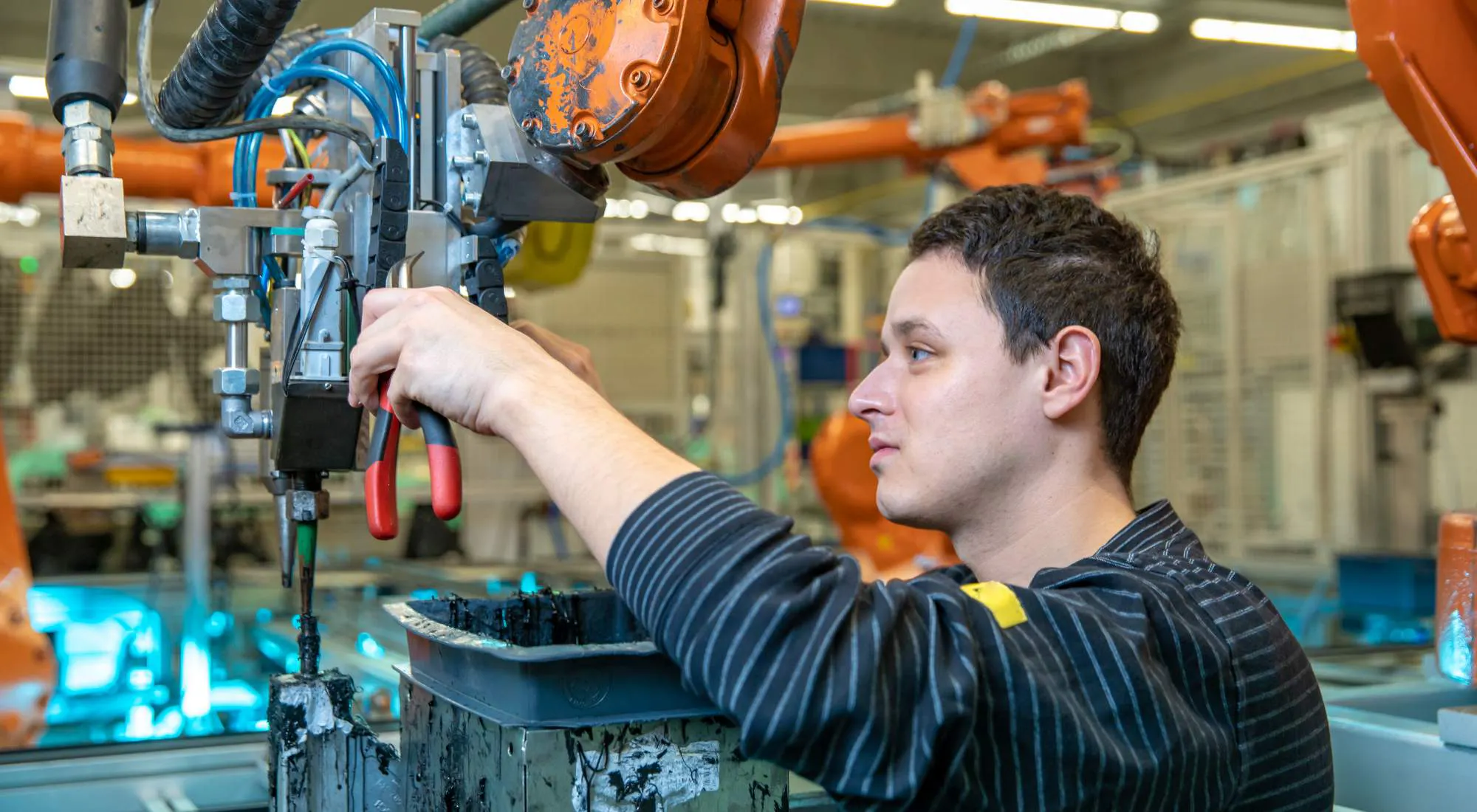
Top Downtime Reduction Strategies From the Experts at UpKeep
Assets that run poorly create companies that run poorly — it’s as simple as that.
When organizations consistently face maintenance issues resulting in production downtime, they lose time, money, and more.
But downtime is a result of more than broken machinery. Insufficient processes, undertrained and unempowered employees, ineffective practices, plus more lead to unplanned downtime that disrupts processes and production.
Learn about the most common causes of unplanned downtime in production and how utilizing a digitized and centralized CMMS software that offers a handful of downtime reduction strategies can be a game-changer for your company.
What Is Downtime in Manufacturing?
Downtime is any period during the manufacturing process in which facility output is stopped or a process is not running. There are two types of downtime: planned and unplanned.
Planned Downtime
Planned downtime is a stoppage that happens on purpose. Often, it’s for implementing updates, upgrades, and configuration changes that should prevent unplanned downtime from occurring. With this planned preventive maintenance, machines and applications continue to function optimally to minimize disruptions.
Planned downtimes can be arranged so that everyone still has something to do while the process is stopped. This may include completing other tasks, coordinating with contractors, or ordering parts.
Unplanned Downtime
Unplanned downtime occurs when the machinery or output is stopped for any unscheduled event. This could be due to:
Power outages
Parts breaking
Lack of materials
And more
Unplanned downtime can strike unexpectedly at any time. It’s usually disruptive and comes with consequences in productivity, revenue, and more. Since it’s unplanned, you never know when this type of downtime is coming, and you can’t arrange to do other beneficial tasks in advance. This ends up being a big waste of time and money for the company.
For the purposes of this article, the downtime reduction strategies we discuss will be related to unplanned downtime.
What Are the Benefits of Using Downtime Reduction Strategies?
Some of the benefits of unplanned downtime reduction include:
Lowering costs
Increasing productivity
Reducing wasted material
Longer unplanned downtime means less production time. This can lead to lower stock numbers and greatly affect the bottom line.
How Can We Reduce Downtime?
The best way to reduce unplanned downtime is by addressing its most common causes head-on. These include:
Inefficient work order processes
Unreliable data and faulty recordkeeping
Ineffective maintenance practices
Insufficient inventory tracking
Untrained employees, and
A weak backup system
But just knowing about these issues isn’t sufficient. You need to know the best way to deal with them. UpKeep’s easy-to-use, mobile-first CMMS software is trusted by over 4,000 companies. Keep reading to find out why.
6 Common Causes of Unplanned Downtime in Production and How UpKeep Provides Downtime Reduction Strategies
In the manufacturing industry, companies experience about 800 hours of downtime each year. We often hear about unplanned downtime and how it negatively affects a company, but manufacturers experience two types of downtime during production processes — planned and unplanned downtime.
Although we commonly hear of reducing unplanned downtime to help production, scheduling planned downtime could be a game changer for your company.
Downtime has its costs, including:
Lost revenue
Recovery costs
Data loss
Compensation costs
Regulatory fines and penalties
Lost productivity
Reputation damage
Opportunity costs
Customer churn
Downtime of either type is costly — approximately $260,000 per hour. Learning about the common causes of unplanned downtime and how preventive maintenance with CMMS software can reduce this downtime can greatly help your company.
#1: Problem: Inefficient Work Order Processes
Many companies deal with five main types of work orders:
General work orders
Preventive maintenance work orders
Inspection work orders
Emergency work orders
Corrective maintenance work orders
Typically, someone within the company — a machine operator, a maintenance technician, or someone else — creates a work order identifying a task. A maintenance request is created, and a work order is prioritized and scheduled. Then, the work order is assigned to a technician and completed before being closed, documented, and analyzed.
When this process is done poorly, without proper information, or is incomplete at one step or another, it can quickly lead to disruptions within a company.
Solution: UpKeep Work Order Management
Mishandled work orders can lead to breakdowns in preventive maintenance, which can cause unplanned downtime.
With UpKeep’s work order software, companies can create, assess, prioritize, and measure all maintenance work orders in one easy-to-use software.
With UpKeep, users can:
Assign and prioritize work orders.
Review trends around work order costs to optimize time, lower maintenance spending, lower time spent on documents, understand breakdowns more clearly, and make quicker changes.
Reduce equipment downtime by ensuring equipment reliability.
Boost ROI of assets and increase equipment lifespan with preventive maintenance.
Companies can reduce downtime with preventive maintenance and boost the maintenance team’s productivity by using a mobile-first work order tracking software.
#2: Problem: Unreliable Data and Faulty Recordkeeping
Pen and paper are the way of the past when running and organizing a company. This method takes more time, makes downtime last longer, and is costly.
Without digitizing records that are accessible to nearly anyone, it’s difficult to define project ownership and keep records of work for accountability. Overall, this leads to incomplete maintenance tasks which inevitably leads to downtime.
Digitized records also ensure real-time, reliable, and organized data that is easily accessible to review and analyze when making decisions. Most often, unplanned maintenance tasks result from improper preventive measures, which stem from disorganized and unreliable data and records.
Solution: UpKeep Analytics & Reporting
A digital platform like UpKeep’s Analytics and Reporting feature allows maintenance teams to have all eyes on data for every asset.
This easy-to-access overview of data allows maintenance managers and technicians to adjust their approach to preventive maintenance.
Digitally generating maintenance reports will help:
Flag prominent issues
Keep repairs on schedule
Keep maintenance teams accountable
Help stick to standards
Ensure repairs are completed and tracked
Avoid unplanned downtime
Help keep up with inventory
#3: Problem: Ineffective Maintenance Practices
Planned maintenance has its place and can be very effective when used correctly. On the flip side, ineffective maintenance practices could be detrimental to your company.
When companies utilize reactive maintenance practices — like waiting for an asset to break completely before scheduling repairs — they suffer unplanned downtime and costly issues.
How do you know if your maintenance practices are ineffective?
Consider these signs:
Your technicians are experiencing a heavy amount of unplanned work.
Equipment is continually malfunctioning and requires repairs outside of the scheduled repair window.
Employees are experiencing increased downtime due to unplanned maintenance of assets and machinery.
There is an increase in workplace accidents – especially those caused by equipment.
The money spent on equipment begins to spiral out of control.
Solution: UpKeep Preventive Maintenance
Predicting the attention your assets require and taking care of those tasks before breakdowns happen could efficiently prevent downtime.
UpKeep’s Preventive Maintenance software allows users to repeat work orders based on days, weeks, or months passed to help keep equipment in top working condition. The preventive maintenance task can automatically be scheduled again for a future date based on the completion date or time interval assigned to each task.
According to the U.S. Department of Energy, companies can save around 12-18% in costs by investing in preventive maintenance.
UpKeep’s CMMS software allows users to:
Create maintenance reports
Track downtime and costs
Manage assets by tracking quantity thresholds for parts
And more
#4: Insufficient Inventory Tracking
It’s true with any project or process: if you don’t know what you have (or don’t have) or cannot find parts and supplies, the process is slowed or stopped.
Properly tracking inventory — knowing what you have on-site, placing orders for more parts before you run out, and knowing where everything is located — could keep processes moving at an appropriate pace.
When inventory can’t be found or is out, repairs and planned maintenance are significantly set back.
Solution: UpKeep Parts & Inventory
UpKeep’s Parts & Inventory tracker efficiently ensures you have everything you need to keep equipment running smoothly and effectively. Here, you can take control of your inventory by overseeing everything from parts consumption to purchasing and more.
Not only should you never run short on inventory again, but with UpKeep’s inventory control software you can also:
Create unique barcodes for any part, ensuring technicians never guess on parts again.
Avoid stockouts by assigning a minimum quantity to every part so you’re notified when it’s running low.
Automatically update inventory counts as parts get added to work orders.
Reduce parts costs by identifying patterns over time.
Keep a historical record of all previous diagnostic information on parts.
Manage inventory from anywhere.
#5: Problem: Employees Who Aren’t Fully Trained and Empowered
Second to only hardware errors, operational errors are the most common cause of downtime.
A study on fossil power plants noted that 56% of breakdowns happened less than a week after a planned maintenance shutdown. Of these breakdowns, 55-65% were related to human performance – operational error.
Employees who aren’t properly trained or who aren’t empowered enough to speak up when they feel something is going wrong could cause unexpected downtime. A good operator not only detects when an asset is showing signs of error but also knows when it’s time to undergo maintenance.
Proper employee training teaches operators to master equipment and potentially solve asset issues on their own, minimizing downtime.
Solution: UpKeep’s Easy-To-Use Mobile CMMS
Utilizing an easy-to-use mobile CMMS is a simple solution for employees. Not only can it be accessed from anywhere, but it requires minimal training.
UpKeep specializes in revolutionizing and streamlining maintenance and facility management processes to empower businesses when it comes to managing maintenance tasks, assets, work orders, inventory management, and more.
When employees are in on the important processes, it helps promote proactive maintenance strategies that enhance operational efficiency and reduce downtime.
#6: Problem: A Weak Backup System
Imagine this:
It’s time for your company audit and you have minimal reports and documentation to hand over. Not only have some processes gone undocumented, but the ones that have are incomplete, difficult to find, or missing.
Now, you’re facing government fines and unplanned downtime to fix issues that arise.
Solution: UpKeep Safety and Compliance
UpKeep’s Safety and Compliance software makes it easy for organizations to provide documentation that equipment is being properly maintained. Here, you can generate PDF reports and documentation to hand over to auditors for easy inspections.
Our Asset Operations Management software has proven to reduce technician time spent filing work orders and locating asset information by 90%. Not only is everything easy to find, making it much simpler to pass audits, but production downtime is also reduced.
Does Your Company’s Production Need a Boost? Downtime Reduction With UpKeep Is the Solution You’re Looking For
Nearly all organizations face downtime in maintenance processes. Whether it is caused by equipment breakdowns, inefficient work order management, a lack of transparency between workers, or the absence of data-driven decision-making, downtime leads to lost time and money.
UpKeep transforms the way companies face downtime reduction by offering hands-on and easy-to-use strategies. By digitizing maintenance tasks, work orders, asset tracking, data analysis, and more, organizations can improve efficiency and reduce costly downtime.
Ranked #1 for ease of use, UpKeep’s CMMS software is built to:
Manage multi-location maintenance lifecycles
Optimize asset utilization
Gain insights into real-time performance data
Employ an ecosystem approach
Bridge the gaps between maintenance, reliability, and operations
Be intuitive for every employee
Request a demo to try UpKeep for your company today.
Want to keep reading?


Article
What Are Some of the Biggest Challenges in Manufacturing?


Article
Asset Tracking Best Practices: Insights, Uses, & Benefits
Article
Downtime Reduction Strategies To Improve Your Bottom Line
4,000+ COMPANIES RELY ON ASSET OPERATIONS MANAGEMENT
Leading the Way to a Better Future for Maintenance and Reliability
Your asset and equipment data doesn't belong in a silo. UpKeep makes it simple to see where everything stands, all in one place. That means less guesswork and more time to focus on what matters.






![[Review Badge] Gartner Peer Insights (Dark)](https://www.datocms-assets.com/38028/1673900494-gartner-logo-dark.png?auto=compress&fm=webp&w=336)