Entrada en el Blog
Técnicas de solución de problemas de mantenimiento y mejores prácticas
La solución de problemas de mantenimiento a menudo se realiza de una manera un tanto desordenada, confiando con demasiada frecuencia en prueba y error, conocimiento tribal y buena suerte.


Maintenance Troubleshooting Techniques and Best Practices
Despite a company’s best efforts to follow preventive maintenance schedules, train employees, and enforce strict operating procedures, equipment will inevitably still break down — at least on occasion. These breakdowns can be caused by a wide variety of issues and require troubleshooting expertise to identify and resolve in order to minimize the impact on an organization’s productivity.
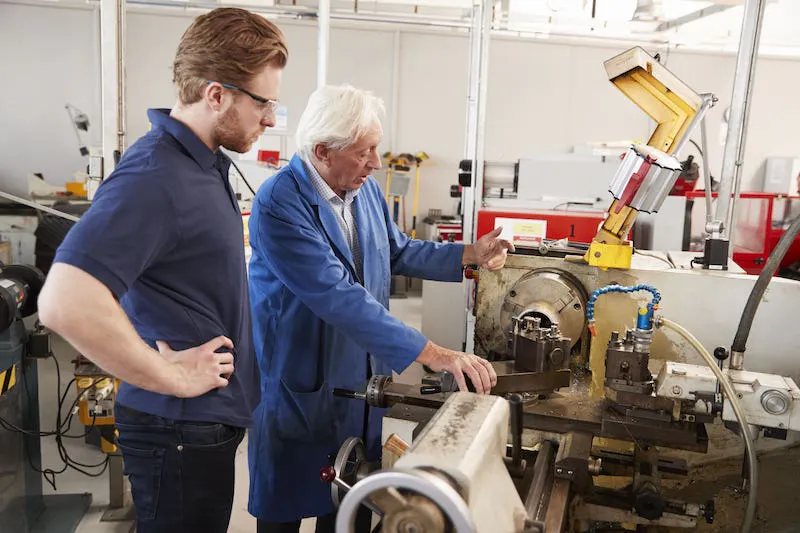
Unfortunately, maintenance troubleshooting is often performed in a somewhat haphazard way today, relying too often on trial and error, tribal knowledge, and good luck.
We’ll explain the world of maintenance troubleshooting, lay out basic components and steps for troubleshooting equipment, and offer our opinion about troubleshooting techniques and best practices.
What Is Maintenance Troubleshooting?
Maintenance troubleshooting is the process a maintenance technician must go through to identify the root cause of an asset performance problem. Ideally, it pulls together a combination of the following to identify the root cause of the problem:
Manufacturer information
Maintenance checklists
Individual asset history
Operator observation
Technician expertise
Potential causes of an asset breakdown may include a broken part, environmental causes, operator error, or a host of other reasons. Because the possibilities are vast, maintenance troubleshooting depends on the completeness and accuracy of the background data available as well as the ability of the technician to correctly synthesize all this information to identify the correct or at least most likely solution.
Components of Maintenance Troubleshooting and Repairs
In an ideal world, maintenance troubleshooting is performed in an environment where a strong asset operations management (AOM) culture and system exist.
AOM provides a solid foundation for both an effective preventive maintenance program, which will reduce the number of troubleshooting incidents in the first place, and a comprehensive data collection system, which will better inform any troubleshooting situations that do arise.
Operator Input
When an asset breaks down, the first critical step is how operators report the breakdown. Since those are the individuals who work day in and day out on the equipment, they can provide the most accurate description of the problem itself.
An AOM infrastructure allows and prompts for a detailed breakdown report that includes:
Space for how and when the problem occurred
Symptoms including noise, smells, and performance failures; and
Photos of problematic areas
All of this information can help get maintenance technicians off to the right start.
Comprehensive Background
Once technicians receive work orders, they must be able to access equipment instruction manuals, diagrams, and common troubleshooting problems for that particular piece of machinery.
Access to this information directly from the work order itself means that technicians can come up to speed quickly on the particular asset, beginning with isolating the most common reasons for asset failure.
Asset History
Along the same lines, an AOM system should hold a complete history of the asset in question. This data has historically resided in the heads of senior technicians who are called upon to answer questions and train younger employees. The problem with the former way of managing this data is that an organization can lose vast quantities of information when those senior employees retire or leave the company.
When this data is instead stored within an AOM system, it can be linked directly to related work orders and provide a more expansive view of what is happening with a particular asset.
For example, if the same part repeatedly causes equipment breakdowns, the problem may not be with the part itself but be caused by an external environmental factor or human error in the operation of the asset. If an older machine begins to break down more frequently, costing the company a great deal of money in repairs or downtime, an analysis may suggest that replacing the asset would be a better decision than continual repairs.
5 Basic Steps for Troubleshooting Equipment
Armed with the information above, maintenance troubleshooting can commence by following five basic steps in each situation.
Step 1: Consider the Symptoms
The information provided by the operator or line supervisor will be critical in this first step. Understanding what happened and the symptoms that followed in terms of noise, equipment jamming, or poor product quality will help narrow the list of possible causes.
Step 2: Isolate the Cause
By combining symptoms with knowledge about the asset itself, a technician should be able to isolate the problem to a particular area or component.
Step 3: Test Your Hypothesis
Once the problem is pinpointed, it’s important to test whether the component is not only malfunctioning within the asset itself but also failing to operate outside the machine.
Step 4: Repair or Replace
After testing the component confirms the problem, maintenance technicians should repair or replace the related parts.
Step 5: Test the Entire System
Once the new component has been replaced, the asset itself should be tested to ensure these symptoms have been resolved.
In addition to these five basic troubleshooting techniques, it’s important to step back and look at the entire picture of asset performance as well. For example, this process may help a technician identify which bearings need to be replaced on a particular asset, but if bearings are wearing down every week, there is some outside cause that needs to be addressed — not just continual replacement of bearings.
Why Is Maintenance Troubleshooting Important?
Understanding maintenance troubleshooting techniques and implementing best practices is important because breakdowns can cost manufacturers a great deal of money in a variety of areas, including:
Wasted Labor: When an asset breaks down, it’s likely that a company will be paying employees who can no longer do their jobs. For instance, if a truck suffers a breakdown during delivery, that driver will be sitting on the side of the road. If a production line is halted because a machine breaks, all those employees on that line are unable to continue to work.
Incorrect Repair: The resolution of the problem itself can be costly, especially if the correct solution is not immediately identified. Trial-and-error efforts can mean replacing the wrong part or fixing something that only covers a symptom, which often leads to another work order down the road.
Downtime: When production lines are not running due to asset breakdowns, a manufacturer is not making a product. This revenue loss coupled with the labor expenses still incurred can be a significant cost.
Customer Complaints: Broken equipment means that orders can no longer be fulfilled in time, so a business will incur costs in terms of dealing with customer complaints, providing reparation like product or future discounts, and losing loyal clients to the competition. Acquisition of new customers and reputation management can be costly.
Maintenance Troubleshooting Techniques and Best Practices
It’s clear that maintenance troubleshooting techniques go beyond the skills and training of individual technicians. Instead, troubleshooting needs to be one component of a larger infrastructure and system where all the parts can work in concert with one another.
Therefore, techniques and best practices should focus on creating an overall infrastructure that will make troubleshooting more effective and efficient. Here are some components that must be established for effective maintenance troubleshooting and repair.
The Right Culture
First, it’s important that an organization establishes the right cultural mindset among all employees from top management to new hires. When everyone works together as a cohesive team, focused on the optimization and performance of assets, the results can be incredible.
Unfortunately, many companies face siloed departments focused on performance metrics that look only at what gets done instead of why something gets done. Shifting the mindset to the value that each employee can add, instead of simply what tasks are completed, feeds into an overall culture that drives organizational performance and revenue.
The Right System
Second, it’s critical to have technological solutions that can facilitate efficient and effective troubleshooting. Not only should a solution be able to centralize and streamline data as well as provide key reports and analytics, but it must be easy enough for all employees to use quickly and effectively.
In addition, a mobile application is table stakes these days, especially in the world of maintenance. Technicians are constantly on the road, moving from asset to asset, or troubleshooting at different plants; they must be able to access complete data as well as input questions, observations, and work completed at the point of service.
With the right system, the maintenance team no longer becomes a cost center but a key revenue driver for the company.
The Right Recognition
Finally, having the right types of communication and recognition systems in place in order to share team, department, and asset wins can reinforce the culture and encourage best practices across not only troubleshooting efforts but also maintenance overall.
Be sure to recognize and reward the behavior of team members who go above and beyond in terms of:
Providing complete information
Playing a part in asset optimization and troubleshooting efforts; and
Working with others effectively to identify root causes that may not be immediately obvious
As employees see important metrics such as reduced downtime, improved productivity, and decreased cost reported regularly — and believe that personal recognition, compensation, and rewards are tied to company performance — they will feed into a continuous improvement cycle that will focus on asset performance, reduce overall problems, and effectively address troubleshooting issues when they do arise.
Optimize Your Maintenance Troubleshooting Techniques With UpKeep’s Asset Management Software
We can give you all the troubleshooting techniques in the world, but they won’t help as much if you don’t have a central place to manage asset operations. The asset management tool from UpKeep provides powerful components to help you manage the full asset lifecycle. You can easily automate preventive maintenance tasks from your mobile device, and our interface is easy for everyone to use.
Manage everything using the #1 asset management solution from UpKeep, including:
Asset downtime
Depreciation
Costs
Contact us today to start a free trial or schedule a tour and see our asset management system in action.
¿Quieres seguir leyendo?



Artículo
Inventario de mantenimiento | 7 métricas que deberías estar rastreando

Artículo
Root Cause Anaylsis vs. Shallow Cause Analysis



Artículo
Gestión de operaciones de activos para equipos de mantenimiento
MÁS DE 4000 EMPRESAS CONFÍAN EN LA GESTIÓN DE OPERACIONES DE ACTIVOS
Liderando el camino hacia un futuro mejor para el mantenimiento y la confiabilidad
Los datos de sus activos y equipos no pertenecen a un silo. UpKeep simplifica ver dónde se encuentra todo, todo en un solo lugar. Eso significa menos conjeturas y más tiempo para concentrarse en lo que importa.






![[Review Badge] Gartner Peer Insights (Dark)](https://www.datocms-assets.com/38028/1673900494-gartner-logo-dark.png?auto=compress&fm=webp&w=336)