Blog Post
What is EHS Software? Meaning and Business Case Explained
Replace spreadsheets and paper logs with cloud-based EHS software. Streamline incident reporting, automate compliance, and reduce workplace injuries effectively.


Key Takeaways
EHS software consolidates the management of Environment, Health, and Safety maintenance into a single source of truth.
EHS software minimizes hidden costs by preventing operational downtime and streamlining administrative bottlenecks through automation.
The industry has undergone a technological shift from reactive, siloed manual methods (spreadsheets/paper) to proactive, cloud-based SaaS platforms.
Versatile platforms support diverse use cases to ensure rigorous standards across varied operational environments.
What is the Meaning of EHS Software?
EHS software is a digital solution designed to manage data and processes related to Environment, Health, and Safety. These platforms centralize information to help organizations minimize risk, ensure regulatory compliance, and create safer workplaces.
An effective EHS platform addresses three core pillars:
Environment: Tracks waste management, air emissions, water quality, and other metrics to ensure sustainability.
Health: Monitors industrial hygiene, occupational health trends, and employee wellness to prevent long-term illness.
Safety: Manages incident reporting, risk assessments, and corrective actions to prevent workplace injuries and accidents.
Understanding EHS Terminology
While the core function remains the same, you might encounter different terms depending on the region or specific industry focus. This is because industry professionals often use several acronyms interchangeably when discussing these solutions.
Common variations used are shown in the table below
|
Acronym |
Meaning |
|
EHSMS |
Environmental Health and Safety Management System |
|
HSE |
Health, Safety, and Environment |
|
QHSE |
Quality, Health, Safety, and Environment |
|
OHS |
Occupational Health and Safety |
Regardless of the term used, the goal is to unify safety and compliance data into a single source of truth.
Evolution of EHS Software
Before
EHS software has shifted over the last decade. Safety managers used to rely on spreadsheets, paper, and siloed methods to track incidents and compliance logs. These manual methods often led to errors, lost documentation, and delayed responses to critical hazards.
Now
Modern cloud-based SaaS (Software as a Service) platforms have replaced these outdated tools. Technicians can now report safety hazards or complete inspections directly from the field using their mobile devices. This connectivity ensures that decision-makers have accurate data to implement corrective actions immediately.
What Does EHS Software Actually Do?
Primarily, EHS software functions to transform safety processes from a reactive administrative burden into a proactive operational strategy. A good software does this through the following capabilities.
Incident Management
Effective EHS platforms streamline the entire lifecycle of an incident, from the initial report to the final resolution. Key capabilities include:
Reporting: Capturing critical details like incident severity, location, and photos/videos directly from the job site.
Root Cause Analysis (RCA): Guiding teams through investigation methodologies to identify why an incident occurred and how to prevent recurrence.
OSHA Reporting: Automatically generating required compliance documents, such as OSHA Form 300 and 300A annual summaries, to reduce administrative errors.
Audit and Inspection Management
Digital tools replace cumbersome paper binders with dynamic, mobile-ready inspection workflows. This shift ensures that audits are completed consistently and that audit data is instantly accessible for analysis.
Modern audit features allow teams to:
Deploy Digital Checklists: Standardize maintenance inspection criteria across multiple sites to ensure uniformity.
Execute Field Audits: Enable field workers to complete audits offline or in low-connectivity environments using mobile devices.
Track Non-Conformance: Automatically trigger work orders or corrective actions when an inspection item fails, ensuring nothing slips through the cracks.
Compliance and Regulatory Management
Staying compliant requires rigorous tracking of permits, legal standards, and certification dates. EHS software acts as a central repository for these obligations, helping organizations avoid regulatory fines and legal risks.
Risk Management
An EHS software’s risk management modules help organizations identify potential dangers and implement controls to mitigate them. Companies can proactively prioritize risk areas and allocate resources toward the most critical safety gaps.
Core risk functions include:
Job Hazard Analysis (JHA): Identifying hazards associated with specific tasks and defining the necessary control measures before work begins.
Risk Matrices: Visualizing risks based on probability and severity to score and prioritize hazards.
Corrective and Preventive Actions (CAPA): Linking incidents or audit failures to specific corrective steps, assigning owners, and tracking progress to resolution.
Sustainability Reporting
Modern EHS software defines "Environment" by quantifying an organization's impact. As stakeholders increasingly demand more transparency, EHS platforms provide the data needed to drive sustainability initiatives.
The Business Case for EHS Software
Organizations that rely on fragmented systems are vulnerable to preventable risks and inefficiencies. Implementing a unified platform allows teams to work smarter, reduce operational costs, and build a resilient safety culture. Some benefits of implementing EHS software are explained below.
Data Centralization
A modern EHS platform connects every workflow, asset, and stakeholder on one platform to ensure everyone views the same real-time data. The digital tool also helps identify and remove duplicate data entries and administrative bottlenecks that waste time.
Cost Reduction
According to the National Safety Council, the total cost of work injuries in the U.S. alone was $176.5 billion in 2023, a figure larger than the GDP of many countries. EHS software drives measurable ROI by avoiding the costs of accidents and non-compliance.
Key areas of cost reduction include:
Regulatory Fines: Strengthening compliance helps organizations avoid expensive penalties from bodies like OSHA, FDA, and EPA.
Operational Downtime: Preventing accidents keeps critical assets running and minimizes unplanned production halts.
Insurance Liability: Improving safety records and demonstrating audit-readiness can reduce liability risks and associated costs.
Improved Safety Culture
Did you know?
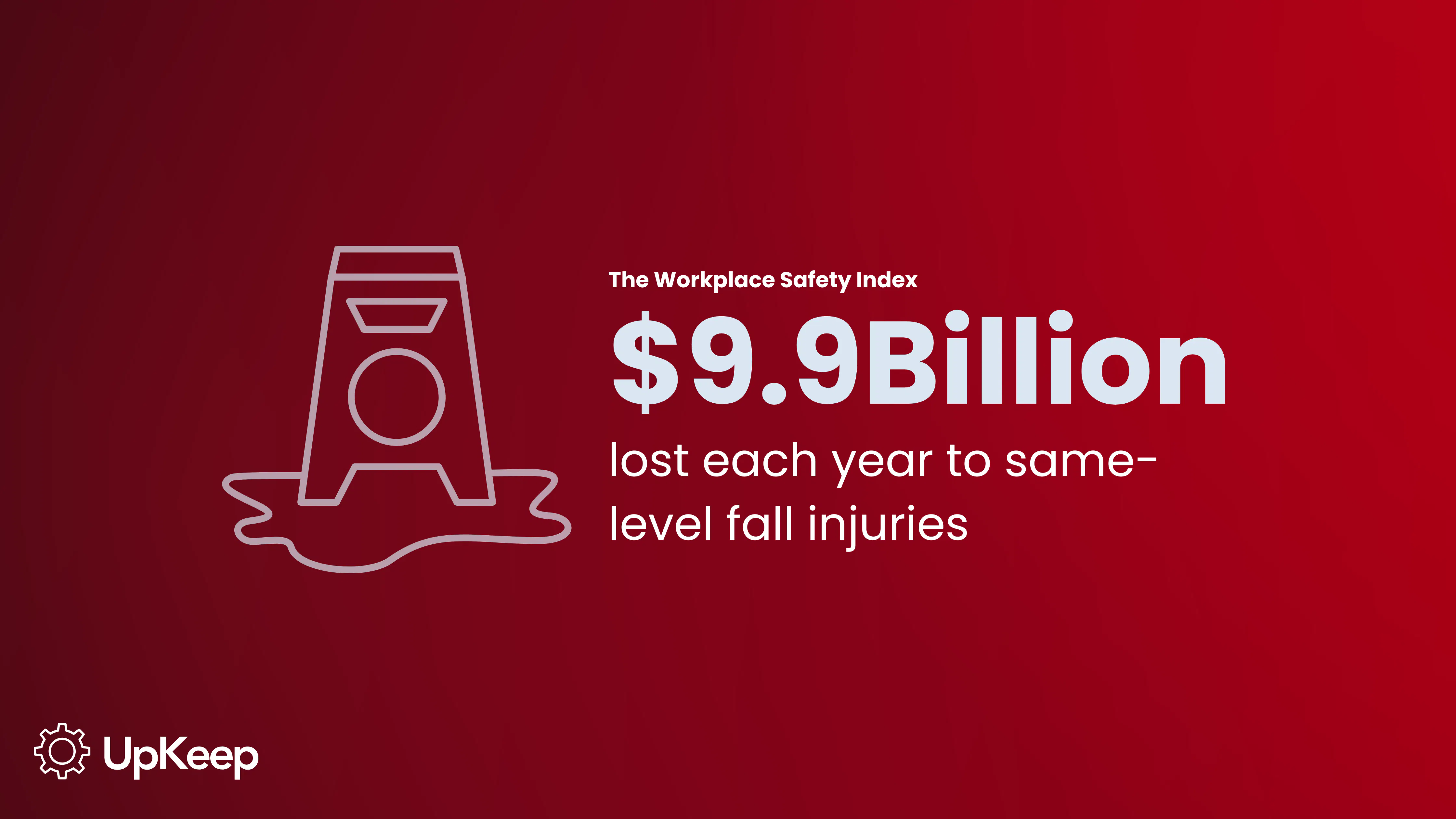
Wet floors are a huge safety hazard. The Workplace Safety Index estimates that falls on the same level cost businesses $9.9Billion in 2024.


A safety program is only effective if the frontline workforce actually participates in it. Modern EHS software engages workers with intuitive tools that fit naturally into their daily workflows.
Mobile apps allow workers to report hazards or complete inspections instantly from the field without returning to a desk.
Features like natural language processing and photo capture make logging data easy, which boosts adoption rates to as high as 94%.
Reliable tools demonstrate that the organization values the technician's time and safety, strengthening the overall safety culture.
Data-Driven Decision Making
EHS platforms leverage data and AI to uncover insights that guide smarter decisions and improve asset reliability. Advanced analytics capabilities enable teams to:
Predict failures and identify risks before they escalate into breakdowns or accidents
Visualize performance, track KPIs like incident rates and corrective actions in real time
Optimize operational strategies
Industry Use Cases for EHS Software
While the core principles of safety and compliance remain consistent, specific EHS applications vary significantly across different sectors. Versatile software platforms adapt to these unique operational needs, ensuring that every industry maintains rigorous safety standards.
Manufacturing
Safety managers use EHS software to enforce Lockout/Tagout (LOTO) procedures and manage machine guarding inspections. Key applications in the manufacturing industry include:
Automating OSHA 300 logs to prevent costly fines and simplify regulatory reporting.
Using mobile apps to report near-misses on the shop floor immediately, preventing future accidents.
Maintaining digital trails of all safety inspections to prove compliance during surprise audits.
Food and Beverage
Safety in this space involves consumer safety and product quality. EHS platforms support this sector by:
Digitizing cleaning checklists to ensure production lines meet hygiene standards
Tracking corrective actions quickly when audits reveal potential biological or chemical hazards.
Monitoring training records to ensure all staff hold valid food safety certifications.
Facilities and Property Management
EHS software centralizes these operations, ensuring that tenant safety and building compliance are never compromised. Common use cases are:
Scheduling and documenting regular inspections of fire extinguishers, alarms, and emergency exits.
Allowing staff to instantly report slip-and-fall hazards or broken lighting via mobile devices.
Energy and Utilities
Mobile-first EHS tools are essential here, as technicians need offline capabilities to perform safety checks in the field. Industry-specific functions include:
Enabling lone workers to conduct Job Hazard Analyses (JHAs) on-site before touching high-voltage equipment.
Tracking spill reports and environmental impact data to meet EPA regulations.
Linking safety data directly to asset maintenance histories to identify equipment that poses recurring risks.
The Bottom Line
Modern enterprises face compounding challenges regarding regulatory compliance, sustainability, and employee safety standards. Regulatory bodies like OSHA enforce strict guidelines, and failure to meet these standards results in severe financial penalties and downtime.
The financial implications of neglecting these standards are massive. According to OSHA, employers pay over $1 billion per week for direct workers' compensation costs for disabling, non-fatal workplace injuries. Adopting EHS software is the only scalable way to mitigate these risks and meet the demand for operational transparency.
Frequently Asked Questions About EHS Software Meaning
What type of ROI should I expect from EHS software?
The return on investment from EHS software comes from reduced downtime, administrative efficiency, and risk avoidance. EHS tools mitigate financial risk by helping companies avoid OSHA fines and costly liability claims. Organizations can see significant improvements, such as a 30% reduction in downtime and a 40–60% increase in preventive maintenance compliance.
Is EHS software necessary for small businesses?
Yes, because safety risks and regulatory requirements apply to organizations of all sizes. Small businesses (SMBs) are ideal candidates for EHS software because they often lack the dedicated administrative staff to manage complex paperwork manually. With these tools, they can punch above their weight.
Is EHS software the same as an ERP?
No, but they work best when connected. An Enterprise Resource Planning (ERP) system manages general business resources like finance, HR, and procurement, while EHS software is purpose-built for managing safety risks, incidents, and regulatory compliance.
What is the difference between EHS and HSE software?
These terms are used interchangeably depending on the region or industry preference. EHS stands for Environment, Health, and Safety, while HSE simply reorders the acronym to Health, Safety, and Environment. Both types of software work to unify safety, health, and environmental data into a single platform for better visibility and compliance.
4,000+ COMPANIES RELY ON ASSET OPERATIONS MANAGEMENT
Leading the Way to a Better Future for Maintenance and Reliability
Your asset and equipment data doesn't belong in a silo. UpKeep makes it simple to see where everything stands, all in one place. That means less guesswork and more time to focus on what matters.






![[Review Badge] Gartner Peer Insights (Dark)](https://www.datocms-assets.com/38028/1673900494-gartner-logo-dark.png?auto=compress&fm=webp&w=336)