Entrada en el Blog

Ejemplos de mantenimiento preventivo que ahorran y desperdician dinero

El costo del mantenimiento preventivo no siempre ahorra dinero a su organización. En esta publicación, observamos ejemplos de cuándo lo hace o no.

Duración: 13 minutes
Ryan Chan
Publicado el October 22, 2024
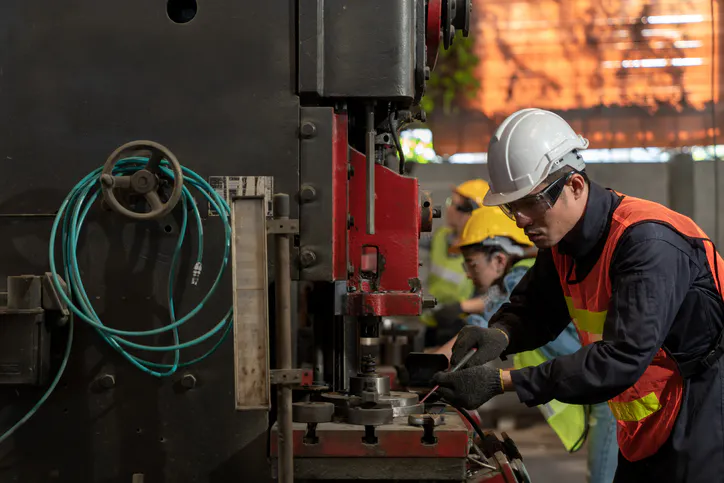
maintenance technician performing preventive maintenance on machine

Understanding Preventive Maintenance (PM) Costs: How To Optimize Your Investment and Performance

Your preventive maintenance operations have the potential to be rich and robust or a complete monetary bust. 

Understanding your preventive maintenance costs may help you realize the potential of PM for incredible cost-saving efforts. Misunderstanding the fiscal potential of PM could have you missing out on an excellent opportunity to enhance productivity, minimize downtime, and keep your maintenance overhead from throwing your operations overboard. 

Let’s clear up some of the confusion and take a deep dive into the complexities of preventive maintenance costs. 

What Is Preventive Maintenance (PM)?

Preventive maintenance is a type of proactive maintenance that seeks to keep assets in good order by anticipating when there might be issues. Rather than waiting for equipment to accrue issues or break down altogether, preventive maintenance reduces unscheduled downtime and major repairs by taking care of key components before something goes wrong.

Preventive maintenance aims to increase asset lifetime by preventing excess depreciation and impairment or untimely breakdown. 

Is Preventive Maintenance Worth It?

Yes! Along with keeping your operations functional, studies have shown that preventive maintenance may:

  • Yield around a 500% ROI

  • Save 12-18% of costs compared to reactive maintenance

  • Decrease unplanned downtime by over 18% and result in over 83% fewer defects in production

And these cost savings are nothing to sneeze at! Consider how much you spend on breakdowns, which can add up to downtime and maintenance costs. Preventive maintenance helps you pinch every penny out of your operations by preventing these failures in the first place. 

But your PM plans are only as effective as your planning. Relying on analog methods and paper routes may leave wasteful and costing gaps in your maintenance program. 

But with the power of UpKeep, you can easily schedule tasks and submit work orders. As one of the leading maintenance management software on the market, our comprehensive tool combines the strengths of EAM and CMMS to cover your organization's unique needs. 

Learn more about our maintenance management capabilities or schedule a demo today. 


Request a Demo


How Does a Preventive Maintenance Strategy Boost ROI?

The cost-effectiveness of preventive maintenance lies in its ability to prevent breakdowns, failures, and accidents before they happen. It’s proactive as opposed to reactive, which can be disruptive, costly, and shorten the lifespan of equipment. 

Preventive maintenance boosts ROI because it:

Minimizes Asset Downtime

We all know time is money  — and downtime is downright costly. 

For big, Fortune 1,000 companies, downtime may cost upwards of $1 million per hour. While the average mid-sized company generally spends $1 million per year on operation-interrupting incidents, some enterprises may spend more than $60 million annually.

Preventive maintenance is central to reducing asset downtime. By preemptively addressing potential issues before they escalate into catastrophic failures, preventive maintenance greatly contributes to increased maintenance ROI. By adhering to a regular schedule of maintenance tasks, calibrations, and inspections, organizations can identify and rectify problems early on, staving off unexpected breakdowns and downtime.

When assets remain in ideal working conditions:

  • Operations are seamless and devoid of unscheduled downtime.

  • Asset lifespans are extended.

  • Overall maintenance costs are reduced.

It's simple: safeguarding your investment with preventive maintenance means fewer interruptions and more efficiency. 

Reduces Major Repair Costs

Fewer breakdowns mean fewer major repairs. Consider how much preventive maintenance is required for a forklift. Generally, forklifts must be inspected every 250 to 300 usage hours. These inspections may catch costly repairs before they grow into bigger problems. 

For example, one study from Conger Industries found that 20% of most forklift repairs are due to leaks. On average, these repairs cost around $720, and most leaks are due to:

  • Abrasion: This may be corrected by securing hoses to keep them from rubbing on abrasive surfaces.

  • High temperatures: This can be solved by implementing hoses with the proper temperature ratings and replacing them regularly.

  • Tube erosion: This can be prevented through regular inspection and replacement.

Notice how these leading causes of failures can be avoided with preventive maintenance? 

Extends Assets Life

Preventive maintenance ensures the life expectancy of your assets by keeping them in prime condition. Our assets are bound to degrade over time, but less so if they are well taken care of. 

Regular cleanings can prevent pre-aging erosion. Consistent lubrication and oil changes ensure your equipment is not working harder than it should to operate. Routine inspections catch minor wear-and-tear damage that may devolve into asset-totaling breaks. 

Previous studies suggest that scheduling preventive maintenance may extend machine life by 20-40% while also improving machine reliability by 35-50%.

What may seem like a bunch of menial, unnecessary tasks is actually minor cost tradeoffs for buying another piece of equipment that gave out before its anticipated lifespan. 

Increases Productivity

Eliminating the looming threat of imposing disruptions caused by unexpected breakdowns and repairs means: 

  • Uninterrupted production schedules

  • Little to no downtime

  • A successful allocation of resources sans waste

  • Workers can shift their focus from potential threats to other non-maintenance-related operation tasks

When you rely on preventive maintenance to keep your operations running smoothly, you foster a culture prioritizing proactive problem-solving and continuous improvement over scrambling reactive measures. By taking this approach, you are encouraging your teams to collaborate while also sharing insights for enhanced operational efficiency. 

When you eliminate all the static caused by unexpected breakdowns, you can maximize your productivity and run operations without skipping a beat.

Do you know what else can help you keep up with your maintenance operations at an unmatched pace?

UpKeep’s CMMS software is more than a tool to help schedule work orders. It’s a holistic maintenance instrument that can also help you:

  • Manage multi-location, day-to-day maintenance life cycles.

  • Optimize asset utilization.

  • Gain insights into real-time performance data.

  • Employ an ecosystem approach.

  • Bridge the gaps between maintenance, reliability, and operations.

How To Practice Cost-Effective Preventive Maintenance: 8 Strategies You’ll Want To Implement

#1: Determine When Preventive Maintenance Should be Used or Not 

In the manufacturing world, waste means money lost. While preventive maintenance is key to cutting waste and reducing costs, there is such a thing as “over maintenance” when it comes to PM strategies. According to experts, poor preventive maintenance plans may waste up to 50% of money spent on the maintenance budget. 

To optimize your preventive maintenance costs and avoid overspending on unnecessary tasks, you may need to put your PM plan on a diet. Let’s review some examples of where PM is necessary, unnecessary, and questionable. 

Needed

Lubrication of critical equipment is often used as an example of necessary preventive maintenance. Most people are aware that regular oil changes on vehicles are an important maintenance task to keep their car engines in good working order. The same is true of many different types of manufacturing equipment.

The worst-case scenario is that a critical piece of equipment breaks down and stops production. Depending on how long the repair takes, whether replacement parts are in stock, how long new parts would take to arrive from a supplier, whether labor could be redirected, and the value of goods produced on that line, a company could be looking at thousands or even millions of lost dollars per day.

Other maintenance tasks that may be involved in preventive maintenance routines include:

  • Regular cleaning

  • Inspections

  • Calibrating instruments and tools

  • Replacing parts and components

Not Needed 

One common example used to illustrate a task that does not require preventive maintenance is replacing light bulbs in general office space. The worst-case scenario is a light bulb burns out. Since office space frequently has more than one light bulb in a single area, the consequence of a burned-out light bulb is very minor. 

Although the likelihood of a light bulb burning out is fairly high, the cost of new light bulbs and the labor of changing them can also be high, especially if done while the current light is still functioning. A preventive task could mitigate failure, but given the low impact of a burned-out bulb, it is simply not warranted.

Questionable

Air filter changes on heating, ventilating, and air conditioning (HVAC) equipment are one of those questionable preventive maintenance items.

The worst case is the facility’s HVAC system goes down, yet the likelihood of that happening is low. HVAC systems will still run with a clogged filter, but efficiency is reduced, and other parts may be stressed as a result. The task of changing the filter can mitigate risk, and the cost of a new filter is relatively low. Therefore, it’s probably a good idea to change the filter, but the next question is how frequently?

Industry experts disagree about the frequency; recommendations vary from every three months to every nine months. Choosing to over-maintain something like filter changes can add unnecessary costs over time. However, waiting too long can cause inefficiencies and shorten the lifespan of an HVAC system.

#2: Determine the Ideal PM Schedule for Each Asset

The type and amount of preventive maintenance required varies depending on the specific needs of different assets. 

Because of this, it can be challenging to establish a successful and cost-effective preventive maintenance program without analyzing each piece of equipment and categorizing its maintenance needs. However, implementing a multi-approach to each of your assets may eliminate PM cost waste while ensuring your assets are well-maintained and properly working. 

Some PM types you may want to consider for your assets include:

Time-Based PM

A good rule of thumb is to start with a time-based preventive maintenance program for most of your assets. Time-based PM, also known as periodic maintenance, type of PM dictates that a particular piece of equipment should be inspected, cleaned, or maintained daily, monthly, yearly, or at some other predetermined interval, regardless of usage. 

An example of time-based preventive maintenance is changing the oil in your car every three months or your furnace filter for your HVAC every six months.

Reliability-Centered PM

Reliability-centered maintenance (RCM) is a preventive maintenance approach that aims to overhaul and optimize PM plans by identifying potential failure modes before they occur. 

With RCM, maintenance managers may be able to proactively assess the risks and schedule maintenance tasks before failure occurs. Unlike time-based or usage-based PM, reliability-centered maintenance relies on an as-needed basis and often involves KPIs and other sensor monitoring tools.

Usage-Based PM

In some cases, you may want to consider a usage-based maintenance schedule, which relies on meter readings to determine when maintenance activities occur. 

This may be based on things like mileage or the number of hours used. Heavily used equipment should be serviced more frequently than underused machinery. For example, you’d want to change the oil in your car every 3,000 miles, even if you drove that distance in one month instead of three.

Usage-based maintenance is generally the best method for commercial fleets and machinery. By selecting which assets will be maintained with this PM type, you can help increase preventive maintenance if your operating conditions ramp up, reduce maintenance costs, and prevent over-maintaining equipment (especially since maintenance tasks can actually harm equipment if done too frequently). 

#3: Analyze Historical Maintenance Data

Historical maintenance logs are a gold mine of valuable data that may be used to spot specific breakdown patterns and maintenance trends. Even if you follow protocols to a tee, intermittent breakdowns—failures that occur sporadically and unpredictably—can happen. By using insights from historical data, you can discover the source of potential vulnerabilities and make concessions to proactively prevent them.

UpKeep allows you to centralize data, manuals, and previous inspection documentation in one easy place. It even lets you attach documents, notes, and previous work orders to tasks so technicians can use the info for speedy repairs. 

Our intuitive Data Hub allows you to sync asset data to and from any platform to create a digital ecosystem that:

  • Collects asset data

  • Standardizes data into common data models

  • Automates data-driven asset operations

#4: Implement Risk-Based Prioritization

Unless you have a maintenance budget the size of NASA’s (which is $250 million annually, yet they still have a $3.3 billion in maintenance backlog due to outdated infrastructure), your facility probably can’t afford to spend time performing PM tasks on things like power drills. 

When it comes to PM tasks, prioritize your critical assets first to avoid fiscal waste. 

Risk-based prioritization helps you pinpoint your most critical assets by calculating each equipment’s risk priority number (RPN). You can use the following equation to find this:

Severity x Occurrence x Detection = Risk Priority Number 

Each variable can be ranked from one to ten, and each variable represents the following:

  • Severity: Indicates the severity of the failure of your operations (one being the least and ten being the most severe)

  • Occurrence: Indicates the chance of an asset failing (one being the least and ten being the most likely) 

  • Detection: Indicates the probability of detecting asset failure(one being the most likely to detect and ten being the least likely)

Once you’ve calculated the RPN for each asset, you can rank each asset from the highest RPN to the lowest RPN.

#5: Use KPIs to Assess Equipment Health in Real Time

You can’t fix what you’re not measuring. Take a look at industry-accepted KPIs and use them to measure your maintenance efforts. If your wrench time is much lower than industry standards, for instance, and you're seeing low reliability as a result, it's easy to pinpoint the problem and implement a solution.

Without equipment monitoring, it's difficult to understand the true health of your assets. In fact, with condition-based maintenance (CBM), it's possible to monitor parameters you didn't even know played a role in your equipment's health, like vibration.

CBM can help optimize costs for a preventive maintenance program by allowing you to perform only necessary maintenance. For instance, if a part needs to be lubricated only when it reaches a certain vibration level, that's the optimal time to perform that task.

#6: Apply Reliability Maintenance Centered Principles

Observe and integrate the five pillars of reliability-centered maintenance (RCM) into your maintenance practices. These essential pillars include:

  1. Identifying failure points

  2. Focusing on maintaining function

  3. Identifying failure modes

  4. Developing a routine maintenance strategy for each asset

#7: Train Staff

Strong training programs are a worthwhile investment. By setting your workers up for success, you can maximize your facility's efficiency. With preventive maintenance assistance and tools, your employees can help your preventive maintenance program flourish. The more oversight the operators and frontline employees can provide, the better your preventive maintenance can be.

#8: Fine-Tune Your Preventive Maintenance Program

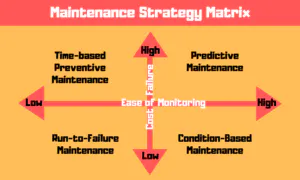
While preventive maintenance is amazing, it's important to remember that it is only one type of maintenance. Preventive maintenance is not the right strategy for every asset in your facility, and misapplying it is a surefire way to waste money and resources. Rather, it should be a part of your overall maintenance strategy. Other important types of maintenance to include in your facility are:

  • Predictive maintenance

  • Condition-based maintenance

  • Reactive maintenance

  • Run-to-failure maintenance

And the list goes on! A complete maintenance program will incorporate many different types of maintenance in order to help control costs and improve efficiency.

How Much Does Preventive Maintenance Cost?

Depending on your industry, maintenance costs could make up anywhere between 15% to 40% of your overall production costs. On the higher end, this may be due to waste. A low preventive maintenance budget signifies an optimized maintenance plan that generates ROI and operates on low-cost initiatives.

Preventive maintenance costs can be chalked up to how well your PM plan works and how you implement it. UpKeep allows for maximum PM implementation by providing a centralized platform that keeps your maintenance operations connected and streamlined like never before. 

From work order prioritization and automation to robust integration and advanced communication, our CMMS tool is helping manufacturing facilities around the nation!

Reduce Preventive Maintenance Costs and Optimize Your PM Planning With the Power of UpKeep

Preventive maintenance is extremely important for ensuring your equipment runs as smoothly as possible at all times. However, to avoid unnecessary costs and labor, it’s important to use preventive maintenance scheduling tools to enhance your efforts.

Thousands of companies rely on UpKeep’s advanced CMMS software to optimize their preventive maintenance costs by:

  • Gaining visibility into maintenance costs

  • Scheduling equipment maintenance tasks easily

  • Creating and setting alerts to ensure the correct parts are always available

  • Making any work order repeat based on a set day, week, or month interval

  • Creating automated PMs based on machine cycles, vehicle mileage, or any other unit of measure

With UpKeep’s maintenance management software, you can:

  • Decrease equipment and asset downtime by up to 26%

  • Ensure consistent cost and budget records

  • Elongate your asset and equipment lifetime by up to 11%

  • Achieve up to 652% ROI by integrating UpKeep into your workflow

  • Reduce maintenance response and work order completion times

  • Streamline communication with unlimited free requesters

  • And more

Ready to join the revolution and enhance your PM capabilities with UpKeep? Learn more or start your free trial today.


Request a Demo


¿Quieres seguir leyendo?

Buena elección. ¡Tenemos más artículos sobre mantenimiento!

Artículo

Cómo crear una lista de verificación de mantenimiento preventivo

Las listas de verificación de mantenimiento preventivo protegen a su equipo, a sus clientes y a sus resultados. Aprenda a...
Ver artículo

Artículo

Una guía paso a paso para elegir la estrategia de mantenimiento adecuada para su equipo

Elegir la estrategia de mantenimiento adecuada para un activo determinado requiere que evalúe el costo de la falla y la...
Ver artículo

Artículo

Mantenimiento preventivo y RCM explicados

Aunque tanto el mantenimiento preventivo como el mantenimiento centrado en la confiabilidad tienen los mismos objetivos finales, abordan la asignación...
Ver artículo

MÁS DE 4000 EMPRESAS CONFÍAN EN LA GESTIÓN DE OPERACIONES DE ACTIVOS

Liderando el camino hacia un futuro mejor para el mantenimiento y la confiabilidad

Los datos de sus activos y equipos no pertenecen a un silo. UpKeep simplifica ver dónde se encuentra todo, todo en un solo lugar. Eso significa menos conjeturas y más tiempo para concentrarse en lo que importa.

IDC CMMS Leader 2021
[Review Badge] Gartner Peer Insights (Dark)