Entrada en el Blog
8 Equipment Maintenance Best Practices to Boost Service Uptime
Equipment maintenance best practices to reduce downtime, extend asset life, and build a proactive maintenance strategy.


Key Takeaways
Effective equipment maintenance is a core business strategy and not a reactive cost center.
The most critical best practice is implementing a CMMS to manage work orders, track complete asset histories, and enable all other maintenance strategies.
A successful equipment maintenance program depends on empowering technicians with mobile-first tools, ongoing training, and the autonomy to solve problems.
A successful strategy relies on tracking a mix of leading indicators to predict future health and lagging indicators to analyze past performance.
What is Equipment Maintenance?
Equipment maintenance encompasses all tasks that ensure a company's physical assets remain in good working order. This includes servicing, repairing, and replacing parts to ensure equipment operates safely and efficiently. Viewing maintenance as a core business strategy, rather than just a cost center, is essential for long-term operational success and profitability. Effective maintenance management helps organizations avoid costly breakdowns, extend the lifespan of critical machinery, and maintain a safe working environment.
Consequences of Neglecting Equipment Maintenance
Ignoring or deferring necessary maintenance can lead to adverse outcomes that ripple across an organization. When equipment is not properly cared for, it directly impacts efficiency, safety, and the bottom line.
Common consequences of neglecting equipment maintenance include:
Increased downtime: This is the most immediate consequence. Unexpected equipment failures halt production, leading to missed deadlines and lost revenue.
Higher repair costs: Reactive or emergency maintenance is almost always more expensive than planned maintenance. It often involves overtime labor, rush shipping for parts, and more extensive damage to the machine.
Reduced asset lifespan: Poor maintenance accelerates wear and tear, forcing companies to replace expensive machinery much sooner than expected.
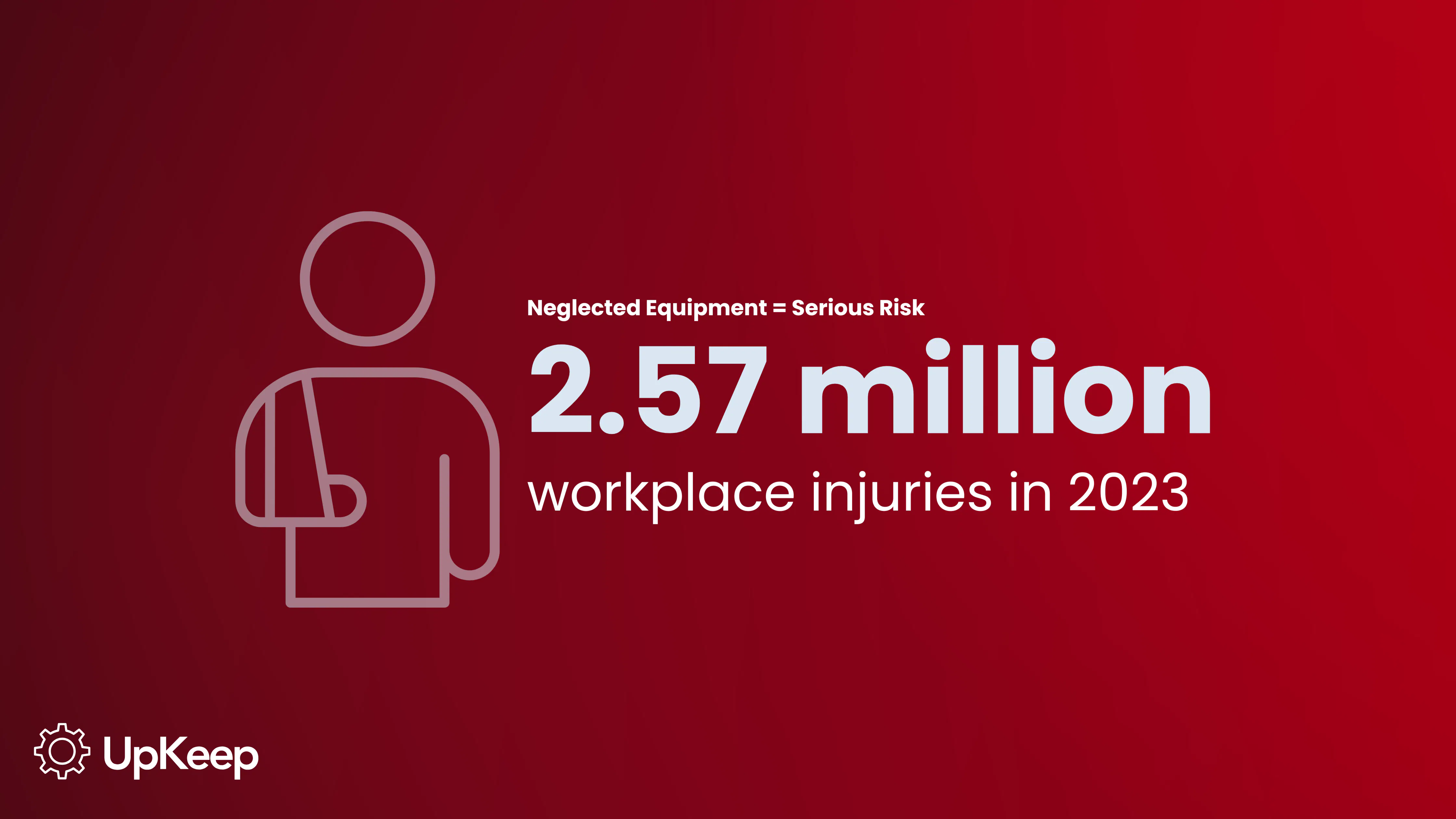
Safety and compliance risks: Neglected equipment can become hazardous, leading to workplace accidents and injuries. The United States Bureau of Labor Statistics recorded 2,569,000 workplace injuries in 2023. Neglected equipment maintenance also creates significant risk for failing safety audits or violating compliance regulations.


Lower product quality: Failing equipment may not perform to specification, resulting in defective products, scrap, and rework.
8 Equipment Maintenance Best Practices to Implement Today
For every maintenance or facility manager, implementing a structured maintenance program requires adopting best practices that create consistency, visibility, and accountability. These best practices are designed to move a team from reactive chaos to proactive control.
1. Adopt a Centralized, Mobile-Friendly CMMS
A modern Computerized Maintenance Management System (CMMS) is the most critical tool for implementing best practices. It serves as the central source of truth for all maintenance activities, eliminating siloed data, lost paperwork, and fragmented communication.
A CMMS is designed to manage the core of your maintenance operations:
Work orders: The system should manage the entire lifecycle of work orders, which includes creation, assignment, real-time tracking, and closure. This ensures every task is documented and nothing gets lost.
Asset history: It provides a centralized view to track all asset data, including repair histories, downtime, associated costs, and performance. This data is essential for monitoring key metrics, such as Mean Time to Repair (MTTR) and Mean Time Before Failures (MTBF).
MRO inventory: A CMMS allows you to track spare parts, monitor consumption, set reorder thresholds, and assign inventory directly to work orders. This solves the pain point of inefficiently tracking parts and costs.
2. Empower Your Maintenance Team
A world-class maintenance strategy is only as good as the team that executes it. Investing in your technicians' skills, safety, and sense of ownership is a critical best practice that directly impacts equipment reliability and team retention.
A well-trained and empowered team is more efficient, makes fewer errors, and is more likely to adopt new systems and processes. You can do this by:
Providing ongoing technical skills training: Maintenance technology and equipment are constantly evolving. A proactive training program ensures that your team is well-prepared for new challenges as maintenance technology and equipment continue to evolve.
Conducting regular safety and compliance training: Regular, documented training on safety and compliance is crucial for audit readiness. This includes equipment-specific safety procedures, OSHA certifications, and annual refresher courses on industry-specific standards and regulations. OSHA’s Training Library contains information about training requirements and resources to protect workers during maintenance and ensure compliance.
Empowering technicians with the right tools: Empowerment stems from providing your technicians with the necessary information and autonomy to solve problems effectively. Instead of forcing them to rely on paper, walk back to a desktop, or chase down supervisors, empower them with mobile-first tools. This trust and modern tooling are proven to boost technician adoption and job satisfaction.
3. Foster a Culture of Safety and Compliance
A strong safety culture is not separate from a maintenance culture; they are the same. Integrating safety protocols directly into daily maintenance practices is essential for protecting technicians and ensuring long-term operational stability.
For many industries, especially manufacturing, food production, and pharma, failing to meet regulatory requirements can have severe consequences. A missed inspection or a lost work order can lead to OSHA fines, lost certifications, or complete production halts.
Safety should be built into every maintenance task, rather than being treated as an afterthought or a separate checklist. This begins by providing technicians with the tools to easily identify and report issues.
Hazard and incident reporting: Empower your team to log safety events, incidents, near misses, and observations as they happen. Using a mobile tool with reporting features can make it simple for any field worker to submit a report without requiring a full login.
Job hazard analysis (JHA): Before work begins, teams should identify potential hazards and establish control measures to mitigate them. Digitizing this process within your maintenance platform ensures it becomes a standard part of the workflow.
Corrective and preventive actions (CAPAs): When an incident is logged, it must be linked to actionable follow-ups. A safety system enables you to assign owners and track the progress of corrective and preventive actions, ensuring the issue is truly resolved.
4. Build a Feedback Loop for Continuous Improvement
A static maintenance plan will eventually fail. The most successful maintenance programs are dynamic systems that constantly learn and adapt. Establishing a formal feedback loop ensures that you are not just fixing problems but are actively using data from those problems to prevent them from happening again, driving continuous improvement. Two crucial steps for building a feedback loop are;
Conduct root cause analysis for failures: When a significant failure occurs, simply fixing it is not enough. You must understand why it happened. Conducting a formal Root Cause Analysis (RCA) enables your team to move beyond treating symptoms and empowers them to solve the underlying problem. Instead of just replacing a failed part, an RCA investigates the sequence of events and conditions that led to the failure. This process provides visibility into recurring failures, allowing you to implement lasting solutions.
Use insights to refine your core maintenance strategy: Utilize data from your RCAs and KPI reviews to optimize every aspect of your maintenance operation. For example, insights from your CMMS may lead you to adjust preventive maintenance schedules, optimize your spare parts inventory, or identify specific assets that require replacement.
5. Create Checklists for Daily, Weekly, and Monthly Inspections
Preventive maintenance (PM) relies on consistency. Creating standardized checklists is the best way to ensure that technicians perform routine inspections and tasks correctly every time. By categorizing tasks by frequency, you can optimize your team's wrench time and make sure nothing is missed.
A modern CMMS is the ideal place to build, manage, and track these tasks. Instead of using paper clipboards, technicians can access these checklists on a mobile app, complete with instructions, photos, and sign-off requirements, right at their fingertips.
Daily checklists: These are for quick, walk-around inspections. They often include visual checks, cleaning tasks, and verifying fluid levels to catch obvious issues before they become problems.
Weekly checklists: These involve more detailed tasks that don't need daily attention. This might include testing specific functions, lubricating moving parts, or performing calibrations.
Monthly/quarterly checklists: These are for more in-depth preventive maintenance. They often involve replacing wear parts, conducting thorough cleanings, or running detailed diagnostics as part of your scheduled PM program.
Using a CMMS to manage these checklists ensures every inspection is completed on schedule and creates an audit-proof digital log of all maintenance activity.
6. Make Maintenance a Collective Responsibility
Effective equipment care is not just the job of the maintenance department; it is a collective action that involves the entire operation. A modern CMMS breaks down information silos and transforms maintenance from a departmental task into a transparent, team-wide process. When operators, supervisors, and technicians all share a single platform, communication improves, and problems are resolved more efficiently.
This collective approach starts by empowering everyone to be part of the solution. Operators and other employees are often the first to notice small issues. Once a request is submitted, stakeholders can view real-time status updates, and features such as in-app chat and push notifications streamline communication between teams. This visibility ensures that supervisors are aware of what is happening, technicians receive the necessary context, and everyone works from the same, accurate information.
7. Allocating Resources Strategically for Maximum Efficiency
An accurate maintenance budget is the primary tool for efficient resource allocation and management. It provides a clear plan for managing funds, ensuring that financial resources are allocated correctly to routine inspections, repairs, and upgrades. A strong budget is built on data, requiring accurate historical information, including asset maintenance history, failure data, and work order details. This data allows planners to identify waste, control costs, and justify their financial needs.
To allocate resources effectively, teams must evaluate the cost-benefit of different maintenance strategies. A Cost-Benefit Analysis (CBA) in maintenance weighs the cost of proactive actions (like preventive maintenance) against the potential losses from inaction (like a breakdown).
This analysis helps determine the best strategy for each asset. For some non-critical equipment, a reactive "run-to-failure" approach may be more cost-effective than continuous upkeep. For critical assets, the cost of preventive maintenance is almost always justified.
An effective CBA framework involves:
Identifying cost drivers: Defining the specific causes of expenses for a maintenance action.
Quantifying costs and benefits: Assigning a monetary value to all costs (labor, parts) and benefits (avoided downtime, safety). This must include the cost of inaction as a baseline comparison.
Calculating net present value (NPV): A positive NPV indicates that the financial benefits of the maintenance strategy outweigh its costs.
Prioritizing based on risk: Using criticality analysis to rank assets based on the risk of failure. This ensures that resources are focused on high-impact assets where failure would cause significant safety, operational, or financial disruption.
8. Measure Maintenance Success with Clear KPIs
To determine if your maintenance strategy is effective, you must track specific Key Performance Indicators (KPIs). These metrics move your operation away from guesswork and provide objective data to measure performance and drive business objectives. Maintenance KPIs are generally categorized into two types: lagging indicators, which reflect past results, and leading indicators, which predict future performance.
Lagging indicators measure the outcome of past events, providing a historical perspective on your performance. While they don't prevent failures, they are essential for identifying problem assets and understanding long-term reliability. On the other hand, leading indicators measure the health and effectiveness of your current maintenance program. They are predictive and help you see if your proactive efforts are on track to prevent future failures.
Indicator | Type | Definition | Implication |
Mean Time Between Failures (MTBF) | Lagging | Average time an asset operates before it breaks down. | A higher MTBF indicates greater asset reliability. |
Mean Time To Repair (MTTR) | Lagging | Average time to fix a failed asset to operational status. | A lower MTTR shows your team is efficient. |
Preventive Maintenance (PM) Compliance | Leading | Percentage of scheduled PM tasks completed on time. | High PM compliance predicts reduced future downtime. |
Schedule Compliance | Leading | Adherence to the established weekly work schedule. | High Schedule Compliance predicts reduced downtime. |
Work Order Backlog | Leading | Amount of unfinished or overdue maintenance work. | A growing backlog is indicative of being under-resourced or inefficient. |
UpKeep CMMS Shifts Equipment Maintenance from Reactive to Reliable
Achieving excellence in equipment maintenance means moving from a reactive culture to a proactive, reliable strategy. The foundation of this shift is adopting a CMMS as your single source of truth for all work orders, asset history, and MRO inventory.
UpKeep CMMS excels in this area, enabling you to establish control, empower your team, foster a safety culture, measure what matters, and continually improve. By making maintenance a collective, data-driven action, you can move your team from a cost center to a key value driver, ensuring reliability, safety, and efficiency. Sign up for a free trial today.
FAQs About Equipment Maintenance Best Practices
What tools are essential for effective maintenance?
The most essential tool for modern maintenance is a Computerized Maintenance Management System (CMMS). It serves as the single source of truth for your entire operation. A CMMS allows you to digitize and manage all core maintenance activities, including:
Work order creation, tracking, and closure
Asset history, performance data, and repair logs
MRO inventory and spare parts tracking
Safety checklists, incident reporting, and compliance logs
Mobile-first tools are also critical. Providing your technicians with a CMMS app on their phones gives them instant access to asset history, digital manuals, and work orders in the field, eliminating wasted time.
How to boost wrench time without rushing jobs?
Wrench time is the portion of a technician's day spent actively working on equipment. The goal is to maximize this time by minimizing the time spent on other tasks, such as paperwork, walking back and forth, or searching for parts and information.
You can boost wrench time by:
Reducing paperwork: Digitize work orders, checklists, and logs in a mobile CMMS.
Providing context: Equip technicians with all necessary information at their fingertips via a mobile app, including asset history, manuals, photos, and parts locations. This stops them from wasting hours or days going back and forth to a central office or computer.
What is the easiest way to schedule maintenance tasks?
The most effective way is to utilize the scheduling features within a CMMS. Instead of relying on manual tools like whiteboards or spreadsheets, a CMMS allows you to:
Automate preventive maintenance (PM): Set up recurring PMs based on a calendar schedule or usage data, allowing them to be auto-scheduled and tracked.
Centralize requests: Manage all incoming work requests in a single location.
Use smart tools: Upkeep offers AI-powered features, including a Smart Scheduler that recommends the most suitable technician for a job based on availability and priority.
MÁS DE 4000 EMPRESAS CONFÍAN EN LA GESTIÓN DE OPERACIONES DE ACTIVOS
Liderando el camino hacia un futuro mejor para el mantenimiento y la confiabilidad
Los datos de sus activos y equipos no pertenecen a un silo. UpKeep simplifica ver dónde se encuentra todo, todo en un solo lugar. Eso significa menos conjeturas y más tiempo para concentrarse en lo que importa.






![[Review Badge] Gartner Peer Insights (Dark)](https://www.datocms-assets.com/38028/1673900494-gartner-logo-dark.png?auto=compress&fm=webp&w=336)