Blog Post
300 Million Square Feet of Office Space To Be Vacant by 2030. What Happens to the Building Workers?
Five years after I founded UpKeep, we were growing and ready for a new office space. I signed a seven-year lease for a 200-person space in Los Angeles in February 2020 – probably one of the most unlucky times in recent history to sign a long-term office lease. Oops. As everyone knows, COVID ramped up immediately after and the vast majority of employees began working from home.


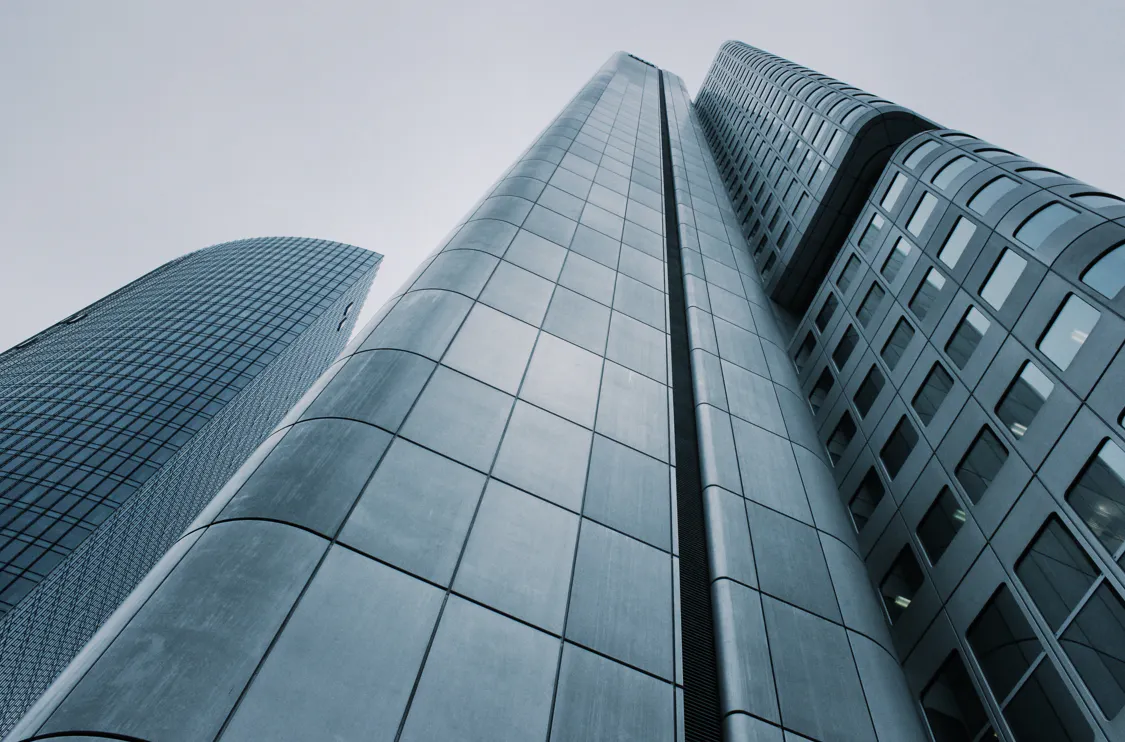
I know our story is a common one, and we’re starting to see the effects trickle into the greater commercial real estate market. Just last week, The Wall Street Journal reported that a San Francisco office tower valued at $300 million four years ago sits mostly empty and might sell for 80 percent less today.
The Financial Times noted that office vacancy rates have reached an all-time high of 18.6 percent during the first quarter of 2023 and expect that by 2030, 300 million square feet of space will be unoccupied. It’s easy to understand why. Most companies, just like UpKeep, are unlikely to renew long-term leases as they end over the next several years.
What will happen to building workers that manage the unoccupied commercial real estate?
Think of all the employees who work behind the scenes to keep commercial buildings running on a day-to-day basis: janitors, groundskeepers, maintenance technicians, security staff, cleaning crews, and specialty technicians for electrical, plumbing and HVAC. Where will they all go?
For example, consider that businesses employ one maintenance technician for every 50,000 square feet of space. If 300 million square feet of office space vanishes, that will displace 6,000 maintenance workers alone by the end of the decade. At the same time, the Bureau of Labor Statistics predicts that the demand for technicians is still expected to grow at about 5 percent from 2021 to 2031, about as fast as the average for all occupations. However, most of this growth will be to replace those who retire or change professions.
It’s hard to know how maintenance teams previously employed in commercial office buildings will shift. I predict that many may move to industrial facilities like those that are growing up around semiconductor and alternative energy components production. A few may join equipment manufacturers who are expanding their service centers to provide specialty predictive maintenance on the machines they sell. Some may upskill and transition to tangential fields such as technology or education. Others may move to residential buildings, which may require additional maintenance as remote and hybrid work continues. The more people live and work from home, the more maintenance residential space will likely require.
As for those maintenance teams still staffing low-vacancy office buildings, they will face never-before-considered problems. For example, human beings generate about 250 BTU/hour at rest. Heating, ventilating, and air conditioning (HVAC) systems have traditionally been designed to handle near-full occupancy of commercial space, taking into account human body heat. When buildings are vacant, not only can significant energy be wasted for the comfort of only a few employees, but existing systems may actually have trouble generating enough heat without human body heat.
Commercial real estate trends may follow patterns of shopping malls and healthcare: the return to real.
I think it’s interesting to compare what’s happening in commercial real estate today to what happened with shopping malls over the last several decades. Malls grew in popularity, peaking in 1990 when 19 new malls opened across the country. Changes in shopping behavior, malls falling into disrepair, the aging of typical mall customers, and eventually, the rise of online purchasing all contributed to the slow death of malls, which reached peak vacancy at 9.4 percent in 2011.
Yet an article in The Business Journals reported that the four main shopping center segments, comprising indoor malls, open-air centers, grocery-anchored shopping centers, and outlet malls, have shown significant recovery and even growth after the pandemic.
Just like COVID radically accelerated remote and hybrid work arrangements that will now have long-range consequences, the pandemic fast-tracked things like telehealth in the healthcare industry. According to an American Medical Association (AMA) survey, “While only 14.3 percent of physicians worked in practices that use videoconferencing to provide patient visits in 2018 this share was at 70.3 percent in 2020. Not only was that share high in psychiatry (85.8 percent) it was also above 76 percent for each of the primary care specialties and near or above 80 percent for many medical specialties.”
Today, the number of telehealth visits is decreasing, due to both post-pandemic reimbursement changes and the desire to return to in-person care.
More employees will return to the office seeking in-person connections
Although I don’t think the world will ever return to a time when the vast majority of people work 9-to-5 in an office, I do believe we’ll see a greater number coming back into a common workspace. Why? Because human beings are social creatures and we need to be in relationship with one another. Communication, empathy, creativity and collaboration are so much richer in an in-person environment.
Just like people are returning to common shopping areas even when they can have just about anything delivered to their door today or going to see healthcare providers despite to wide availability of online or telehealth solutions, employees will once again come back to the office for planning meetings, brainstorming sessions, or team-building activities.
That leaves the maintenance team with a tall order: how to care for all the systems and equipment for fewer occupants in the short-run in a cost-effective manner while being ready for future changes as businesses continue to titrate their in-person census for the long-run.
Want to keep reading?



Article
Nuclear Fusion Developments: What Would Free Energy Mean for Manufacturing?


Article
More Than 50% of All Facilities Management is Now Outsourced. Before You Follow Suit, Decide Whether It’s a Differentiator for Your Business



Article
US-China Trade Tensions Escalate: Analyzing the Impact on Manufacturing and the Global Economy
4,000+ COMPANIES RELY ON ASSET OPERATIONS MANAGEMENT
Leading the Way to a Better Future for Maintenance and Reliability
Your asset and equipment data doesn't belong in a silo. UpKeep makes it simple to see where everything stands, all in one place. That means less guesswork and more time to focus on what matters.






![[Review Badge] Gartner Peer Insights (Dark)](https://www.datocms-assets.com/38028/1673900494-gartner-logo-dark.png?auto=compress&fm=webp&w=336)