Blog Post
US-China Trade Tensions Escalate: Analyzing the Impact on Manufacturing and the Global Economy
I've been watching with interest as the conflict between China and Taiwan continues to escalate. Besides the obvious concern of world war and the loss of human life, it’s becoming clear that perhaps an equally significant danger is the overall impact this conflict may have on manufacturing and the entire global economy.


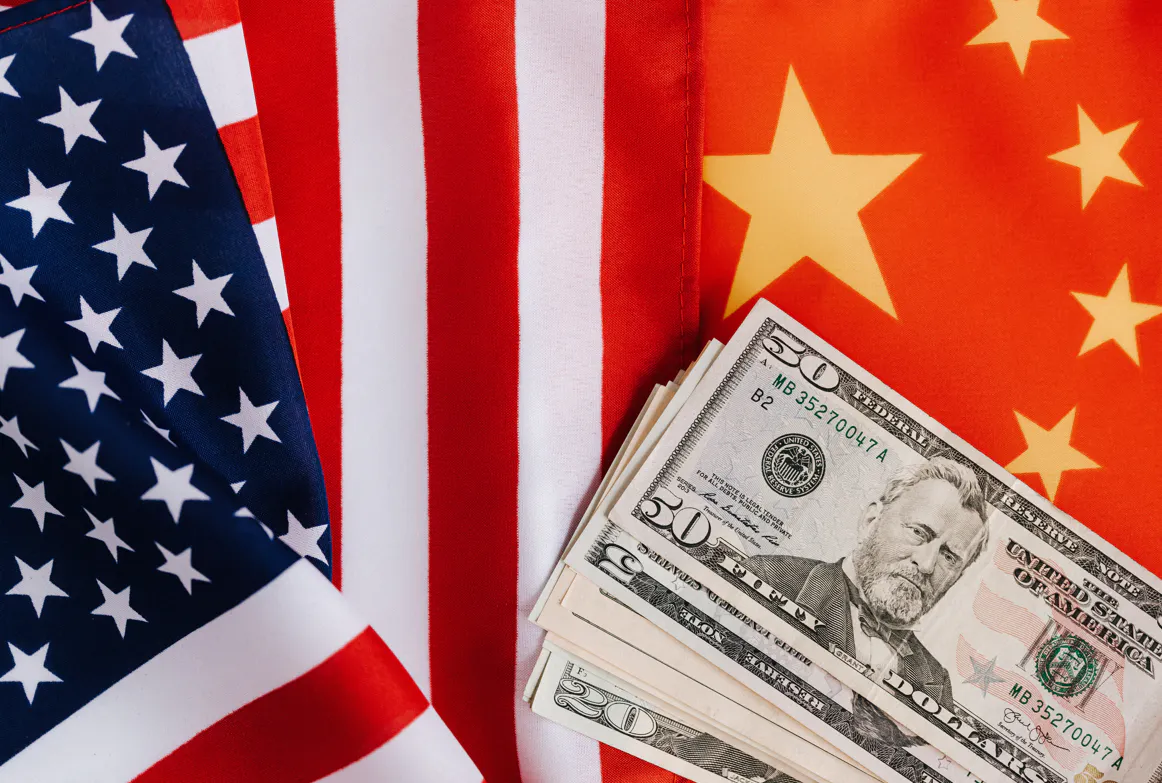
According to Business Insider, “a Chinese invasion of Taiwan could mean trillions of dollars in losses and a serious global recession.” Glenn O'Donnell, the vice president and research director at Forrester, told the publication that "if China would invade Taiwan, that would be the biggest impact we've seen to the global economy — possibly ever. This could be bigger than 1929."
If China invades Taiwan, the US must defend Taiwan not only for political and moral reasons but also to protect our economy
Although the U.S. has historically supported Taiwan to maintain political stability in the Asia-Pacific region as well as uphold international and moral norms, I think the current situation requires us to solidify this support in order to protect our country's economy.
Taiwan is one of the world's largest producers of semiconductor chips and the home of TSMC, the global leader in chip manufacturing. As we already know from the recent pandemic, a supply chain disruption of semiconductor chips will slow down the manufacture of everything from cars to smartphones. For example, Ford failed to produce more than 1.1 million cars as a result of the chip shortage during COVID.
$52.7 billion CHIPS Act geared toward reducing U.S. dependence on other countries
I believe we are at an important crossroad. Although we have to defend Taiwan in the current conflict because of the potential impact on the U.S. economy, it's also time to reduce America's reliance on other countries for key components like semiconductor ships.
The recently passed CHIPS and Science Act is designed to bolster U.S. leadership in the semiconductor industry, providing $52.7 billion for American semiconductor research, development, manufacturing, and workforce development. Over time, it is the hope that this stimulus will jump start more semiconductor production within our own country.
While tariffs and taxes may be necessary, they can negatively affect a free and open economy
Taxes and tariffs have conventionally been used as a response to international conflicts. Instead of a physical war, I think we may see a continuation of our government adding and adjusting taxes and tariffs. For example, the Trump Administration increased the cost of duties on Chinese imports several years ago. Today, CNBC reports that the current administration is “eager not to do anything that could be viewed by China as an escalation while also seeking to avoid being seen as retreating in the face of the communist country’s aggression.”
Yet, I think it's clear that taxes and tariffs can have significant effects on an open economy, affecting both demand and supply of imports and exports and the price of those goods. While tariffs can protect domestic manufacturing industries by making imported goods more expensive, China may retaliate, resulting in higher prices overall and even greater global inflation.
Improving US-China relations may spur greater global innovation in the long run
As I look beyond this current conflict, I believe it's important for our country to continue improving our relationship with China. The reality is that we have outsourced a great deal of manufacturing to China, giving the country an opportunity to find ways not only to reduce costs but to excel in high-end advanced manufacturing and reliability. We cannot now ignore the second most powerful economy in the world.
Instead, I believe there's an opportunity for companies in both countries to accelerate innovation, which naturally results from a global, open market competition.
A multifaceted approach is needed to protect our country from inevitable conflicts
I think the bottom line is that we need to pursue all of these avenues: back Taiwan in the current conflict, shore up domestic manufacturing, and improve our relationship with China for long-term growth and stability.
Global challenges, whether in the form of pandemics, geopolitical conflict, or natural disasters, will continue to arise. In our increasingly interdependent world, these situations will inevitably affect supply chains and local economies. Yes, we can get through these conflicts and difficulties, as I think COVID has proven, but at what cost? The current China-Taiwan situation is just another reminder that we need to continue to put into place those things that can minimize the impact of these inevitable conflicts.
Want to keep reading?


Article
More Than 50% of All Facilities Management is Now Outsourced. Before You Follow Suit, Decide Whether It’s a Differentiator for Your Business



Article
AI is a Real Threat to Human Civilization. Let Me Explain Why



Article
As AI and GPT Infiltrate the Digital World, It’s Time to Give the Built World the Respect It Deserves
4,000+ COMPANIES RELY ON ASSET OPERATIONS MANAGEMENT
Leading the Way to a Better Future for Maintenance and Reliability
Your asset and equipment data doesn't belong in a silo. UpKeep makes it simple to see where everything stands, all in one place. That means less guesswork and more time to focus on what matters.






![[Review Badge] Gartner Peer Insights (Dark)](https://www.datocms-assets.com/38028/1673900494-gartner-logo-dark.png?auto=compress&fm=webp&w=336)