Blog Post
Your HVAC Preventive Maintenance Checklist Template for Optimal Performance
Stay on top of your HVAC maintenance with this handy checklist and ensure your system remains in tip-top shape as long as possible.


Key Takeaways
A comprehensive HVAC preventive maintenance checklist covers heating, ventilation, cooling, and controls to catch emerging issues before they become costly emergencies.
Proactive HVAC maintenance can trim energy consumption by 5%–15% and extend equipment life by two to five years.
Digital checklists powered by a CMMS automate scheduling, generate work orders, and build a complete service history that turns maintenance data into a strategic advantage.
The goal of any HVAC preventive maintenance checklist is to catch major problems before they happen. A minor repair completed in spring or fall, when weather is mild and demand is low, dramatically reduces the risk of a breakdown during the extreme days of summer or winter. Beyond avoiding emergencies, consistent preventive maintenance (PM) reduces energy bills, prevents costly repairs, and maintains the comfort of everyone in your facility.
Here's what facility managers need to know to build and execute an effective HVAC PM checklist.
How HVAC Preventive Maintenance Reduces Costs and Improves Efficiency
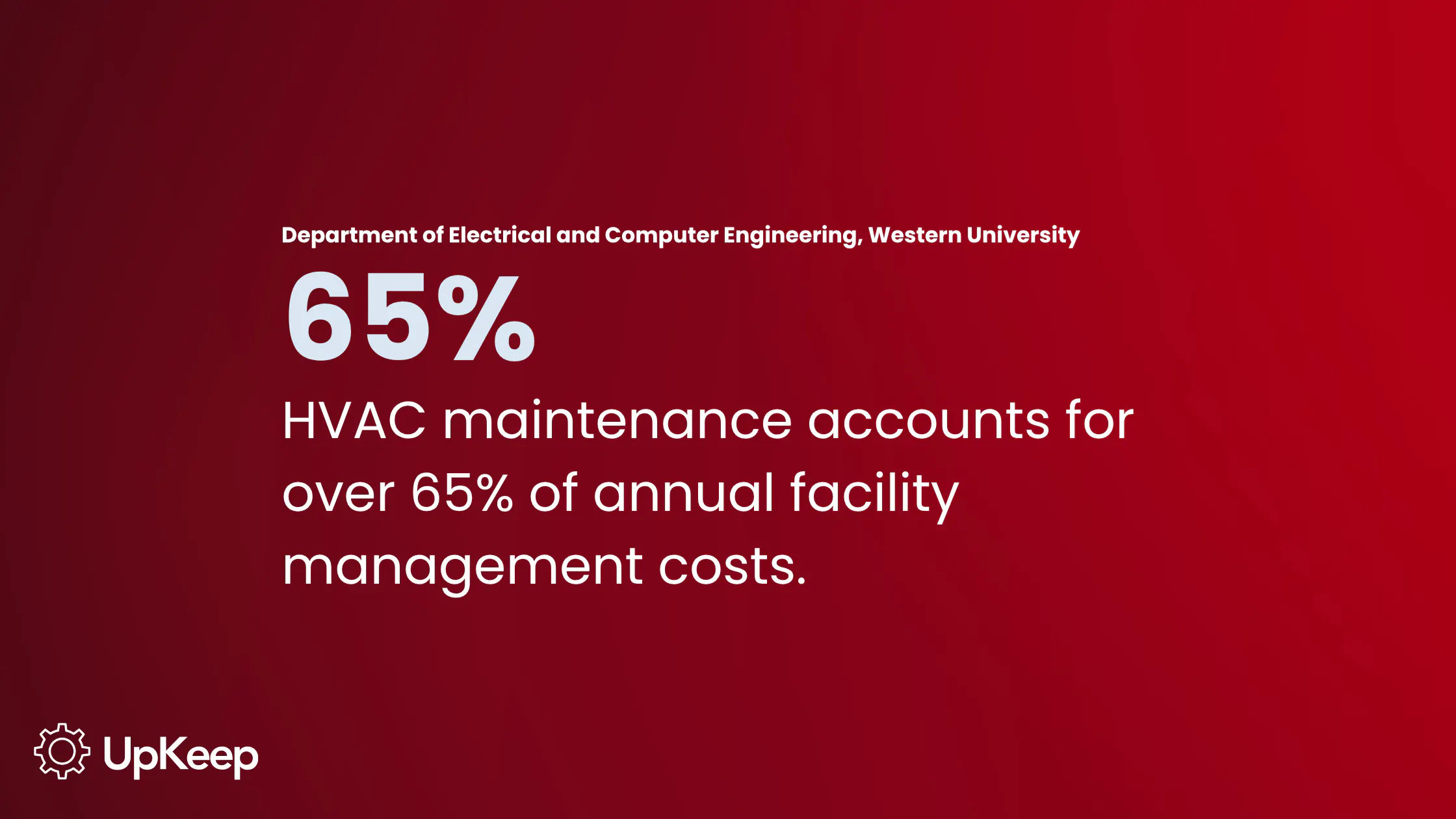
Preventive maintenance is a scheduled series of expert inspections and adjustments designed to keep heating and cooling systems running at their best. Research finds that HVAC maintenance specifically accounts for over 65% of annual facility management costs. Small, consistent adjustments such as proactively cleaning filters, checking refrigerant levels, or calibrating thermostats will fine-tune airflow and heat exchange, making operating costs more predictable and budgets easier to manage.


The long-term payoff is just as significant. A system that receives regular, professional upkeep can last two to five years longer than one that's ignored, sparing you early and expensive replacement costs. Regular HVAC inspections also help businesses determine when aging equipment has reached the point where a newer, more efficient system makes financial sense.
Comprehensive HVAC Preventive Maintenance Checklist Overview
Key Components of an Effective HVAC Maintenance Checklist
An effective HVAC PM checklist covers four core areas of the system’s components: the heating system, ventilation (ductwork, fans, blowers, and filters), the cooling system (evaporator and condenser coils), and controls (thermostats, sensors, and electrical connections). Neglecting any of these components can lead to inefficient performance, higher energy costs, reduced air quality, and avoidable repair bills.
Use this free HVAC preventive maintenance checklist template to get started.
A Breakdown of Your HVAC System Components and Maintenance
|
Heating Burners, heat exchanger, gas lines, flame sensors → Fall inspection |
Cooling Evaporator + condenser coils, refrigerant levels, compressor → Spring inspection |
|
Ventilation Ductwork, fans, blowers, filters → Year-round |
Controls Thermostats, electrical connections, voltage + current testing → Annual inspection |
Seasonal Maintenance: Tailoring Your PM Checklist for Each Season
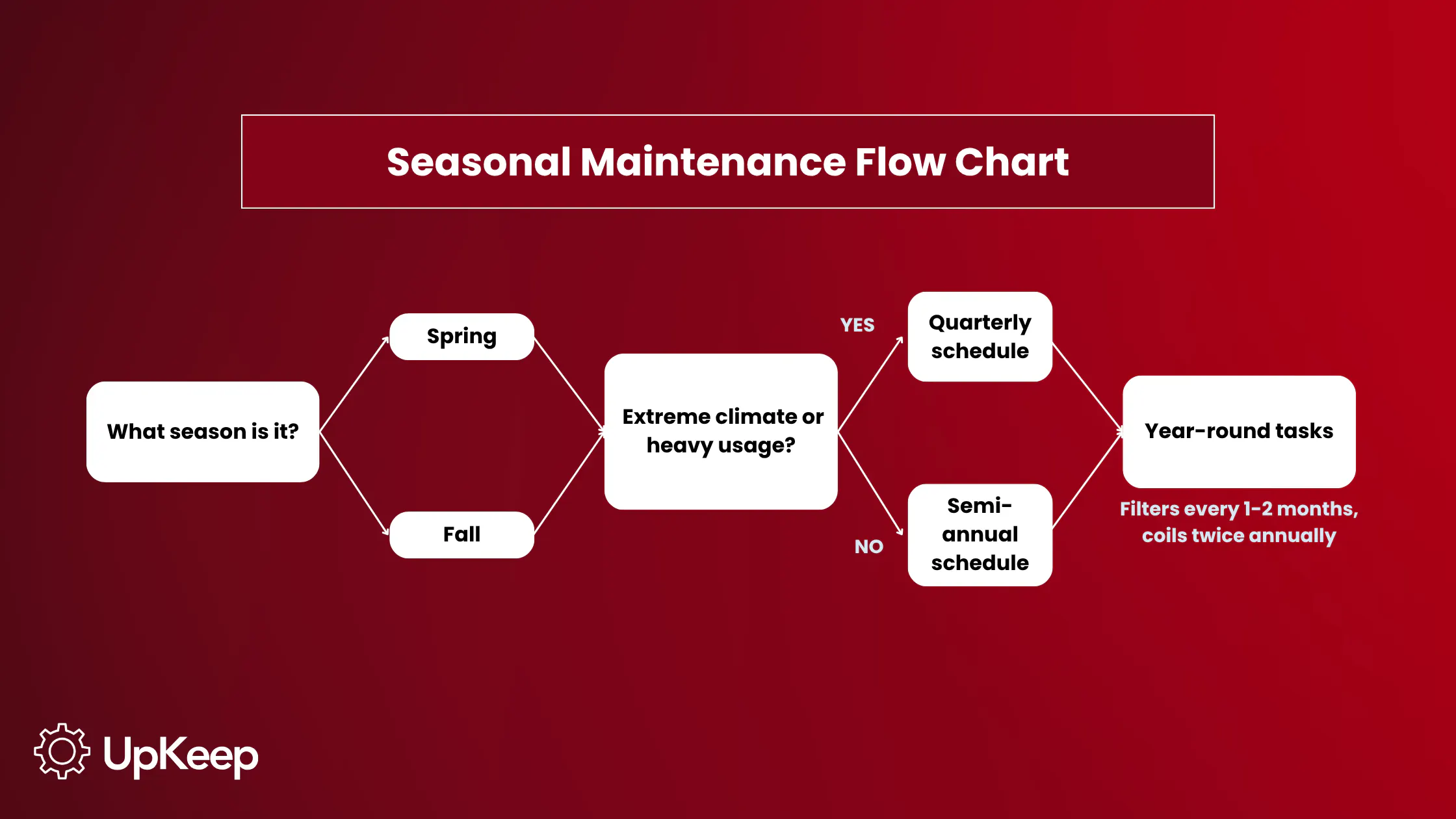
HVAC systems don't operate the same year-round, and your checklist shouldn't either. Spring preventive tasks should focus on preparing the air conditioning system for peak cooling demand, while fall inspections ready the heating system before temperatures drop. For facilities with heavy HVAC usage or in extreme climates, a quarterly maintenance schedule may be more appropriate than the standard, semi-annual cadence.
Other components (particularly safety-related items) may need more frequent attention. Changing filters every one to three months and washing outdoor coils twice a year are vital to healthy airflow and system balance throughout the year. For those requiring more rigorous inspection, a predictive maintenance system may be more appropriate so that sensors can monitor the asset’s temperature and pressure changes in real time.
Seasonal Maintenance Flow Chart

Emergency Preparedness: Maintaining HVAC Systems for Unexpected Events
To prepare for when a failure or hazard is detected, keep a documented emergency contact list of licensed HVAC technicians and ensure facility staff know how to shut down systems safely.
To ensure nothing gets missed during your regular maintenance inspections, streamline precautions with automated reminders and work orders. UpKeep's CMMS automates preventive maintenance scheduling, generates work orders when inspections are due, and tracks the complete service history of every HVAC asset. This gives facility managers a single source of truth and eliminates the manual follow-up that can turn small issues into prolonged emergencies.
Detailed HVAC Preventive Maintenance Tasks
Ventilation: Best Practices for Safe Airflow
Clogged blower components or malfunctioning fans can reduce a system's efficiency by up to 15%. Protecting your HVAC system’s ventilation is therefore a significantly impactful maintenance task.
Filter changes are one of the highest ROI tasks on a PM checklist. A clogged air filter forces the blower and other components to work harder and longer to move air through the system. Technicians can replace disposable filters every one to three months and clean reusable filters as recommended to keep airflow unrestricted and improve air quality.
It’s also important to inspect and clean ductwork and ensure there are no cracks or breaks in duct connectors. Replace or fix any worn screws, gaskets, or latches. Then, seal any gaps or leaks in duct joints with mastic or foil tape for efficient air delivery.
Manager’s Pro Tip:
Duct leakage is the most common cause of inefficiency in HVAC systems, with studies finding 90%–100% of tested systems require air duct sealing or repairs.
Coil Maintenance: Inspecting Condenser and Evaporator Coils
A clean condenser coil dramatically improves heat rejection and reduces how long the air compressor has to run, which significantly lowers energy usage during peak cooling season and preserves chiller function. Cleaning an outdoor condenser coil entails removing leaves, dirt, and grass clippings, then applying a non-acidic coil cleaner. Straightening any bent fins and clearing vegetation at least two feet around the unit helps guarantee unrestricted airflow.
Evaporator coils absorb heat and humidity from indoor air. Dust, dirt, mold, or ice can make the system less efficient, raise energy bills, and cause other components to wear down more quickly.
Refrigerant Levels: The Importance of Regular Checks
A low refrigerant charge can indicate leaks that cause costly compressor damage, making it critical to measure refrigerant levels during the spring AC start-up and fall heat pump inspections.
Manager’s Pro Tip:
Don't assume a new system is fully charged. Field studies by Purdue University show that both new and operational systems are frequently about 15% undercharged.
Electrical Connections: Safety and Reliability Checks
Faulty electrical connections can cause unsafe operations and reduce the component lifespan. Technicians should conduct comprehensive electrical control testing annually, including tightening all electrical connections and measuring voltage and current on motors.
Thermostat Functionality Testing and Calibration
A thermostat that's out of calibration can cause short cycling or extended run times, leading to uneven comfort and wasted energy. Calibrating the sensor ensures temperature readings accurately match actual room conditions so the system only cycles when needed.
Heat Exchangers and Gas Lines: Inspection Protocols
A dirty burner or cracked heat exchanger causes unsafe operation, but a series of safety inspections eliminates fire hazards and dangerous leaks. Check all gas connections, gas pressure, and burner combustion. Thoroughly clean burners, flame sensors, and the heat exchanger. For extra precaution, this is also a good time for technicians to check fire alarms and smoke detectors.
System Performance Evaluation: Ensuring Efficiency
After completing all individual tasks, run a full system cycle and observe for unusual noises, odors, or inconsistent temperatures that may signal a lingering issue.
Keep a close watch for warning signs like unusual, persistent noises, frequent temperature swings or short cyclings, unexpected spikes in energy bills, visible refrigerant leaks, ice forming on coils, or noticeably reduced airflow. These indicate internal failures that only a certified technician can safely diagnose.
Inspect both interior and exterior equipment and verify that all access panels and guards are in proper working order before signing off on any inspection.
A rigorous HVAC preventive maintenance checklist is one of the highest-leverage tools a facility manager has for controlling costs, extending asset life, and keeping every person in the building comfortable and safe. The difference between a reactive maintenance program and a proactive one often comes down to staying consistent season after season, using the same structured process. With a thorough PM checklist template and the right platform behind it, HVAC maintenance goes from a burden to a competitive advantage.
FAQs: Your HVAC PM Checklist Questions Answered
What should be included in a comprehensive HVAC PM checklist?
An effective checklist should always include inspecting or replacing air filters, cleaning condenser and evaporator coils, testing refrigerant levels, lubricating motors and bearings, verifying thermostat accuracy, and checking ductwork for leaks. These tasks collectively ensure system balance, improve indoor air quality, and boost energy efficiency.
How often should HVAC maintenance tasks be scheduled and reviewed?
HVAC systems typically require two seasonal service visits, one in spring for cooling preparation and another in fall for heating readiness. These are in addition to filter changes every one to three months and a comprehensive annual tune-up to extend equipment life and prevent mid-season failures.
Can HVAC maintenance checklists be customized for specific equipment?
An asset operations management system lets you build checklists from equipment owner manuals or based on past experience, and modify schedules and tasks as the system collects data from ongoing maintenance and repairs.
UpKeep's deeply configurable platform supports custom checklists, work order types, and asset-specific PM triggers so that every checklist fits the equipment it serves.
Ready to streamline your HVAC preventive maintenance program? UpKeep's Studio lets you build custom checklists and automate workflows — no developers required. Request a demo today.
4,000+ COMPANIES RELY ON ASSET OPERATIONS MANAGEMENT
Leading the Way to a Better Future for Maintenance and Reliability
Your asset and equipment data doesn't belong in a silo. UpKeep makes it simple to see where everything stands, all in one place. That means less guesswork and more time to focus on what matters.






![[Review Badge] Gartner Peer Insights (Dark)](https://www.datocms-assets.com/38028/1673900494-gartner-logo-dark.png?auto=compress&fm=webp&w=336)