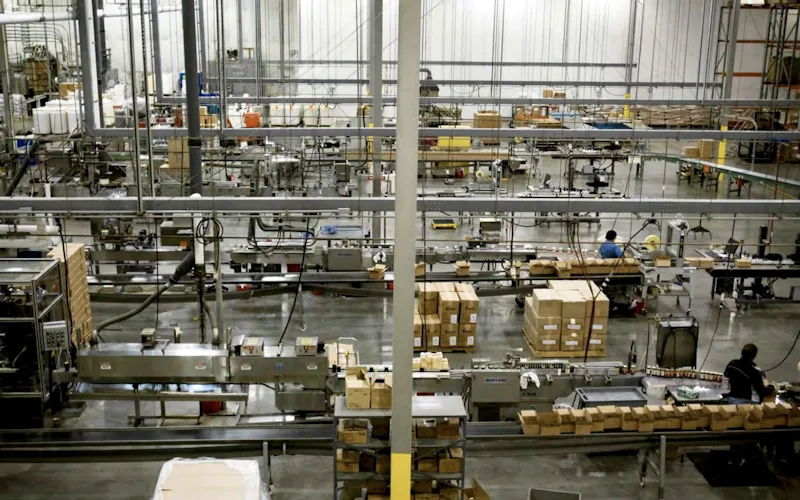







Operations manager reviewing production performance on a plant floor

FOR OPERATIONS TEAMS

CMMS Software for Operations Teams

You are asked about output, not work orders.

Maintenance, safety and parts on one record, so downtime, cost and capacity can be answered from the same numbers the floor is working from rather than from a monthly spreadsheet.

  • One record across sites
  • Cost and downtime by asset
  • No monthly roll-up
McDonald'sCaterpillarPepsiChevronUnileverYamahaShellStratasys

Trusted by 4,000+ industrial teams

WHAT CHANGES

What operations gets that maintenance software usually does not give it

Operations is measured on output and cost, and most maintenance systems report on tickets. These are the four gaps that shows up as.

Downtime is reported monthly, compiled by hand, and already too late to act on.

Downtime accrues against the asset as work is recorded, so the current number is available on any day of the month.

Every site reports differently, so comparing them takes a week and an argument.

One asset naming scheme and one set of statuses across sites, compared on the same numbers.

Maintenance spend arrives as invoices with no link to the equipment that caused it.

Labor and parts land on the asset, so cost per asset and cost per site come out of the record.

A capital request is argued from a story about the machine everyone knows is bad.

Repeat failures, total spend and downtime for that asset are on the page before the meeting.

RESULTS

What operations teams see

Measured across UpKeep customers in an independent Forrester study.

315%

Return on investment from moving maintenance onto UpKeep

Forrester Total Economic Impact study

$638K

Savings from downtime avoided across the study period

Forrester Total Economic Impact study

90%

Reduction in technician time spent filing work orders and finding asset information

Forrester Total Economic Impact study

KEY WORKFLOWS

How the floor reaches the numbers you report

None of this requires anyone to compile anything. It is the same record, read differently.

A line stops

  1. CMMS The stop is recorded against the asset with a reason and a duration, by the person who was there.
  2. Production It shows against output for that line rather than as a maintenance ticket in isolation.
  3. Nova Ask which line lost the most hours this quarter, and to what.
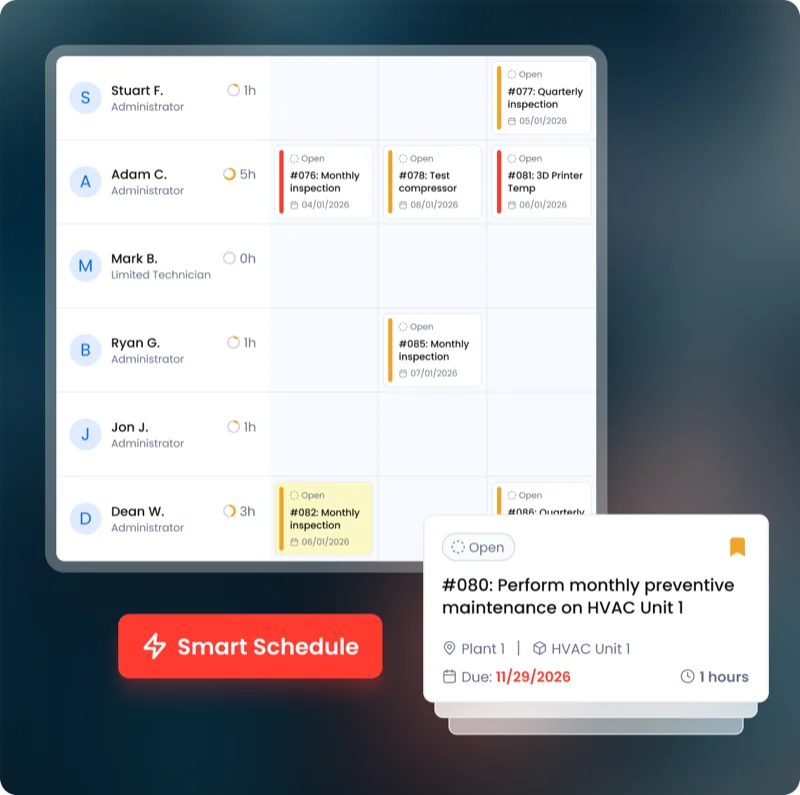
A new site comes online

  1. CMMS It inherits the same asset structure and statuses as the others, so it is comparable from week one.
  2. Workforce Coverage and labor hours roll up next to the existing sites.
  3. Nova Ask how the new site compares to the others from its first month, in the same terms.

Budget season

  1. CMMS Cost and downtime per asset are already in the record, not reconstructed from invoices.
  2. Capital Planning Replace-or-repair is argued from that asset history rather than from a condition survey that aged the week it arrived.
  3. Parts & Inventory Carrying cost and stockouts show what the storeroom is actually doing.

NOVA

Get the answer without waiting for the report

Nova is UpKeep's AI assistant, and it builds apps. Describe the view you need in plain language and Nova builds it against your own downtime, cost and work order data.

See how Nova works
  • Which sites lost the most production hours last quarter, and why?
  • Build a weekly operations review dashboard by site.
  • What are we spending per asset on the top ten cost drivers?

PRODUCTS

What operations teams run on

These are apps, not an edition. Operations usually cares most about what reads across sites.

See all products →

CMMS for operations teams: common questions

What does an operations team get from a CMMS that a maintenance team does not?

The same record, read at a different altitude. Maintenance needs the job; operations needs downtime, cost and capacity rolled up by asset, line and site.

The value is that neither is compiled. Both come out of the work being recorded once.

Can we compare sites that run differently today?

Only if they share an asset naming scheme and a set of statuses. UpKeep enforces that structure across sites, which is usually the actual work of a rollout, the software is the easy half.

Does UpKeep connect maintenance to production output?

Yes, through Production. A stop recorded against an asset shows against that line rather than sitting in a maintenance queue nobody outside the team reads.

Will UpKeep replace our BI tool?

No, and it should not try. UpKeep answers questions about assets, work and maintenance cost. If you already have a warehouse, the data is available by API rather than trapped.

What does UpKeep not do for operations?

It is not an ERP, not a full MES, and not a financial planning system. It will tell you what an asset costs and what it stopped; it will not close your books or run your production scheduling end to end.

GET STARTED

See it against a number you already report

Bring a metric you compile by hand each month. We will show where it would come from if the work were recorded once.