Entrada en el Blog
Why Reactive Fleet Maintenance Keeps Falling Short
Reactive maintenance doesn’t scale. Learn how preventive maintenance is helping fleet teams reduce downtime and operate more predictably.


Why Reactive Fleet Maintenance Keeps Falling Short
Fleet breakdowns rarely come out of nowhere. The warning signs are almost always there, whether it’s missed inspections, delayed services, or incomplete records. The issue isn’t awareness; It’s follow-through.
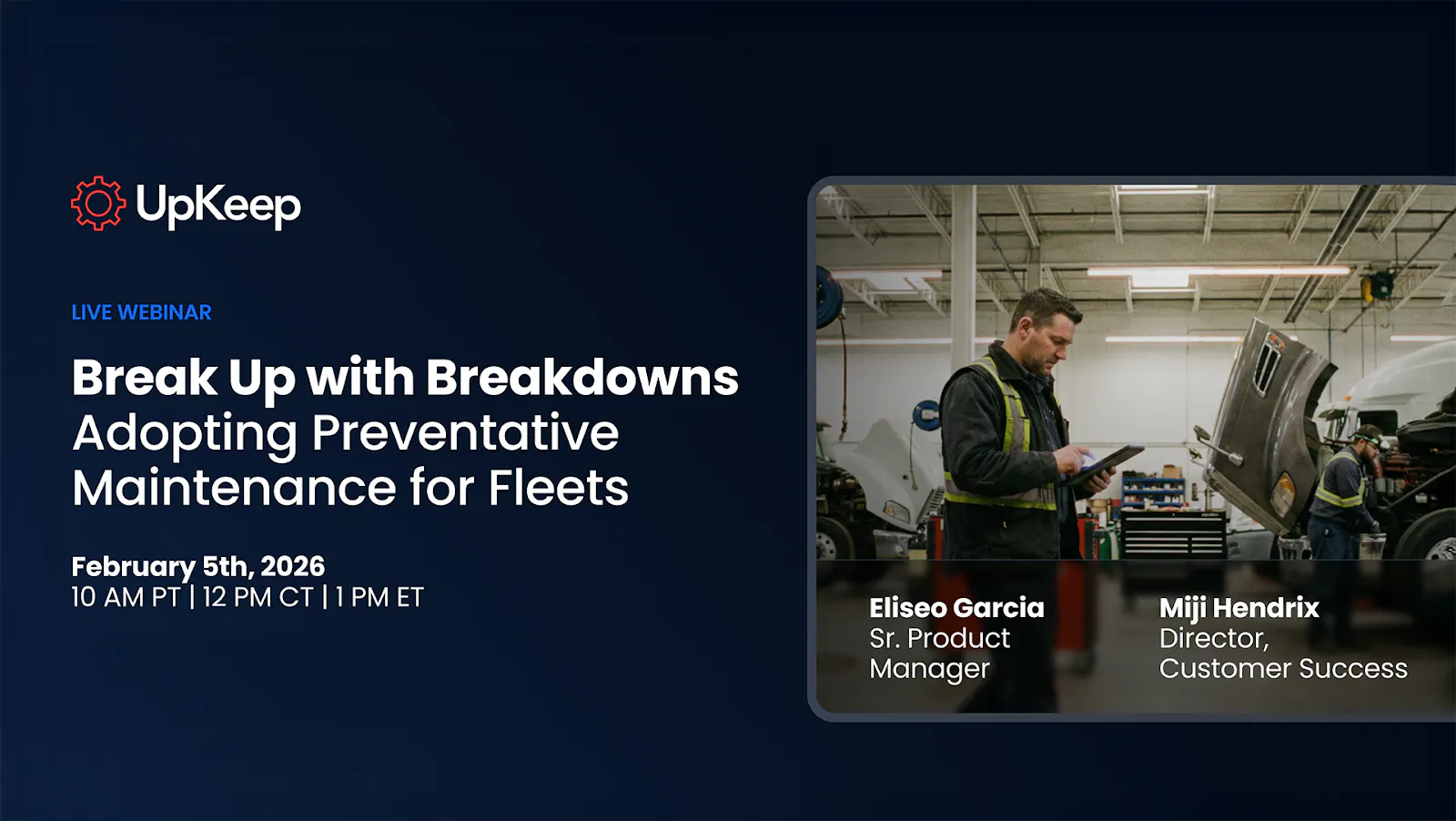
That gap between knowing and doing was a central theme in UpKeep’s recent webinar, Break Up with Breakdowns: Adopting Preventive Maintenance for Fleets. We dug into why reactive maintenance continues to dominate and what it actually takes to move beyond it.
For many organizations, maintenance still begins after something goes wrong. Vehicles go down, schedules slip, and costs rise. That pattern repeats again and again, creating constant pressure to catch up instead of move forward.
Preventive maintenance offers a way out, and fleets that commit to it are already seeing meaningful results.
🎥 Watch the full on-demand webinar.
The Cost of Staying Reactive
Every unplanned breakdown brings more than just a repair bill. Emergency labor, expedited parts, and lost productivity add up quickly, while missed commitments ripple across the business.
What makes this especially frustrating is how predictable it all is. Most failures come from routine wear and tear that could’ve been addressed earlier. Yet a large share of fleet maintenance spend is still driven by unplanned work.
When teams stay reactive, they aren’t just fixing vehicles. They’re constantly recovering from disruption. Preventive maintenance replaces that recovery mode with control and predictability.
Prevention Builds Momentum
Preventive maintenance is often misunderstood as extra work, but in practice, it simplifies operations.
Planned service allows teams to group tasks, schedule smarter, and reduce last-minute emergencies. Vehicles spend more time in operation, while technicians focus on high-value work instead of scrambling to put out fires.
It also improves decision-making. When service history, inspections, and usage data live in one place, patterns become clear. Recurring issues surface earlier, high-risk assets stand out, and teams can act before small problems turn into expensive failures.
Execution Is the Real Gap
Most fleet leaders already believe in preventive maintenance. The challenge isn’t buy-in; It’s consistency.
Manual tracking, disconnected tools, and daily operational pressure make preventive plans easy to push aside. When maintenance data’s hard to access or incomplete, teams default to reacting because it feels faster in the moment.
In the webinar, we shared a common approach: treat preventive work as non-negotiable and build systems that make the right work easier to do, even when things get busy
Built for Fleet Reality
Fleet maintenance isn’t static. Vehicles are constantly moving, usage varies widely, and compliance requirements differ by operation. Preventive schedules depend on mileage, engine hours, and time, not just calendar dates.
Generic maintenance tools struggle to keep up with that complexity. Fleet teams need systems designed around how their assets actually operate.
When asset data, service schedules, inspections, and work orders are centralized, preventive maintenance becomes repeatable instead of aspirational. Technology stops being a barrier and starts enabling better outcomes.
Prevention Wins Long Term
The most effective fleets aren’t fixing the most breakdowns. They’re preventing them.
Preventive maintenance reduces downtime, extends asset life, and stabilizes maintenance costs over time. It also gives teams room to focus on optimization instead of constant recovery.
As fleets grow, reactive maintenance simply doesn’t scale; prevention does.
Meet UpKeep Fleet
Preventive maintenance only works when it’s easy to follow through.
UpKeep Fleet brings vehicles, inspections, and preventive maintenance into one place so teams can catch issues earlier, stay compliant, and reduce unplanned downtime without adding complexity. Setup is fast, inspections are simple, and maintenance work stays connected to real vehicle data.
Learn more about UpKeep Fleet and how it supports preventive maintenance across your fleet.
¿Quieres seguir leyendo?



Artículo
Maintenance Tonight: The Big Year-End Breakdown (AI, Trends & Transformation)
Artículo
Why Reactive Fleet Maintenance Keeps Falling Short


Artículo
Listas de verificación de mantenimiento preventivo para la gestión de flotas
MÁS DE 4000 EMPRESAS CONFÍAN EN LA GESTIÓN DE OPERACIONES DE ACTIVOS
Liderando el camino hacia un futuro mejor para el mantenimiento y la confiabilidad
Los datos de sus activos y equipos no pertenecen a un silo. UpKeep simplifica ver dónde se encuentra todo, todo en un solo lugar. Eso significa menos conjeturas y más tiempo para concentrarse en lo que importa.






![[Review Badge] Gartner Peer Insights (Dark)](https://www.datocms-assets.com/38028/1673900494-gartner-logo-dark.png?auto=compress&fm=webp&w=336)