Entrada en el Blog
(duplicate) (duplicate) (duplicate)
Maintaining an efficient inventory system is crucial for any business, especially when it involves maintenance parts. Proper management ensures that operations run smoothly, reduces downtime, and minimizes costs.


What Progress Has Been Made in AI Implementation Within Maintenance?
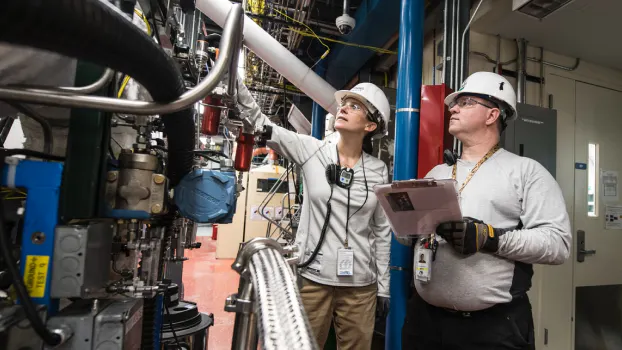
Artificial intelligence (AI) has moved beyond simply a futuristic concept to become an integral part of various industries. One sector where AI is making significant strides is within maintenance and reliability. From predictive analytics to autonomous systems, AI is revolutionizing how maintenance is planned, executed, and managed.
In a recent UpKeep survey (Get Full Report), 40 percent of companies reported that they are actively implementing or planning to implement AI in the near future, reflecting a general industry shift towards automation. Here are some of the main areas where AI is making headway in maintenance.
Predictive Maintenance: The Forefront of AI Innovation
Predictive maintenance is arguably the most transformative application of AI in maintenance. Traditional maintenance strategies, such as reactive and preventive maintenance, have their limitations. Reactive maintenance, or fixing equipment when it fails, often leads to unplanned downtime, higher costs, and increased stress across the workforce. Preventive maintenance, which means servicing equipment at time- or usage-based intervals, can be inefficient and lead to unnecessary maintenance activities.
AI-powered predictive maintenance, on the other hand, leverages machine learning algorithms and sensor data to predict equipment failures before they occur. By analyzing historical data and real-time sensor inputs, AI models can identify patterns and anomalies that indicate potential issues.
Benefits of this latter approach include reduced downtime and costs as well as maximizing equipment life. By predicting failures before they happen, manufacturers can schedule maintenance during non-peak hours, minimizing disruption, and early detection of issues prevents major breakdowns, saving costs on repairs and replacements. Regular, condition-based maintenance also ensures equipment operates optimally, extending its life.
AI-Driven Condition Monitoring
Condition monitoring involves continuously tracking the health of machinery using various sensors and diagnostic tools. AI enhances this process by providing deeper insights and more accurate diagnostics. Advanced AI algorithms can process vast amounts of data from vibration sensors, temperature sensors, and acoustic sensors to monitor the condition of equipment in real-time.
One significant advancement is the integration of deep learning models that can understand complex patterns and relationships within the data. These models improve the accuracy of fault detection and diagnosis, enabling maintenance teams to take timely actions and prevent failures.
Automated Maintenance Scheduling
Effective maintenance scheduling is crucial for minimizing downtime and optimizing resource allocation. AI-driven maintenance management systems can automate the scheduling process by analyzing historical maintenance data, equipment usage patterns, and production schedules. These systems can generate optimal maintenance plans, ensuring that maintenance activities are performed at the right time with minimal disruption to operations.
Moreover, AI can dynamically adjust schedules based on real-time data and changing conditions. For instance, if an unexpected issue is detected in a critical piece of machinery, the AI system can prioritize its maintenance and adjust the schedule accordingly.
Augmented Reality for Maintenance Assistance
Augmented reality combined with AI is transforming the way maintenance technicians perform their tasks. Augmented reality is now providing technicians with real-time, hands-free access to technical information, manuals, and guided procedures through wearable devices or smartphones.
AI enhances this experience by offering context-aware assistance, such as fault diagnosis, step-by-step training and guidance, and remote assistance.
Digital Twins and Simulation
Digital twins are virtual replicas of physical assets that simulate their behavior and performance in real-time. AI plays a crucial role in creating and managing digital twins by analyzing data from the physical asset and updating the digital model accordingly. This technology enables predictive maintenance, real-time monitoring, and optimization of equipment performance.
Through simulation, digital twins can test various maintenance scenarios and strategies, providing insights into the best approaches to minimize downtime and costs. This helps in making informed decisions about maintenance practices and strategies.
AI in Inventory Management
Efficient inventory management is essential for maintenance operations, ensuring that the right parts and tools are available when needed. AI algorithms can analyze usage patterns, historical data, and supply chain dynamics to optimize inventory levels. This can help in a wide variety of areas including reducing stockouts, minimizing overstock, or optimizing procurement.
Enhancing Safety and Compliance
AI enhances safety and compliance in maintenance operations by monitoring adherence to safety protocols and regulations. AI-powered systems can analyze data from various sources, such as equipment sensors and worker activity logs, to ensure that safety standards are met. This proactive approach helps in identifying potential safety hazards and ensuring compliance with industry regulations.
Conclusion
The integration of AI in maintenance is transforming many industries, leading to smarter, more efficient, and cost-effective maintenance practices. From predictive maintenance and condition monitoring to automated scheduling and augmented reality assistance, AI is driving significant advancements. As AI technology continues to evolve, we can expect further innovations that will enhance the reliability, safety, and efficiency of maintenance operations across various sectors. The future of maintenance is not just about fixing things when they break but about anticipating and preventing issues before they arise, and AI is at the heart of this transformation.
¿Quieres seguir leyendo?
Artículo
Una guía increíblemente sencilla para iniciar un programa de mantenimiento predictivo en sus instalaciones
Artículo
La función de la tecnología de sensores en la revolución de la mantención preventiva.
Artículo
La función de la tecnología de sensores en la revolución de la mantención preventiva.
MÁS DE 4000 EMPRESAS CONFÍAN EN LA GESTIÓN DE OPERACIONES DE ACTIVOS
Liderando el camino hacia un futuro mejor para el mantenimiento y la confiabilidad
Los datos de sus activos y equipos no pertenecen a un silo. UpKeep simplifica ver dónde se encuentra todo, todo en un solo lugar. Eso significa menos conjeturas y más tiempo para concentrarse en lo que importa.






![[Review Badge] Gartner Peer Insights (Dark)](https://www.datocms-assets.com/38028/1673900494-gartner-logo-dark.png?auto=compress&fm=webp&w=336)