Entrada en el Blog
(duplicate) (duplicate) (duplicate) (duplicate) (duplicate)
Maintaining an efficient inventory system is crucial for any business, especially when it involves maintenance parts. Proper management ensures that operations run smoothly, reduces downtime, and minimizes costs.


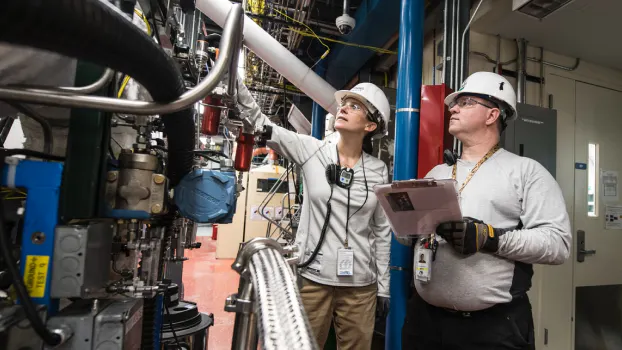
Improving Retention Becomes Highest Priority in Addressing the Growing Skills Gap
For the past several years, the maintenance and reliability industry has struggled with a growing skills gap while bracing itself for things to only get worse. Many reasons for this skills gap have surfaced as well as a myriad of recruiting and retention initiatives designed to address this problem.
While companies have had varying degrees of success, most have shifted their focus to retaining their best and brightest. According to a recent UpKeep survey, maintenance executives report that retaining existing talent is four times more important than hiring new people.Get Full Survey Report
How We Got Here
A multitude of factors have contributed to this critical challenge including an aging workforce that continues to retire and take tribal knowledge with them, a demand for remote work that is difficult to offer in a physically demanding industry, a lack of interest within the younger generation, a steep learning curve as new technologies infiltrate the workplace, and a lack of training and development.
Aging Workforce: A significant portion of the existing maintenance workforce is nearing retirement age, with the average age of maintenance technicians sitting at 47. As these experienced professionals leave the workforce, they take with them a wealth of knowledge and expertise that is not easily replaced.
Demand for Remote Work: Ever since the global pandemic, the supply and demand for remote work has increased. While many jobs can be done remotely or at least accommodate a hybrid schedule, maintenance and reliability jobs, by their nature, need to be performed in person. This results in a decreased demand for physically demanding positions.
Perception Issues: Maintenance and reliability careers are often perceived as less attractive compared to other engineering and tech roles. This perception deters young talent from entering the field.
Technological Advancements: The integration of Industry 4.0 technologies, such as the Internet of Things (IoT), artificial intelligence (AI), robotics, and predictive maintenance systems, has transformed the landscape. These technologies require new skill sets that many current workers do not possess and find difficult to attain.
Lack of Training and Development: There is a noticeable lag in the education and training systems' ability to keep up with industry advancements. Many educational institutions and training programs are still focused on traditional maintenance skills, rather than the modern, technology-driven skills required today.
The Impact of the Skills Gap
The skills gap has far-reaching implications for industries that rely on maintenance and reliability. For example, without skilled personnel to maintain and repair equipment, industries can face increased downtime, leading to lost productivity and higher operational costs. Even more concerning, unqualified maintenance staff can pose significant safety risks, potentially leading to accidents and injuries to others around them.
Finally, companies that are unable to effectively maintain their equipment will struggle to keep up with competitors who have more reliable operations.
Best Strategies to Bridge the Gap
While attracting new talent is always important, many organizations have refocused on retaining the talent they already have. Here are some of the most effective retention ideas:
Investment in Training Programs: Companies should invest in continuous training and upskilling programs for their employees. This includes both on-the-job training and formal education in the latest technologies and maintenance practices. In many cases, this training should focus on the many automation and robotics technologies entering the industry.
Leveraging Technology: Utilizing e-learning platforms and simulation-based training can provide flexible and effective ways for employees to learn new skills. Virtual reality (VR) and augmented reality (AR) can offer immersive training experiences that are both engaging and informative.
Knowledge Transfer Programs: Establishing mentorship programs where retiring workers can pass on their knowledge to younger employees can help preserve valuable expertise within the organization.
Competitive Pay: In an inflationary environment, maintenance technicians will increasingly prioritize competitive pay and wage increases to maintain their standard of living.
Work-Life Balance. Many professionals continue to prioritize being able to balance career and personal demands. While remote work may not be a feasible option, getting creative about scheduling and PTO policies can help show your team that you care about them and want to help them meet all their interests and obligations.
In addition, many maintenance organizations have found that partnerships with local educational institutions can be effective in attracting young talent to the profession. By collaborating with universities and technical schools, companies can help align curriculums with industry needs.
Apprenticeship programs and internships can provide students with much-needed hands-on experience and a clearer path into the maintenance field. These types of programs can also help change the perception of maintenance and reliability careers. Highlighting the technological aspects of the job and its critical role in ensuring operational efficiency can make these careers more appealing.
Looking Ahead
As we move further into 2024, the urgency to address the skills gap in maintenance and reliability cannot be overstated. By taking proactive steps to invest in education, training, and technology, industries can ensure they have the skilled workforce needed to thrive in a rapidly evolving landscape. The key lies in collaboration across all sectors and a commitment to continuous improvement and innovation. In the end, bridging the skills gap is not just about filling positions; it’s about building a resilient, adaptable, and forward-thinking workforce ready to tackle the challenges of tomorrow.
¿Quieres seguir leyendo?



Artículo
Pensamientos de Ryan: ¡Por qué necesitamos cerrar la "brecha de habilidades" de mantenimiento ahora!
Artículo
La función de la tecnología de sensores en la revolución de la mantención preventiva.
Artículo
La función de la tecnología de sensores en la revolución de la mantención preventiva.
MÁS DE 4000 EMPRESAS CONFÍAN EN LA GESTIÓN DE OPERACIONES DE ACTIVOS
Liderando el camino hacia un futuro mejor para el mantenimiento y la confiabilidad
Los datos de sus activos y equipos no pertenecen a un silo. UpKeep simplifica ver dónde se encuentra todo, todo en un solo lugar. Eso significa menos conjeturas y más tiempo para concentrarse en lo que importa.






![[Review Badge] Gartner Peer Insights (Dark)](https://www.datocms-assets.com/38028/1673900494-gartner-logo-dark.png?auto=compress&fm=webp&w=336)