Entrada en el Blog
How Reliability Principles Helped Bring First Nuclear Power Reactor Online in 30 Years Last Week
For the first time in 30 years, a nuclear reactor built from scratch came online this week. Officials reported that this reactor is already sending power to Georgia’s grid reliably. Public reaction is understandably divided. While some are excited about nuclear power being a clean alternative to greenhouse-gas-producing fossil fuels, others are worried about potential catastrophic failures.


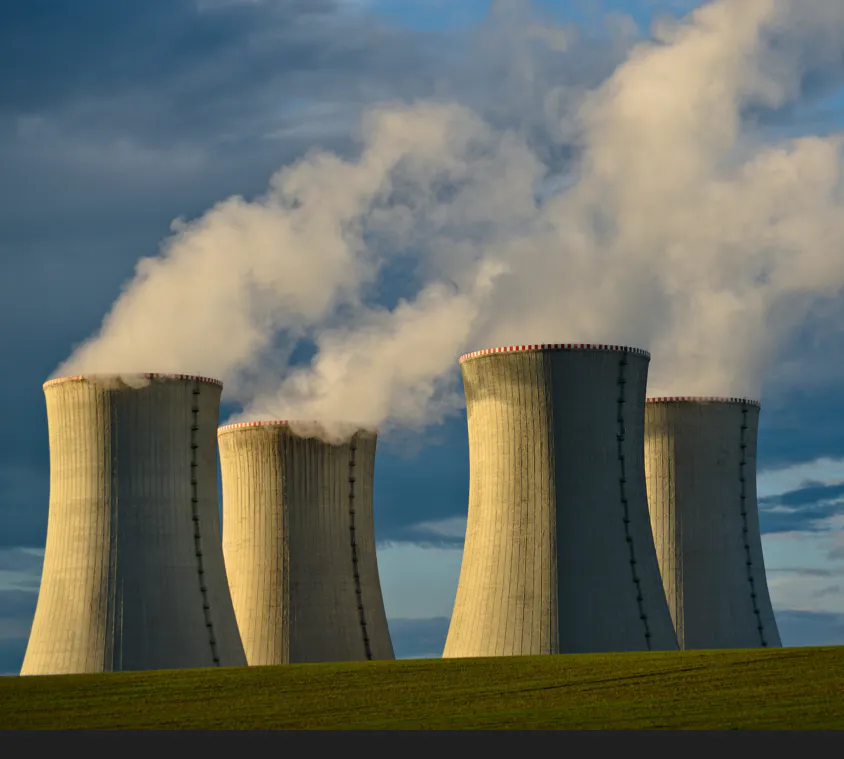
Even though nuclear disasters have really been few and far between in the grand scheme of things, I think it’s very difficult to evaluate risk when those rare instances can be disastrous for those nearby. Here’s where I believe reliability principles can come into play; reliability tools are designed to help us balance risk, cost, criticality and benefits of maintenance activities on our key assets. I think these tools can also be applied by our policy makers when it comes to making future decisions about nuclear power.
Is It Time to Think Again?
I’ve been reading a book called Think Again that stresses the importance of trying to understand what we don’t necessarily know. Adam Grant, author and organizational psychologist, invites readers to “let go of knowledge and opinions that are no longer serving you well and to anchor your sense of self in flexibility rather than consistency.”
It’s made me consider our society’s age-old position on nuclear power. I think all of us tend to make decisions and stick to them, yet this book has pushed me to reevaluate why I think about certain things in certain ways. When it comes to nuclear power, we have new facts today that we didn’t have three decades ago. Maybe it’s time to reconsider nuclear power’s place in our energy-consuming world.
Energy Transitions Have Accelerated in the Last 30 Years
Until the middle of the 19th century, the majority of the world burned things like wood or crop waste to generate energy. The Industrial Revolution introduced coal, which then generated half the world’s energy by the turn of the 20th century. Three decades ago, the vast majority of our world’s power was still generated by coal, oil, natural gas, and traditional biomass.
However, in recent years, a host of alternative power sources including nuclear, solar, wind and hydropower have entered the picture as concerns about the environmental impact of traditional fuels have risen. Up until now, I think solar and wind power have been upheld as the best clean energy alternatives. Unfortunately, when most people think about nuclear power, they remember the rare but catastrophic accidents such as Fukushima, Chernobyl, and Three Mile Island. While many more accidents, injuries and problems have occurred with non-nuclear means of power generation over the years, the scale and scope of these incidents are significantly less. As a result, it’s easy to understand why there is greater fear about nuclear power generation.
Current World Events Are Shifting The Risk-Reward Balance
Today our world is dealing with additional factors that did not play into the equation 30 years ago. There is an ever-increasing concern about global warming and the impact of carbon emissions on the long-term viability of our planet. Geopolitical conflict between Ukraine and Russia has significantly affected energy and fuel prices throughout Europe, raising concerns about energy independence in the United States. And, at the same time, the design of nuclear reactors have improved significantly, boosting the safety and viability of nuclear power generation.
We frequently hear about climate change issues and their effects on the world around us in the media. In fact, it was recently reported that June 2023 set the warmest record for that month in 174 years. Just this week, an article published in Forbes reported that a study by Northwestern University shows the connection between underground climate changes and a higher risk of infrastructure damage as building foundations undergo significant shifting, contraction and expansion. Nuclear power offers an alternative to greenhouse-gas producing energy.
I think we’ve all seen how the Ukraine-Russia war has impacted energy prices. The geopolitical conflict has pushed many countries throughout the world into an energy crisis, often doubling household energy costs. The United States has worked hard to achieve energy independence as a means of national security and continued prosperity; the addition of nuclear power may help us achieve and maintain that goal.
Finally, the design of nuclear reactors have improved significantly, making nuclear power one of the safest methods of generating power. Modern nuclear reactors are near impossible to meltdown as they did in past catastrophes, even if these reactors are struck by an earthquake or other natural disasters.
I think all of these factors challenge us to change the way we think about nuclear power. It’s time to reevaluate the risks and rewards of building additional nuclear reactors in this country.
Reliability Engineering is All About Balancing Risk and Reward
One thing that came to mind as I was pondering all of this is how reliability engineering provides all the tools that policy makers and others in the nuclear energy industry need to make the right decisions.
It’s extremely difficult to evaluate true risk when occurrences are very rare but potentially devastating as nuclear catastrophes have been in the past. We can all accept the risk of something that might happen once every 30 years, as long as it doesn't affect our own families, friends and communities. It’s much easier to evaluate something like wearing a seatbelt and the potential benefit in a more likely but typically less catastrophic situation as a car accident.
Balancing risks, understanding criticality, and assessing potential investments in asset maintenance are the daily tasks of reliability engineers. They often work to understand failure rates of individual asset components to predict reliability as part of a criticality assessment process. Many use failure mode and effects analysis (FMEA) tools to identify potential problems and their overall impact on the operation of a piece of equipment or even on an entire production line.
I don’t know if those who made the decision of building the nuclear reactor in Georgia considered these reliability principles per se, but I believe these tools and techniques helped evaluate the risk, costs, and benefits of nuclear reactors moving into the future. Policy makers should rely on these reliability principles and work closely with those intimately involved in nuclear power generation to evaluate the risk and reward equation, especially in light of the ongoing challenges in the global warming and geopolitical conflicts that we are experiencing today.
¿Quieres seguir leyendo?


Artículo
How AI is Transforming Maintenance and Manufacturing In 2023 and What is Needed in the Future


Artículo
The Hidden Side of Robotics and Automation In Manufacturing: Unveiling the Price of Maintenance


Artículo
Will the Apple Vision Pro Finally Solve The Labor Shortage In Manufacturing? I Doubt It. Here's Why.
MÁS DE 4000 EMPRESAS CONFÍAN EN LA GESTIÓN DE OPERACIONES DE ACTIVOS
Liderando el camino hacia un futuro mejor para el mantenimiento y la confiabilidad
Los datos de sus activos y equipos no pertenecen a un silo. UpKeep simplifica ver dónde se encuentra todo, todo en un solo lugar. Eso significa menos conjeturas y más tiempo para concentrarse en lo que importa.






![[Review Badge] Gartner Peer Insights (Dark)](https://www.datocms-assets.com/38028/1673900494-gartner-logo-dark.png?auto=compress&fm=webp&w=336)