Entrada en el Blog
La función de la tecnología de sensores en la revolución de la mantención preventiva.
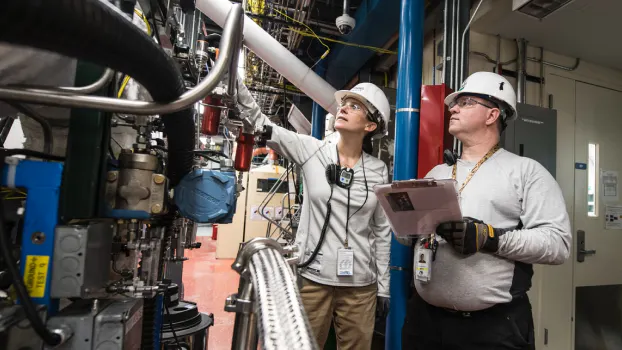
Mientras que las tareas de mantenimiento preventivo siempre tendrán su lugar en un programa de gestión de activos integral, las tecnologías de sensores de mantenimiento predictivo de hoy prometen revolucionar la forma en que se maneja el mantenimiento preventivo y elevar aún más el nivel de rendimient


AI Applications for Everyday Maintenance
Over the last several years, artificial intelligence (AI) has slowly permeated every aspect of the modern world. Although we might not see it, AI is starting to take on a bigger role in just about every industry, often behind the scenes. It is helping to automate repetitive tasks, detect anomalies in workflows or processes, or help predict future activities and respond accordingly. AI is also reshaping how various industries, including manufacturing, healthcare, agriculture, and consumer products, approach maintenance tasks and operational efficiency. Here are a few everyday applications of AI in maintenance.
Manufacturing Industry
Manufacturing is one industry that has started to witness a substantial AI-driven transformation with significant potential in the future. The biggest challenge for manufacturing companies is finding skilled technicians who are trained to implement, maintain, and optimize the different AI technologies that are emerging. The most popular applications are:
Predictive Maintenance
The vast majority of manufacturers are still operating reactive maintenance programs; repairing machines as the break. Some have implemented preventive strategies, which are typically based on pre-set time- or usage-based schedules. Preventive maintenance can help reduce downtime and costs associated with emergency repairs.
However, AI-powered predictive maintenance systems can collect real-time data from critical assets through sensor technology, providing 24/7 monitoring of performance. When things like temperature or vibration fall out of normal ranges, it can indicate that an asset is in need of attention before a failure occurs. This data can trigger an alert, which is sent to the maintenance manager, who can then deploy a technician immediately. By addressing issues essentially right before they occur, manufacturers can reduce downtime, save on repair costs, and optimize production schedules.
Quality Control
Quality control on production lines usually rely on imperfect human inspection or random product sampling, both of which could miss defective end products. AI-driven computer vision systems can inspect every product on the line for defects with unmatched precision. Any product with a suspected defect can be rerouted for further inspection or taken off the production line, which ensures consistent product quality, enhances customer satisfaction, and minimizes recalls and returns.
Supply Chain Optimization
Manufacturers rely heavily on their supply chains to provide needed materials and parts to optimize maintenance operations. As illustrated in recent years, a breakdown in the supply chain can have a negative ripple effect throughout the economy.
AI algorithms can help optimize supply chain operations, predicting demand, balancing inventory levels, and streamlining logistics to reduce costs and enhance efficiency. AI that’s integrated between the supply chain and asset performance can be extremely powerful. For example, if historic data indicates that a particular machine requires certain components to be replaced annually and suppliers of those components typically have a lead time of three months, needed parts can be ordered three months prior to a scheduled repair to ensure maintenance takes place before a failure occurs.
Healthcare Industry
Finding ways to optimize maintenance operations in healthcare can mean higher quality care, improved patient comfort and outcomes, and lower operational costs. AI is beginning to redefine how medical equipment and facilities are maintained. Here are a few examples:
Medical Equipment Maintenance
Conventional methods of maintaining critical medical equipment, either repairing upon failure or regular inspections can have negative repercussions for patients. Today, AI-powered sensors can continuously monitor the condition of medical devices, alerting staff to issues in real-time, thereby reducing downtime and ensuring patient safety.
Hospital Facility Management
AI-driven systems can help optimize heating, ventilating, and air conditioning (HVAC) systems, lighting, and security systems. In a hospital, some areas such as intensive care units or spaces where sensitive medical equipment is used may require precise temperature or humidity levels to optimize equipment operation and patient healing.
Overall, AI can help improve things like energy efficiency, air quality, and patient comfort, resulting in lower operational costs and higher patient and family satisfaction.
Agriculture
Within the agricultural industry, AI is helping to increase yield, reduce waste, and optimize operations through both precision farming and livestock monitoring.
Precision farming uses AI-powered drones and autonomous tractors to collect data on soil conditions, crop health, and weather patterns. This information enables farmers to make data-driven decisions about planting, irrigation, and pest control, leading to higher crop yields and resource efficiency.
In addition, AI sensors can track the health and behavior of livestock, providing early detection of diseases and optimizing feeding schedules to improve animal welfare and productivity.
Consumer Products Industry
The consumer products industry benefits from AI-driven technology in very similar ways to the manufacturing sector. It uses AI-driven inspection systems to identify product defects, ensuring that only high-quality items reach consumers and enhancing brand reputation. In addition, AI can optimize supply chains by predicting demand fluctuations, improving inventory management, and enhancing delivery logistics within consumer products.
One unique way that AI supports this industry is through personalization of marketing. AI algorithms can analyze consumer data to offer personalized product recommendations, potentially increasing customer engagement and sales.
Conclusion
The integration of AI-based technologies and solutions into maintenance across sectors like manufacturing, healthcare, agriculture, and consumer products is revolutionizing how businesses operate.
Predictive maintenance, quality control, supply chain optimization, and personalized solutions are just a few examples of how AI is enhancing efficiency, reducing costs, and increasing competitiveness.
As AI continues to evolve, it's essential for industries to invest in and embrace these technologies. By doing so, they can stay ahead of the curve, provide better products and services, and contribute to a more sustainable and efficient future. The transformative power of AI is undeniable, and its potential to reshape industries is only beginning to be realized.
¿Quieres seguir leyendo?


Artículo
How AI is Transforming Maintenance and Manufacturing In 2023 and What is Needed in the Future
Artículo
Uso de análisis predictivo para mejorar su CMMS



Artículo
A medida que AI y GPT se infiltran en el mundo digital, es hora de darle al mundo construido el respeto que se merece
MÁS DE 4000 EMPRESAS CONFÍAN EN LA GESTIÓN DE OPERACIONES DE ACTIVOS
Liderando el camino hacia un futuro mejor para el mantenimiento y la confiabilidad
Los datos de sus activos y equipos no pertenecen a un silo. UpKeep simplifica ver dónde se encuentra todo, todo en un solo lugar. Eso significa menos conjeturas y más tiempo para concentrarse en lo que importa.






![[Review Badge] Gartner Peer Insights (Dark)](https://www.datocms-assets.com/38028/1673900494-gartner-logo-dark.png?auto=compress&fm=webp&w=336)