Blog Post
UpKeep’s State of Community Report Shares Industry Challenges and Potential Solutions
Dig into the findings of the 2023 State of Community Report. This report reveals details of topics such as; the talent pool crisis and the aging workforce, the advancements and challenges of AI in the industry and the current economic challenges and demand across industries.


UpKeep’s State of Community Report Shares Industry Challenges and Potential Solutions
The massive labor shortage and skills gap; the ongoing impact of the pandemic to the industry and supply chain; and the role of artificial intelligence (AI) in the future of maintenance, operations, and reliability were just a few of the topics discussed and debated in UpKeep’s 2023 State of the Community Report.
During the past several months, Ryan Chan, founder and CEO, set out to speak with 100 professionals in the maintenance, operations and reliability industry and learn about current challenges and brainstorm possible solutions. The 2023 State of the Community Report is the culmination of this effort and is now available.
“This project has been one of the most rewarding journeys of the past year,” Ryan said. “I had the opportunity to engage with numerous industry professionals, each one offering unique insights and perspectives on the current state of maintenance, operations, and reliability. The conversations were inspiring and motivating as I learned firsthand about the challenges, innovations, and aspirations shaping our industry.”
Multiple industries and professionals participated
The State of the Community report reached out to more than 15 different industries including oil and gas, manufacturing, agriculture, and facilities management. About one-third of those surveyed were maintenance and reliability managers with 23 percent consultants, 16 percent executive leadership, and 16 percent technicians. Nearly 80 percent had fewer than 50 people on their maintenance teams, and roughly two-thirds of the companies were based in the United States, 29 percent in Canada, and 3 percent in the United Kingdom.
Key takeaways revolved around labor, supply chain and AI
Discussions for the State of the Community Report touched on labor issues, supply chain difficulties, and adoption of AI. Main findings were:
The industry is in the middle of a major labor shortage; 2.5 million jobs will be unfilled by 2028. As a result, companies are lowering their standards for hiring and training, making it even more difficult to upskill to the levels needed to embrace advanced technology. Because the younger generation has been steered away from manufacturing jobs, it is that much more difficult to attract the best and the brightest. The entire problem is being exacerbated as current employees retire, taking valuable knowledge with them, and as businesses face high attrition rates.
Four in 5 respondents report ineffective training and knowledge transfer within their organizations. In some cases, a guarded culture and an expectation for younger employees to “prove themselves” makes the transfer more difficult. That said, many organizations have found that apprenticeship, internship and mentoring programs are effective ways to attract and introduce the future generation to the industry.
Companies are seeing a 37 percent turnover rate and share strategies for retention. It can be challenging to invest in training and education when many young technicians move onto new positions so quickly. Demands for higher compensation, greater flexibility, and a nurturing company culture continue to rise.
Seventy percent reported a preference for hiring contractors amid labor shortage. In order to compensate for the lack of available talent in the full-time labor pool, many manufacturers are shifting to contract workers to cover short-term projects, bring in specialized expertise, and reduce overall costs. Unfortunately, asset health may suffer as contractors are often less concerned and focused on the long term success of the company.
The industry is seeing the impact of deferred maintenance after COVID. During the pandemic, many overhauls, major repairs, and turnarounds were delayed due to supply chain issues and shut-downs. As a result, a growing number of assets are overdue for maintenance during a time when fewer employees are available to take on the work.
Supply chain issues haven't been resolved after the pandemic. Although some supply chain issues have improved in the last couple of years, others remain a problem. Companies are trying to compensate by juggling different suppliers and reverse engineer parts internally in order to keep things moving. At the same time, assets are reaching the 10- to 20-year mark as more OEMs are going out of business.
Executive leadership is struggling to prioritize maintenance and reliability. As the economy continues to stall, many organizations are pulling in the reins and cutting costs wherever possible. Unfortunately, maintenance is often still seen as a cost-center and repair problems are put on the back burner as the organization tries to focus on activities that directly generate revenue. The problem is that increasing sales means increasing production, which becomes more difficult to deliver with assets that have not been optimally maintained.
Collaboration is starting to surpass competition as a priority in today's business environment. This is a silver lining to all the industry challenges as manufacturers, contractors, and others must pull together to share knowledge and experience to move forward more quickly in this difficult environment.
Maintenance is supportive of AI but not fully ready to embrace it. Industry leaders emphasized the need to find ways to combine AI with existing human knowledge and skill to create ways to become more efficient and tackle many of these current challenges. The complexity of using AI, robotics, and other advanced technology means that maintenance technicians and managers must make huge leaps in learning, which can be difficult. Finding effective ways to leapfrog technologies to keep up with the most promising ones will be both a challenge and a solution.
“These valuable insights from 100 industry leaders and professionals only scratched the surface of understanding and addressing these complex issues,” Ryan concluded. “Looking forward, I am excited to dive deeper and explore additional perspectives, strategies, and innovations to solve these challenges in the maintenance and reliability industry.”
For more information, download the report HERE!
Want to keep reading?


Article
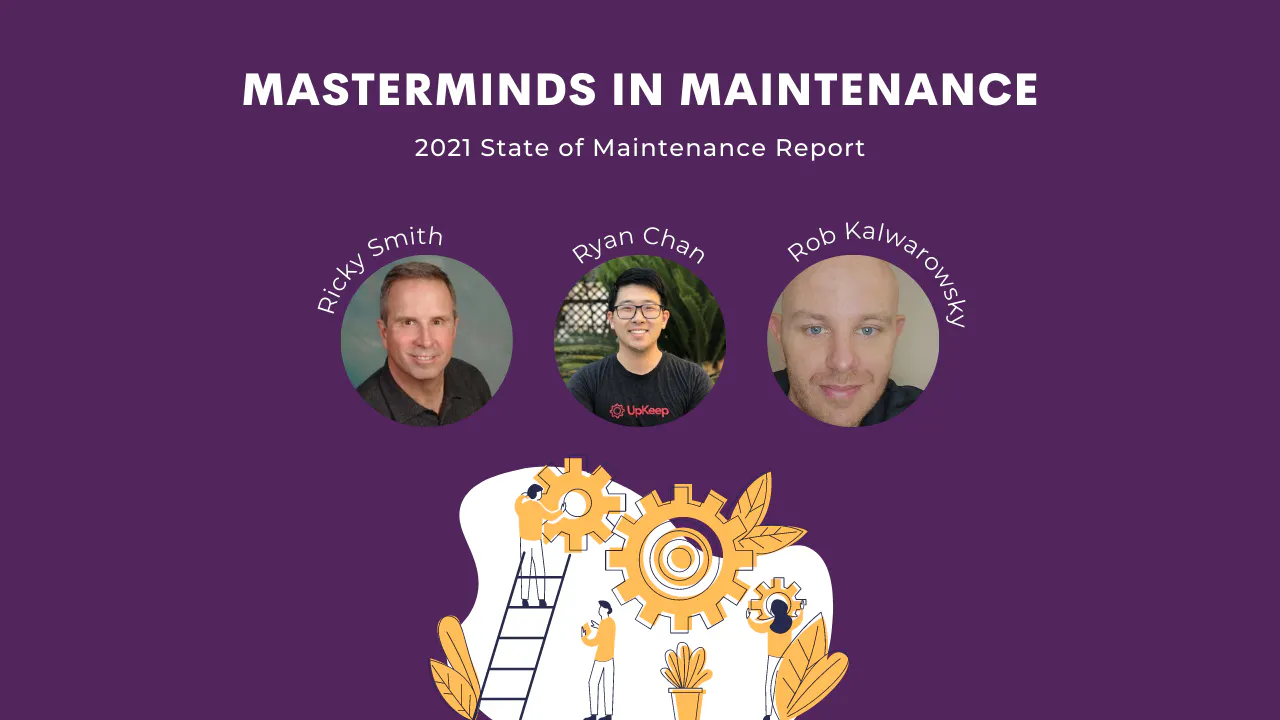
S2:E28 2021 State of Maintenance Report Recap with Rob Kalwarowsky and Ricky Smith


Article
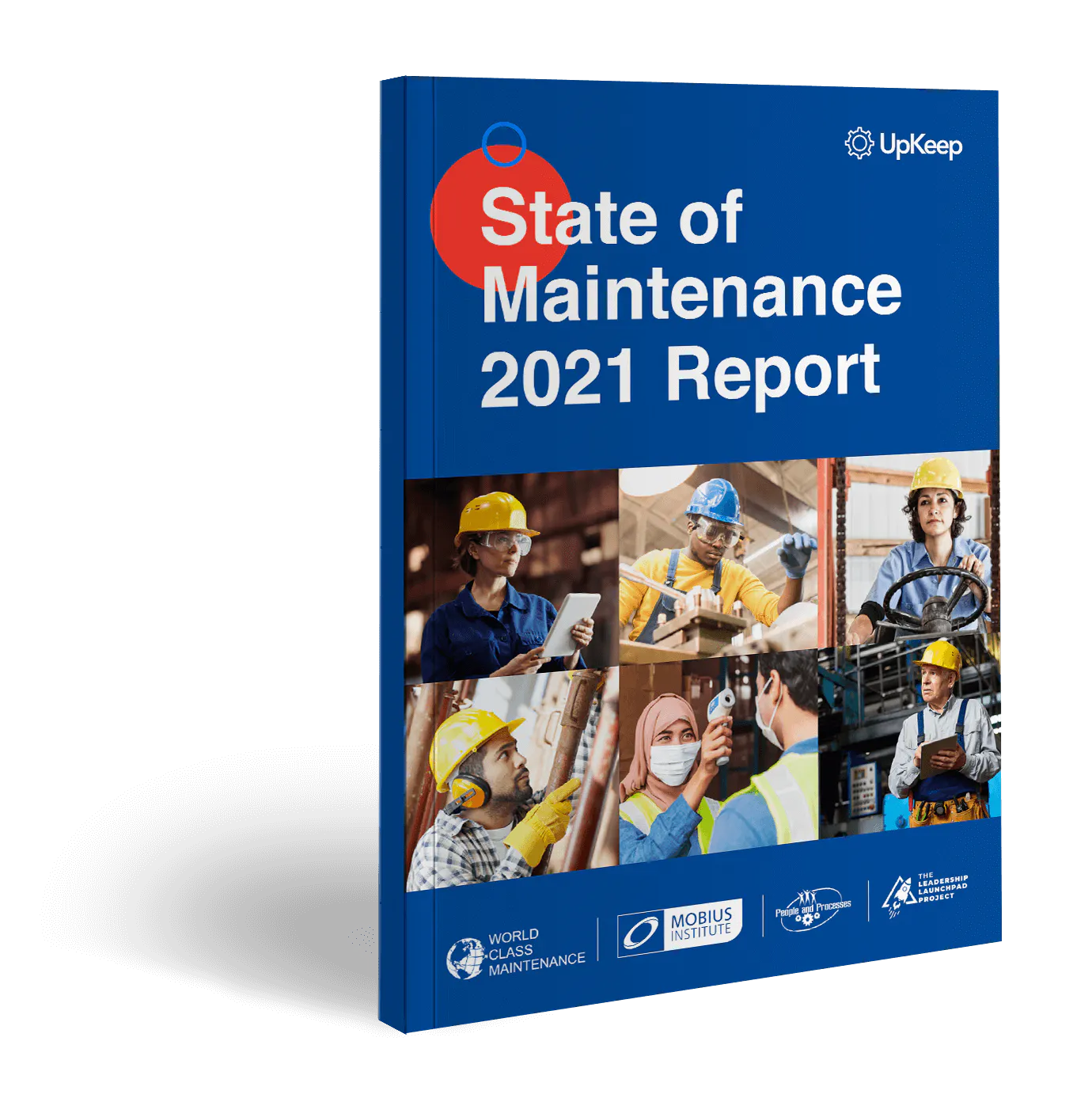
2021 State of Maintenance Report


Article
UpKeep Dominates the G2 Summer 2023 report season: A Testament to Excellence in CMMS
4,000+ COMPANIES RELY ON ASSET OPERATIONS MANAGEMENT
Leading the Way to a Better Future for Maintenance and Reliability
Your asset and equipment data doesn't belong in a silo. UpKeep makes it simple to see where everything stands, all in one place. That means less guesswork and more time to focus on what matters.




![[Review Badge] Gartner Peer Insights (Dark)](https://www.datocms-assets.com/38028/1673900494-gartner-logo-dark.png?auto=compress&fm=webp&w=336)