Blog Post
How Predictive Maintenance Transforms Fleet Management With Real-Time Data
Stop reacting to breakdowns. Implement predictive maintenance fleet management using real-time data and AI to reduce unplanned downtime by 45% and cut maintenance costs by up to 30%.



Key Takeaways:
Predictive maintenance uses real-time sensor and diagnostic data to trigger service only when a vehicle needs it, reducing maintenance costs and unplanned downtime significantly.
A unified platform like a CMMS that connects sensor data, work orders, inspections, and inventory makes predictive maintenance actionable.
AI works best when used to give technicians faster access to better information so they can respond before problems escalate and spend less time on administrative work.
Fleet downtime is inconvenient and hurts your bottom line. When a vehicle unexpectedly goes out of service, the ripple effects touch everything, from delivery schedules and customer commitments to technician workloads and compliance records. For fleet managers already stretched thin, it’s critical to have tools and strategies that can keep up with the demands of modern operations.
Predictive maintenance (PdM) is changing how forward-thinking teams approach this challenge. With real-time, data-driven recommendations, it gives more visibility and control over fleet management, reducing the stress of breakdown surprises and reactive recovery.
How Predictive Maintenance Works
Predictive maintenance uses data from Internet of Things (IoT) sensors and vehicle diagnostics to monitor asset condition in real time. Rather than servicing vehicles on a fixed calendar schedule or waiting for something to break, teams can act when the data says it's needed.
Sensors track driver behavior, fuel levels, engine performance, tire pressure, and other critical components that continuously build a picture of each vehicle's condition. When multiple signals indicate concern, such as GPS data showing irregular braking patterns combined with abnormal engine readings, the system flags a developing issue before it becomes a more intrusive problem.


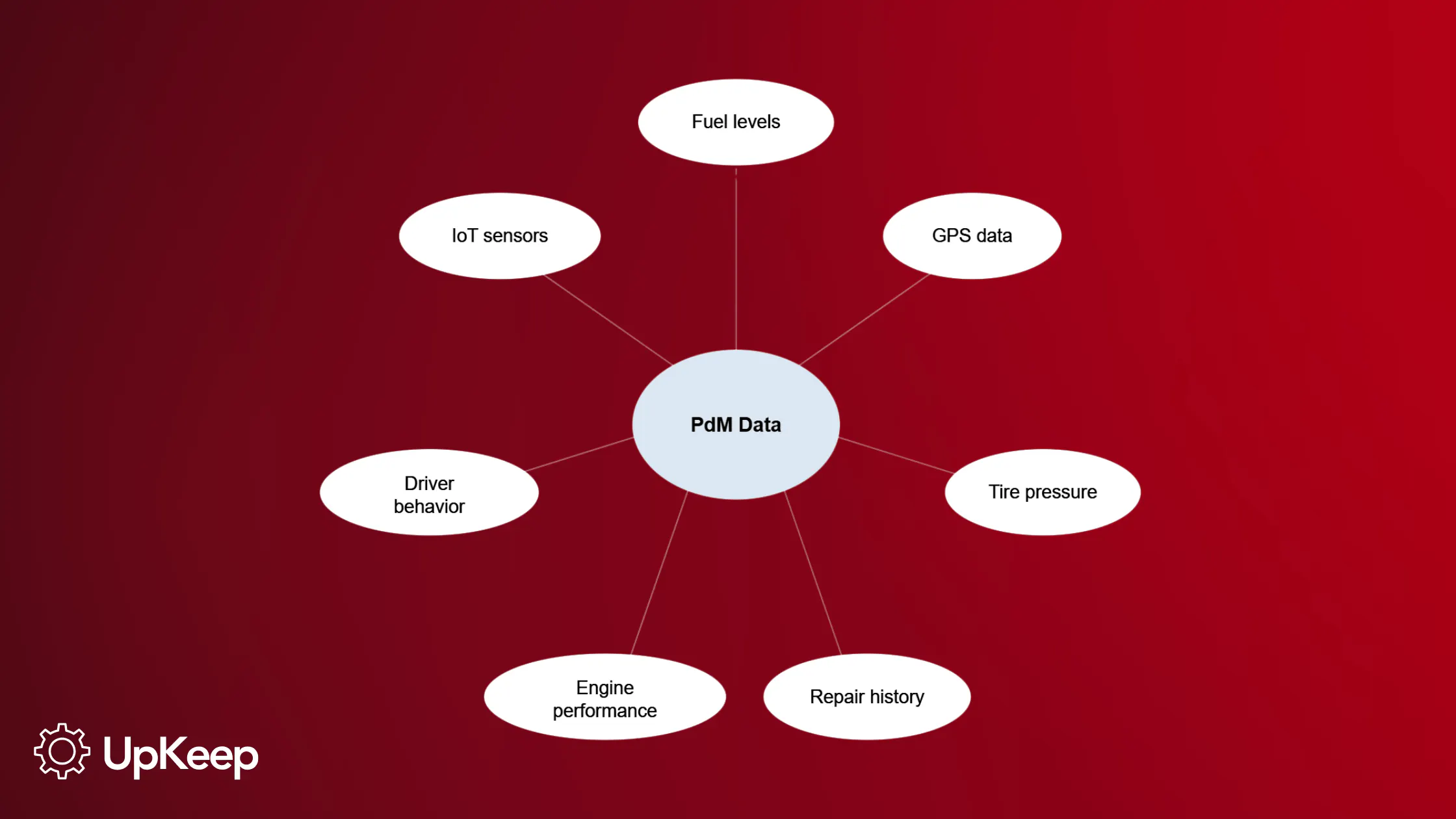
This triggers maintenance only when a vehicle needs it to avoid under- or over-servicing your fleet. When you’re able to conduct maintenance at the exact right times, you can extend asset life and stop draining time and resources unnecessarily.
The Predictive Maintenance Advantage
To understand why predictive maintenance stands out, it helps to consider the alternatives:
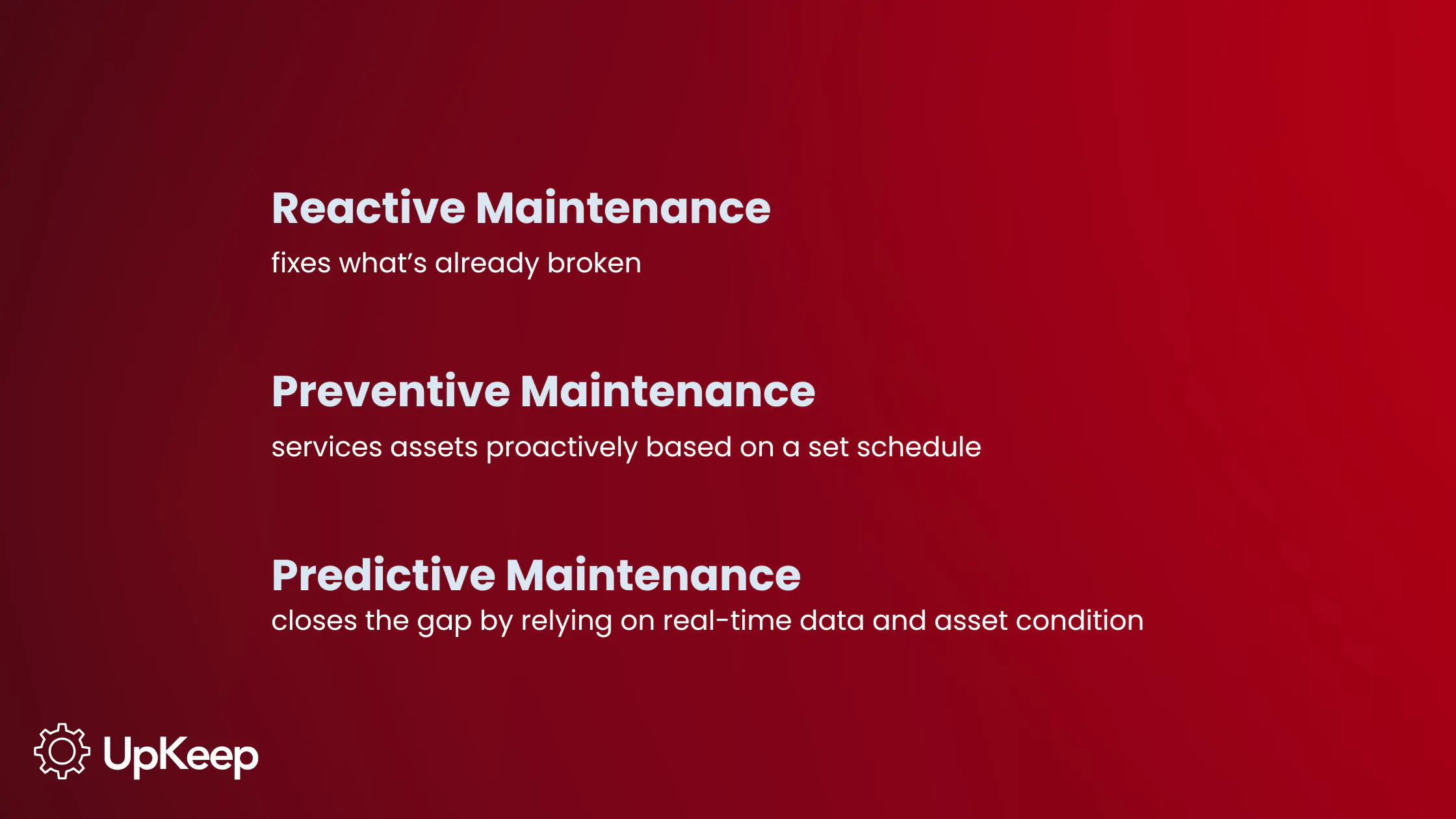
Reactive maintenance fixes what’s already broken. It requires no up-front planning or investment, but the resulting costs in unplanned downtime, emergency repairs, and safety risks outweigh the simplicity of setup (or lack thereof). Waiting for a breakdown is more of a gamble than a strategy.
Preventive maintenance (PM) is a meaningful step forward. It schedules service based on manufacturer recommendations and usage intervals to reduce the likelihood of surprise failures. However, the service timing is still an estimate.
Predictive maintenance closes this gap by relying on an asset’s current condition rather than assumptions. Assets only receive maintenance when absolutely warranted, optimizing fleet operations with concrete usage and wear data.

How Predictive Maintenance Improves Fleet Management
A recent study by Element, Arval, and SMAS found that the total cost of ownership (TCO) is now the top fleet challenge globally, cited by 31% of companies. However, most organizations still handle day-to-day fleet operations through manual processes or disconnected third-party tools.
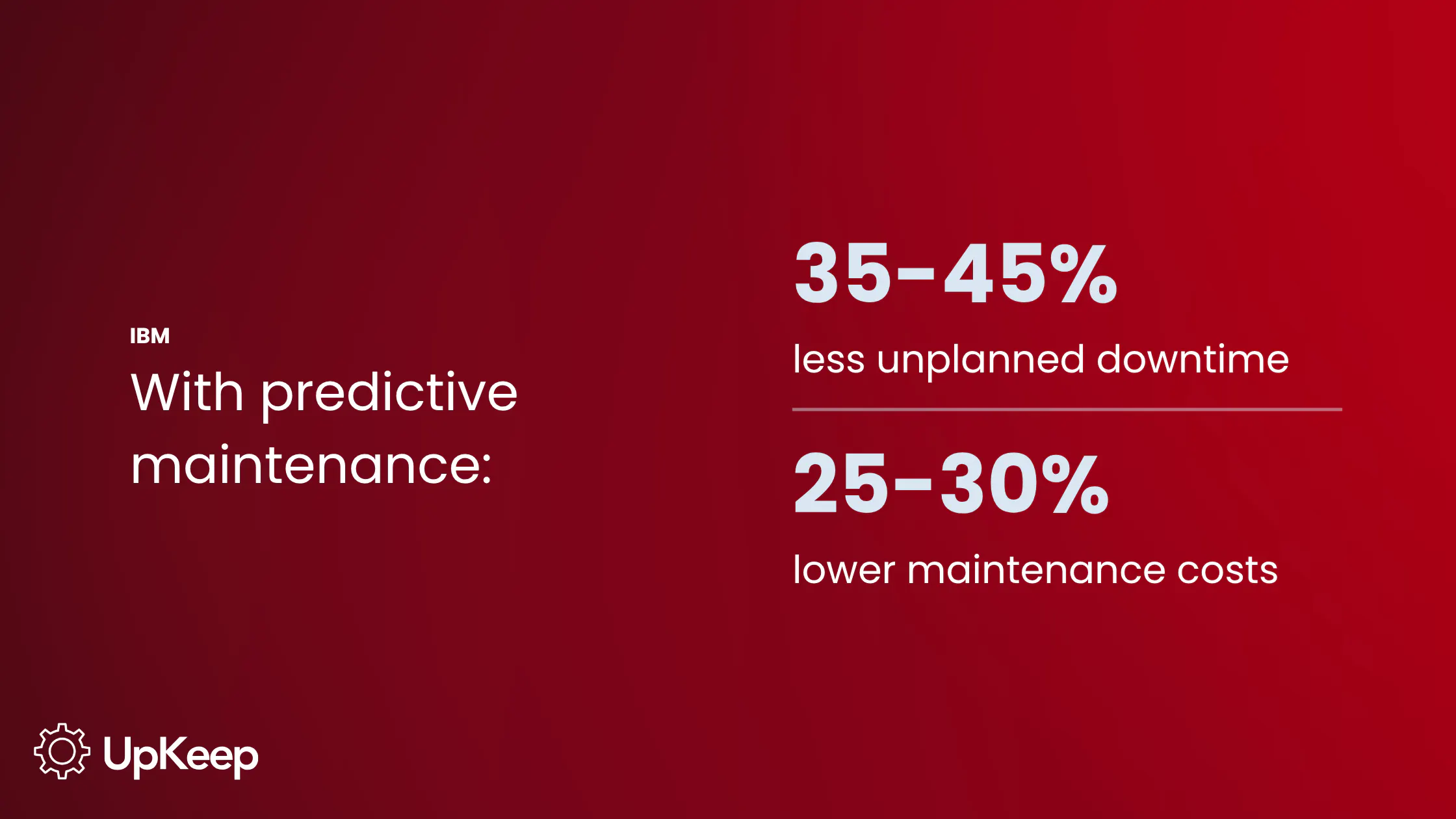
That’s where the shift to PdM makes the difference: Research from IBM demonstrates that performing repairs only when the data deems it necessary can reduce total unplanned downtime by 35-45% and maintenance costs by 25-30%.

For fleet managers trying to do more with tighter budgets and leaner teams, that offers significant operational advantages that can set your organization apart from the competition.
Beyond the numbers, predictive maintenance changes how fleet management functions day to day:
Condition-based service triggers replace fixed-interval schedules by connecting vehicles to a platform that analyzes meter and sensor data in real time.
Standardized driver vehicle inspection reports (DVIRs) ensure field observations feed directly into the maintenance workflow, aligning what drivers experience and what technicians act on.
Maintenance cost data by vehicle supports smarter repair-or-replace decisions, so fleet managers can invest in the right assets at the right time.
Centralized work order history makes it possible to identify trends, generate custom reports, and maintain the documentation needed for compliance audits. This is where computerized maintenance management systems (CMMS) stand out as a single source of truth.
Predictive inventory planning means the right components are stocked before they're needed, which puts vehicles back on the road faster.
Powering Predictive Maintenance Fleet Operations With AI
Artificial intelligence supports modern PdM platforms by surfacing insights, handling tedious tasks to reduce manual work, and helping maintenance teams stay ahead of issues without adding to their administrative load. Rather than replace the expertise that experienced technicians bring to the job, AI offers data-backed recommendations to supplement that knowledge base more quickly.
Where traditional maintenance scheduling relies on fixed rules, AI can continuously refine those rules based on actual outcomes as it learns through usage patterns, condition data, and historical repair records. Its intelligent scheduling tools optimize service timing in ways that static calendars simply can't. As it operates in the background, experienced staff can focus on the work that requires human nuance, skill, and judgment.
AI also compresses the time between detecting an issue and acting on it. Automated alerts reach technicians before problems escalate, providing a prioritized action list and reducing the time spent manually reviewing data across an entire fleet. For teams managing large numbers of vehicles, that focus is a meaningful advantage.
For technicians in the field, AI can remove friction from routine tasks, like enabling hands-free work order creation, inventory checks, and asset history lookups. When the administrative burden is lighter, teams can take on more, respond faster, and operate with greater confidence.
Building a Smarter Fleet Operation
Predictive maintenance works best as part of a broader commitment to connecting people, data, and workflows on a unified platform. When sensor data, work orders, inspection reports, inventory levels, and cost records live in the same system, fleet managers gain something that's difficult to achieve with disconnected tools: a single source of truth for every asset and every decision.
That visibility changes how the entire operation runs not just at the vehicle level, but across teams and locations. Fleet managers can identify which assets are draining resources, where response times are lagging, and how maintenance trends are evolving over time. Operations leaders receive the reporting they need to allocate budgets confidently, plan for growth, and make the case for continued investment in smarter infrastructure.
For organizations that still rely on manual check-ins, spreadsheets, or reactive repair cycles, predictive maintenance represents a fundamental shift in what fleet management is capable of delivering. The technology and data are available, but teams need to find the right platform to turn that data into action and keep every vehicle moving forward.
Want to better organize your fleet management? Learn how to create a fleet maintenance checklist.
Frequently Asked Questions
What is predictive maintenance for fleet management?
Predictive maintenance for fleet management is a data-driven approach that uses IoT sensors and vehicle diagnostics to monitor asset condition in real time. Rather than servicing vehicles on a fixed schedule or waiting for a breakdown, teams receive alerts when condition data about engine performance, tire pressure, fuel levels, and more indicates maintenance is needed. The result is fewer emergencies, less downtime, and timely service.
What is the difference between predictive and preventive maintenance for fleets?
Preventive maintenance runs on a fixed schedule based on manufacturer recommendations and usage intervals but can still lead to unnecessary servicing or missed maintenance on vehicles that need it. Predictive maintenance instead uses condition-based triggers to service vehicles when real data warrants it. This reduces wasted effort, extends asset life, and keeps maintenance costs tied to actual need.
How does AI improve predictive maintenance for fleet management?
Rather than replacing the judgment of experienced maintenance professionals, AI gives them better information to act on, making better-informed decisions faster that are easier to document. AI can analyze data in the background, refine scheduling based on real usage patterns, flag developing issues, and deliver prioritized alerts.
What data do I need to implement predictive maintenance on a fleet?
The core inputs for predictive maintenance are vehicle sensor data and diagnostics covering areas like engine performance, tire pressure, fuel consumption, mileage, and driver behavior. GPS data adds another layer by tracking routes, braking patterns, and idle time. Historical maintenance records are equally important, as they give the system a baseline for identifying what normal looks like and flagging deviations.
4,000+ COMPANIES RELY ON ASSET OPERATIONS MANAGEMENT
Leading the Way to a Better Future for Maintenance and Reliability
Your asset and equipment data doesn't belong in a silo. UpKeep makes it simple to see where everything stands, all in one place. That means less guesswork and more time to focus on what matters.






![[Review Badge] Gartner Peer Insights (Dark)](https://www.datocms-assets.com/38028/1673900494-gartner-logo-dark.png?auto=compress&fm=webp&w=336)