Blog Post
Healthcare OEM Manuals | Why Following Them Can Be Costly
Following original equipment manufacturer (OEM) recommendations has been the go-to strategy for healthcare maintenance. What if there's a better way?


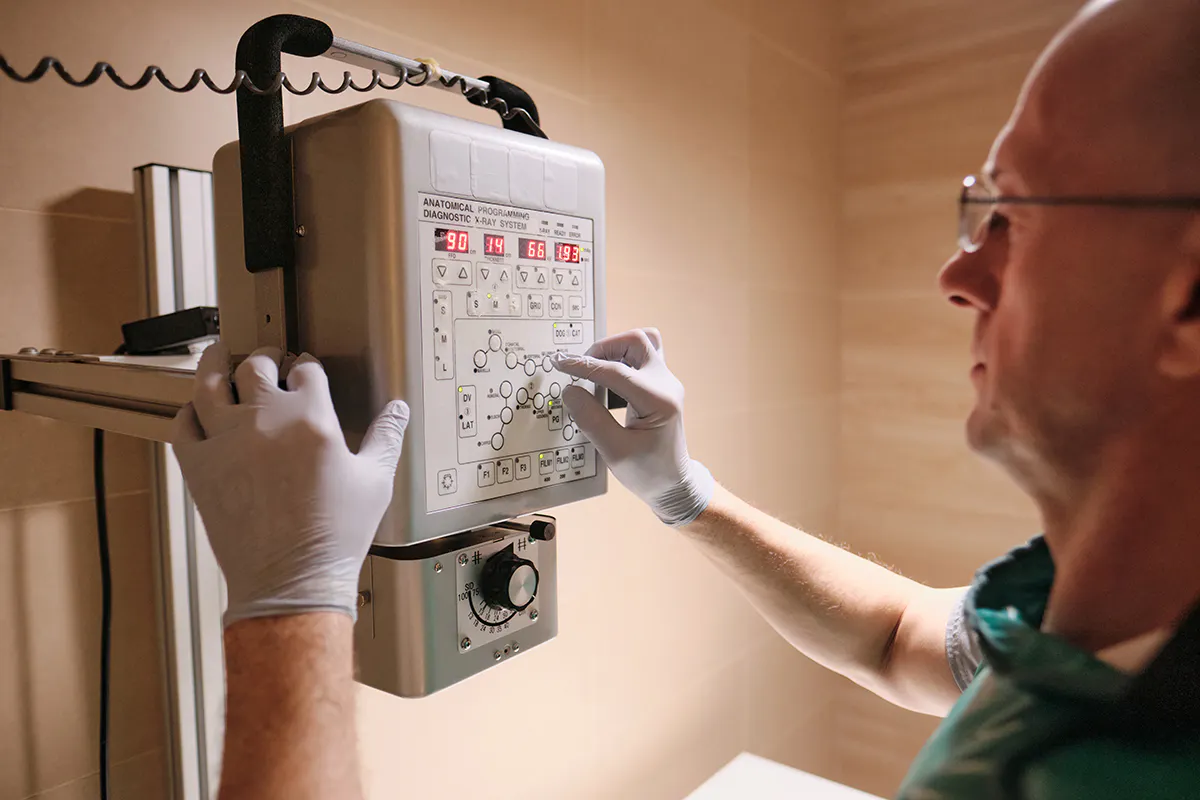
The healthcare industry is undeniably at the forefront of our priorities in terms of essential services. As a result, some of the most incredible advancements seen by our generation relate to hospital equipment and medical devices. In fact, the global healthcare original equipment manufacturer (OEM) industry is projected to generate a market size of USD 250 billion by 2023.
However, the same rate of development doesn't necessarily translate to progress in healthcare equipment preservation. For as long as anyone can remember, following OEM recommendations has been the go-to strategy for maintenance in the healthcare industry. That is, despite the growing advancements of many other maintenance philosophies in other major industries.
State of the Industry
Conventional OEM recommendations for maintenance typically follow a calendar-based or usage-based approach. Using this preventive strategy may be effective in terms of prolonging the useful life of assets, but there are not enough studies to assess the efficiency of such approaches in healthcare settings.
A Brief Overview of Maintenance History
If we take a step back, it can be understandable why maintenance strategies recommended by OEMs take a seemingly conservative stance. Facilities always need to have their equipment in good working condition due to the critical and urgent nature of the industry. But it took some time before the healthcare industry, or any other industry for that matter, could operate within the acceptable reliability standards we have today.
Running equipment to failure was common practice in the 1960s. Reactive maintenance was the only way to look after machines due to a lack of better options. Preventive maintenance (PM) shortly became vastly more popular by introducing time-based schedules to perform routine maintenance tasks. A preventive approach significantly increased the reliability and productivity of equipment in various applications.
In the 1980s, the available technology of the period allowed for a more condition-based approach. Consequently, this allowed for a more optimized take on the maintenance of equipment. Redundancy and wasteful practices became identifiable, which allowed maintenance teams to prioritize their resources towards value-adding tasks.
Fast forward to modern-day capabilities, and highly-specialized maintenance techniques are still continually improving. For instance, predictive maintenance (PdM) further increases the ability to build cost-effective strategies. PdM utilizes sensors and measuring devices to collect and analyze massive amounts of data. By gathering more information about a piece of equipment, PdM predicts the best time to perform maintenance tasks and prevent failure.
The Current State of Maintenance in Healthcare
While there's a wide range of maintenance strategies to choose from, the current state of the healthcare industry is still very traditional. It's valid to focus on reliability and dependability. But the redundancies and wasteful aspects of maintenance are glaring areas for improvement, especially considering the available alternatives. If you think relying solely on OEM recommendations sounds limited and restrictive, then you're not alone.
There have been debates about manufacturer-driven recommendations, particularly the proposed intervals of performing routine maintenance tasks. Some experts have pointed out that devices with similar functions and designs can have significantly varying intervals depending on the manufacturer. This observation raises concerns about the validity and basis of such recommendations in the first place. As an alternative to a one-size-fits-all strategy, studies suggest a more evidence-based and targeted approach. By employing a data-driven maintenance strategy, equipment owners can secure asset reliability and still be cost-effective.
Why Blindly Following OEM Manuals Can Be Costly
OEM recommendations primarily require routine activities according to a prescribed interval. In other words, a preventive strategy aims to counteract the effects of wear before any catastrophic event occurs. It makes perfect sense to service machines and devices so they remain in good working condition.
What's not as obvious is not all preventive maintenance tasks are necessary. Manufacturing and maintenance studies show some sites can easily spend 30% of PM costs unnecessarily on equipment with negligible business impact. We're all too familiar with the risk of under-maintenance. Reduction of the useful life of equipment and the danger of breakdowns are some of the inevitable outcomes of not performing enough maintenance. Performing maintenance too much, on the other hand, causes problems that are not as easily noticeable.
Waste is a significant drawback of performing a scheduled routine of preventive maintenance tasks, such as typical OEM-recommended manual procedures. The main driver of waste is in performing maintenance activities too frequently. If your maintenance tasks are according to a prescribed schedule, you cannot readily optimize according to your needs. Moreover, the same amount of maintenance will likely apply to similar devices regardless of their relative importance to a particular facility.
To improve a conventional preventive approach, consider a reliability-centered maintenance (RCM) model. RCM acknowledges different assets have varying failure modes and corresponding levels of impact. By being aware of the multiple failure modes, it becomes possible to prioritize value-adding tasks. This model also allows the user to objectively understand risks. Ultimately, the desired goal is to attain safety and reliability while doing so in a cost-effective manner.
Best Practices for Alternative Equipment Maintenance Justifications
The Centers for Medicare and Medicaid Services (CMS) require healthcare facilities to maintain their medical equipment to ensure an acceptable level of safety and quality. The expectation is for facilities to service their equipment following manufacturers' recommendations. That said, a facility may adjust its maintenance activities for medical equipment from what is recommended by the manufacturer, based on a risk-based assessment by qualified personnel. Note, however, the CMS states such adjustments are not suitable for specific cases or particular types of equipment. These exceptions are when:
Federal or state law requires adherence to OEM recommendations
The piece of equipment is a medical laser device
New equipment without a sufficient amount of maintenance history is acquired.
If a healthcare facility elects to modify the manufacturers' recommendations, they need to develop an Alternate Equipment Management (AEM) program. An AEM program consists of specific steps and policies to which the facility must strictly comply. It details the frequency of performing maintenance, inspection, tests, and other relevant activities.
A typical healthcare facility will have hundreds, if not thousands, of medical devices coming from a long list of approved suppliers. As you would expect, various manufacturers can prescribe their specific maintenance instructions that could significantly differ from another OEM. The facility would then have to master a wide variety of products, which can pose a significant challenge to workers and technicians.
By electing to perform tasks according to an AEM program, facilities have the opportunity to streamline their maintenance activities and overall strategy. Remember that while this is a practical and cost-effective approach, it bases its principles on evidence and data. Therefore, an AEM program does not only offer an efficient solution but an effective one as well.
Here are some key ideas to keep in mind when it comes to AEM best practices:
Justify Deviations
Safety remains the number one priority when building an AEM strategy. The healthcare industry quite literally deals with lives daily, so the welfare of the patients takes precedence over any other concern. When deviating from the manufacturer's recommendations, it's crucial to ensure patient safety is not put at risk.
Adapt to Become Evidence-Based
An AEM program aims to objectively assess the modes of failure and potential risks. The basis of adjustments to prescribed routines should be grounded in data and evidence. Moreover, the practice of diligently documenting evidence over time increases the credibility of your findings. Think of an AEM program as a continuous feedback loop that keeps adapting to improve as time passes. By measuring data points and establishing a baseline, facilities can track their progress using key performance indicators. Such an approach can only be possible if the facility has the capability to measure progress.
Identify Exclusions
While it's encouraging to highlight the pros of implementing an AEM program, it's equally important to call out its limitations. Keep in mind the types of equipment to exclude from an alternate maintenance program. Typical examples include imaging and radiologic devices, as well as medical laser devices. Other types of new equipment without enough maintenance history are also part of the exclusions. Being aware of these types of equipment in your facility will help ensure your program complies with the set guidelines.
Use Available Data
Facilities that already use computerized maintenance management systems (CMMS) can utilize their available data as inputs to their alternative maintenance program. However, there are cases when the extensive amount of data required to develop a sound AEM program will not always be available from just a single source. It's acceptable to compile data sources, especially for similarly structured facilities. Collectively building on information from other assets can provide a more comprehensive picture of your case. Additional resources combined with your data-gathering allow you to assess the best approach to an AEM program.
How to Get Started
Like most big decisions, getting started with an AEM strategy requires proper planning and preparation. Exploring a reliability-centered approach offers a flexible range of solutions to find the most optimal path. Remember your goal is not simply to oppose manufacturer-provided recommendations. Instead, you're looking to increase the efficiency of maintenance without negatively impacting reliability and safety.
Review the Basics
Before going into the heart of the process, it's imperative to be familiar with the relevant regulatory standards a healthcare facility should uphold. For example, keep in mind to exclude particular types of equipment from maintenance strategies that deviate from manufacturer recommendations.
Ensure the teams working on the program are aware of the organization's objectives. Involve the right people who can evaluate the direction of the strategy. The expertise and experience of the team are invaluable to the creation of an effective program.
Perform an Inventory Review
The next step requires a review of the equipment and devices within the facility. Depending on the facility's size and scope of operations, this step can take a significant amount of effort. Something that helps is maximizing the capability of CMMS and asset management software. Be sure to include all critical equipment, its subcomponents, and the functions they perform.
Analyze System Functions and Perform a Risk Assessment
A comprehensive list of a facility's devices allows you to identify the impact of each machine's functions. The purpose of this step is to gain the ability to prioritize the allocation of resources. You can therefore rank various pieces of equipment according to their impact on operations and patient safety.
Information from analyzing system functions gives you a good understanding of the risk of not having a particular device in use. A systematic method, known as Failure Mode and Effects Analysis (FMEA), identifies potential failures and their consequences. Tools like FMEA provide a more structured approach to describe the risks associated with equipment failure.
Identify and Assign Maintenance Strategies
The previous steps equip the team with information to identify and assign the most suitable maintenance strategy for each device. In this step, it's perfectly acceptable to retain OEM recommendations where the findings might suggest so. However, your list of options is considerably longer. You might choose to modify the intervals of servicing your machines, dependent on the condition of the asset. Devices that do not impact safety or reliability can take on a run-to-fail approach that may be more practical.
By having the flexibility to assign various approaches for different types of equipment, facilities can focus their resources toward more value-added tasks. In the long run, this translates to higher reliability and safety while not necessarily spending more. The key is in reducing redundancies and prioritizing higher-impact activities.
Assess Effectiveness
Teams should collect and measure performance indicators and equipment condition baselines before the rollout of a new program. These measurements are typically collected routinely throughout the program to assess the effectiveness of the change in strategy. Proper documentation of these results and findings lets the team know where to look in case a deep-dive analysis is required. These practices allow the maintenance teams to systematically refine and improve on existing processes.
4,000+ COMPANIES RELY ON ASSET OPERATIONS MANAGEMENT
Leading the Way to a Better Future for Maintenance and Reliability
Your asset and equipment data doesn't belong in a silo. UpKeep makes it simple to see where everything stands, all in one place. That means less guesswork and more time to focus on what matters.






![[Review Badge] Gartner Peer Insights (Dark)](https://www.datocms-assets.com/38028/1673900494-gartner-logo-dark.png?auto=compress&fm=webp&w=336)