Blog Post
Commercial HVAC Maintenance Checklist To Help Streamline Processes
Looking to streamline preventive maintenance processes for your company? Learn how a commercial HVAC maintenance checklist with UpKeep can help organize processes while reducing downtime and costs.


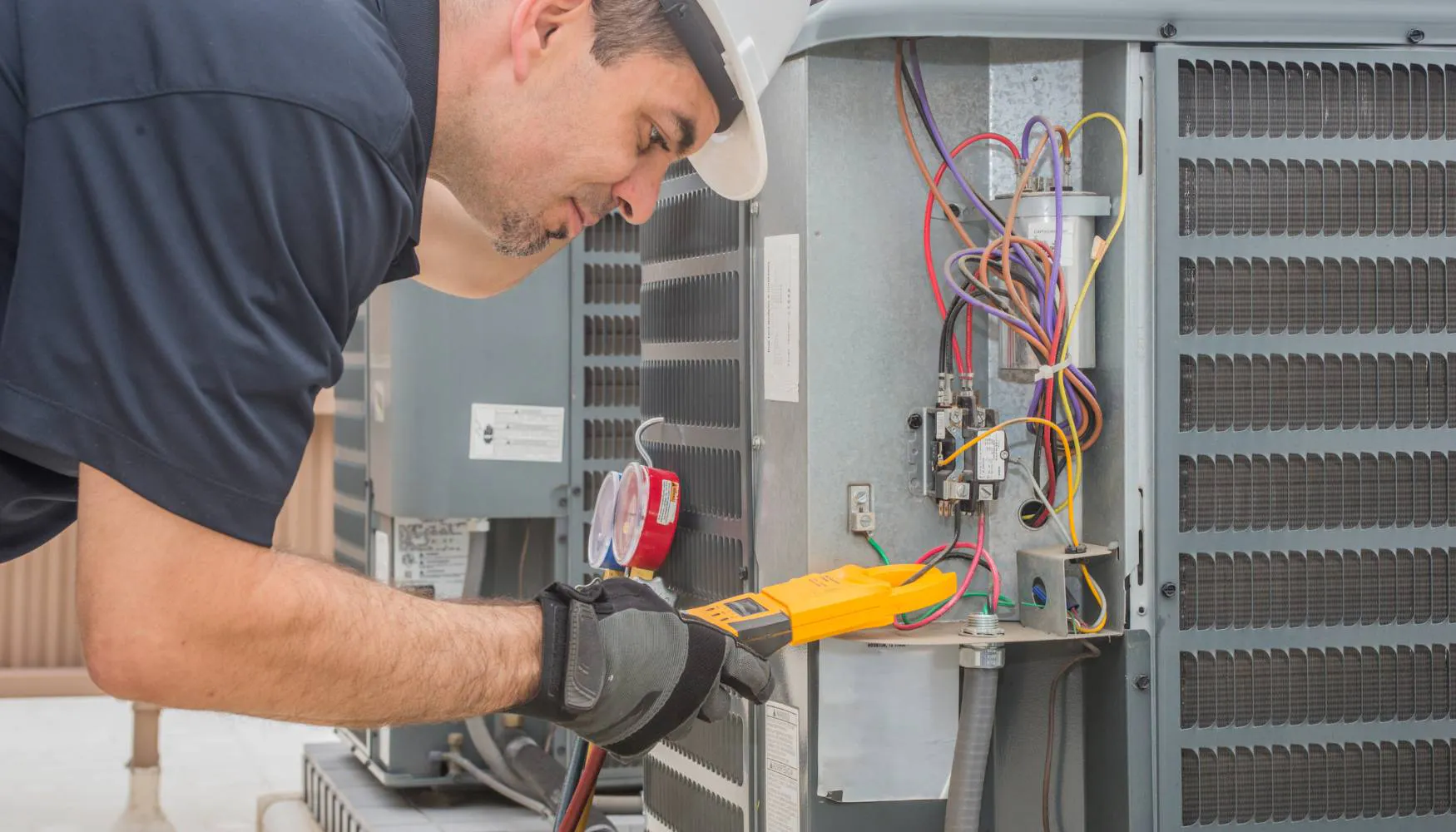
Implementing a Commercial HVAC Maintenance Checklist for Your Company and Why It’s Helpful
In the U.S. today, most residential and commercial buildings have heating, ventilating, and air conditioning (HVAC) systems that help maintain a comfortable temperature throughout the year.
Only when there is a malfunction in the middle of the summer heat or bitter winter cold do we realize how much we take these systems for granted. HVAC system failures can cause discomfort for tenants, employees, clients, or customers.
Although no HVAC system is guaranteed to run smoothly 100 percent of the time, companies can minimize the frequency and complexity of repairs by implementing a regular preventive maintenance plan.
But what are the benefits of developing a preventive commercial HVAC maintenance checklist? And how can you implement the right plan for your business?
Read on to learn the answers to these questions and more.
Table of Contents
What To Include on Your Commercial HVAC Maintenance Checklist
3 Benefits of Utilizing CMMS Software for HVAC System Preventive Maintenance
UpKeep: Streamlining Commercial HVAC Maintenance Processes With CMMS Software
Understanding Your Maintenance Options
For homeowners, businesses, and agencies, the most predominant equipment maintenance program is “reactive maintenance,” which is essentially a “run it until it breaks” model. In other words, no maintenance actions take place until there is a system failure.
While this method may save you from expending manpower, and dollars, or incurring capital costs in the beginning, it ultimately shortens the reliability and lifespan of your HVAC system, leading to larger expenditures down the road.
And the proof is in the numbers —– according to Forbes, most basic HVAC system repairs cost around $100 to $1,200 on average, while more extensive damages can cost up to $2,500 or more.
But what if we told you that you could avoid costly repairs and extend the longevity of your HVAC system with a simple, low-cost solution?
It’s called “preventive maintenance.” It involves performing regular maintenance on a time- or machine-run-based schedule in order to detect, preclude, or mitigate degradation of equipment. This is often done according to specific manufacturer recommendations.
What Is an HVAC System Maintenance Checklist?
The first step to implementing a preventive maintenance plan is creating an HVAC system maintenance checklist. This checklist will consist of key repair and maintenance tasks that should be carried out regularly and will be specific to your system’s requirements.
It will allow technicians to carry out maintenance activities as intended by the product designer, ultimately extending the overall life of the equipment and preventing disruptions to business.
An HVAC system maintenance checklist will include the inspection of various components, including:
Thermostat
Furnace or blower motor
Heat exchanger
Evaporator coil
Condensing unit
Refrigerant lines
Ductwork; and
Return and supply registers
Some of these components are thoroughly inspected, cleaned, or replaced weekly or monthly, while others are addressed seasonally. Energy Star suggests getting a professional maintenance check done bi-annually prior to the start of a new season.
The Importance of Preventive HVAC Maintenance
For homeowners, businesses, and other organizations, there are several benefits to switching from a reactive to a preventative maintenance plan for HVAC systems.
Some of the most notable improvements include:
Lower energy bills – In the average residential or commercial building, the HVAC system uses more energy than any other type of equipment. Regular maintenance tasks such as cleaning coils, checking refrigerant levels, and lubricating motors ensure that your HVAC system is running at maximum efficiency. A less efficient HVAC system requires more energy to heat or cool a building to a comfortable temperature, which contributes to higher energy bills.
Fewer repair bills – All HVAC systems will eventually require the occasional repair. Practicing regular preventive maintenance allows your technician to address potential issues before they become complex and expensive problems.
Extended system lifespan – HVAC system manufacturers spend a lot of time and money on product testing. They know exactly when maintenance tasks need to be completed in order to maximize the lifespan of the product. Following the manufacturer’s maintenance schedule as described in the product manual ensures that you get the best return on investment from your HVAC system.
Improved safety and air quality – Preventive HVAC maintenance tasks such as filter cleaning or replacement, lubrication, electrical systems checks, and coil cleaning are crucial in identifying potential fire hazards and risks to air quality. If neglected, damaged, or clogged HVAC systems can lead to increased levels of humidity, dust, or debris in the air. Long-term exposure to poor indoor air quality can have serious health consequences for a building’s occupants.
What To Consider Before Creating Your Preventive Maintenance HVAC System Checklist
The first thing to do when developing an HVAC preventive maintenance checklist is to reference your owner’s manual. There, you will find a thoroughly tested and proven maintenance schedule along with service recommendations.
Your maintenance plan will also depend on:
The type of HVAC system and its particular manufacturer
Any warranty agreements
The age and condition of the HVAC system
Maintenance and repair history of the HVAC system
How often the HVAC system is used
The local climate and time of year (season)
Once you’ve collected all applicable data, you can start formulating your commercial HVAC maintenance checklist.
What To Include on Your Commercial HVAC System Maintenance Checklist
Crafting a comprehensive maintenance checklist is key to proactively addressing potential issues and optimizing the performance of your commercial HVAC system.
Tasks on your checklist may vary depending on the asset (heating or cooling) or the season. Below, we’ll discuss some items your technician should look at during each associated maintenance check.
HVAC System Maintenance Checklist by Asset
Technicians generally use three checklists when conducting HVAC maintenance. One is a general HVAC preventive maintenance checklist, while the other two are specific to air conditioning or heating components such as:
Although these checklists may include up to a hundred items in reality, here are some of the most common inclusions:
General HVAC System Maintenance Checklist
Check thermostat settings.
Tighten electrical connections.
Inspect and change air filters.
Check and clean air intake.
Measure voltage and current on motors.
Lubricate all moving parts.
Inspect the condensate drain.
Check the system’s controls, including the starting cycle of the equipment.
Heating-Specific Checklist
Check all gas (or oil) connections.
Check for a cracked exchanger or a dirty burner.
Measure gas pressure, burner combustion, and heat exchanger.
Cooling-Specific Checklist
Check and clean evaporator and condenser air conditioning coils.
Check the central air conditioner's refrigerant level and adjust it if necessary.
Clean and adjust blower components to ensure proper system airflow.
HVAC System Maintenance Checklist by Season
Many HVAC systems combine both heating and cooling components within a single unit, so it’s best to schedule maintenance checks at least twice a year before switching between systems.
One maintenance check should occur in the spring to inspect air conditioning components. The other maintenance check should occur in the fall to inspect heating components.
Here’s what a technician will check before each of the season changes:
Spring and Summer HVAC System Maintenance Checklist
Clean or replace all filters.
Clean evaporator and condenser coils.
Check the drain lines for clogs.
Check the refrigerant for leaks.
Remove any water from the drain pan.
Replace worn pulleys or belts.
Inspect system airflow.
Check thermostat settings and ensure functionality.
Check all electrical connections.
Inspect blowers and blades.
Remove any debris on or around the unit.
Fall and Winter HVAC System Maintenance Checklist
Clean or replace all filters.
Check the ignition burner assembly.
Inspect heating elements or heat exchangers.
Clean and check the flue system.
Ensure the flue system is securely attached to the furnace,
Check for signs of gas leaks.
Check the gas pressure.
Replace worn belts or pulleys.
Check the drain lines for clogs.
Remove any water from the drain pan.
Check all electrical connections.
Check thermostat settings and ensure functionality.
Lubricate all moving parts.
Check the heat pump.
3 Benefits of Utilizing CMMS Software for HVAC System Preventive Maintenance
Any time we fail to replace equipment components according to the manufacturer’s recommendation, we shorten the equipment’s lifespan. But in order to know which components need to be replaced, we need to have an accurate record of previous work history.
While documentation can be done manually, there are many programs on the market that can do the work for you, such as Upkeep’s computerized maintenance management (CMMS) software.
From data collection to scheduling, Upkeep is designed to simplify maintenance information and operations.
Read on to learn a few of the ways that CMMS optimizes HVAC system preventive maintenance.
#1: Reduce Maintenance Costs
Once product data has been entered into the program, CMMS software allows users to schedule and automate preventive maintenance tasks.
With regular maintenance, you can increase the longevity and efficiency of your HVAC system, meaning your business can avoid costly repairs or early replacements down the road.
According to the US Department of Energy, companies can expect an average of 12 to 18 percent cost savings after implementing an effective preventive maintenance system.
#2: Reduce Downtime
A functioning HVAC system is crucial to regulating temperature for employees, clients, and customers alike. CMMS supports the implementation of preventive maintenance programs.
It can store key documentation, create maintenance schedules, and track asset performance. By conducting regular maintenance activities, potential issues can be identified and addressed before they lead to equipment failure and downtime, which may disrupt your business.
In fact, Upkeep can reduce equipment and asset downtime by up to 26%.
#3: Streamline Maintenance Processes
UpKeep’s CMMS software is more than just CMMS – it’s an asset operations management (AOM) platform.
Upkeep provides users with a centralized system to document maintenance processes, record equipment history, and store important documents related to your HVAC system.
You can even set up automated reminders for regular maintenance, filter and prioritize work orders, and monitor progress in real-time.
UpKeep: Streamlining Commercial HVAC Maintenance Processes With CMMS Software
Whether you’re planning to implement a preventive maintenance plan for one system or a hundred, you can stay organized with UpKeep.
UpKeep's powerful CMMS capabilities enable teams to:
Schedule equipment maintenance easily.
Create alerts to ensure the correct parts are always available.
Gain visibility into costs.
Make any work order repeat based on a set day, week, or month duration.
Create automated PMs based on machine cycles, vehicle mileage, or any other unit of measure.
Automatically create work orders and send mobile push notifications to technicians when assigned.
Easily attach PDFs of equipment manuals and instructions to a work order.
Ready to get started? Find out more about how UpKeep supports a comprehensive preventive maintenance program.
4,000+ COMPANIES RELY ON ASSET OPERATIONS MANAGEMENT
Leading the Way to a Better Future for Maintenance and Reliability
Your asset and equipment data doesn't belong in a silo. UpKeep makes it simple to see where everything stands, all in one place. That means less guesswork and more time to focus on what matters.






![[Review Badge] Gartner Peer Insights (Dark)](https://www.datocms-assets.com/38028/1673900494-gartner-logo-dark.png?auto=compress&fm=webp&w=336)