Blog Post
Agricultural Tech Advancements That Will Drive the Next Decade
Over the last several weeks, we’ve talked about how manufacturing has been slow to adopt technology, specifically as it relates to maintenance. Many of our initial conversations with new UpKeep customers still focus on getting off pen and paper and other manual systems. We’ve addressed how much more difficult it is to implement technologies like artificial intelligence and robotics in a physical world compared with a digital one.


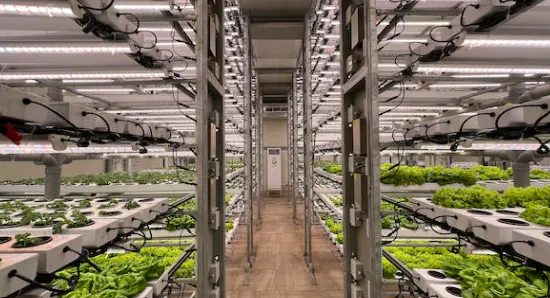
This week, I thought it would be interesting to take a closer look at an industry that’s arguably even slower than manufacturing: agriculture. Not only is agriculture firmly grounded in the physical world, it’s surrounded by uncontrollable factors like weather, storms, and temperature fluctuations. While a growing number of technological solutions are designed to help farmers, many are finding the expense and amount of data generated overwhelming.
Conventional farming, especially in the United States, is increasingly controlled by large corporations, resulting in razor-thin margins for all. In addition, direct government farm payments are forecast at $12.6 billion in 2023, potentially skewing free market forces at work within the industry.
Demand for food is also expected to increase by 70 to 100 percent by 2050. To meet this need, the United Nations estimates that food production in developing countries will need to almost double.
So, what’s this all mean for agricultural technology advancements in the next 10 years? Here are some promising possibilities and what I think.
Moving to High-Tech Mechanization
First, I think we’ll continue to see innovations that focus on making conventional farming practices easier and more efficient. For thousands of years, farmers have developed tools, machinery, and chemicals that are focused on helping them produce more food within a growing season.
Developments today are shifting from these low-tech mechanization solutions to high-tech ones such as remote planting and harvesting of crops using autonomous tractors and robotic milking and egg collection systems. Sensors can monitor things like moisture, pest activity, and readiness for harvest. All of these solutions have promise in streamlining conventional farming.
Meatless Meat Is On the Rise
We’ve also seen developments in food production and processing itself. One of the most popular segments is meatless-meat with companies such as Impossible Foods and Beyond Meat entering the market in recent years. Since 2019, sales for plant-based meats have grown by 43 percent. Proponents point out that while only 18 percent of calories come from livestock, 80 percent of agricultural land is used for farm animals. The Good Food Institute, a nonprofit dedicated to alternative protein innovation, also notes that one-third of the global grain supply is being used for animal feed. The idea behind increasing the amount of alternative plant-based proteins into the world’s diet is that it will help increase food security.
Making the Uncontrollable Controllable
The most difficult factors in conventional farming are all the uncontrollable circumstances with weather and climate that can affect yield. I think one of the most exciting developments in agriculture is actually being pioneered by an UpKeep customer, PlantLab. This organization, with roots in conventional farming, is now a global leader in indoor agriculture.
High-tech greenhouses can not only control things like light, temperature, humidity and water usage, but they can serve as testing grounds for the best type of light for optimal growth, drones that kill plant-damaging moths, and what crops grow best in which climates around the world. The Netherlands has embraced this advanced technology, making it one of the largest exporters of both food and food-related technology.
Agricultural Technological Advancements Means New Opportunities in Maintenance
I think that all of these growing developments within the agriculture industry will be the seeds for incredible future career opportunities for maintenance.
We’ve already seen an increase of white-collar positions negatively affected by artificial intelligence and automation. Professionals who spend their careers working with bits and bytes and performing tasks that are repetitive and predictable will be replaced by technologies that can accomplish the same goals faster, cheaper and more accurately. These professionals will need to upskill and find opportunities that require uniquely human strengths such as empathy, creativity, and relationship.
Maintenance positions, typically viewed as blue-collar jobs, have the upperhand in a sense because they are firmly grounded in the physical world. They require not only understanding the assets, systems, and presenting problems but also the physical skill to make the necessary repairs, adjustments or inspections. That combination may elevate the skilled maintenance technician to new heights.
These amazing developments in agriculture technology are just around the corner, promising to revolutionize something we all consume and need every day. As a result, I think this may be one of the most exciting times to be in the maintenance field within the agricultural industry, truly making a positive difference to humankind.
Want to keep reading?


Article
Shifting Landscape: The Evolution of the Oil and Gas Industry Is Creating New Opportunities For Maintenance



Article
Why does it seem like manufacturing is still using 1990 technology? You guessed it; they are.



Article
A Closer Look at Why Unions in Manufacturing Have Been Declining Since The 1970s
4,000+ COMPANIES RELY ON ASSET OPERATIONS MANAGEMENT
Leading the Way to a Better Future for Maintenance and Reliability
Your asset and equipment data doesn't belong in a silo. UpKeep makes it simple to see where everything stands, all in one place. That means less guesswork and more time to focus on what matters.






![[Review Badge] Gartner Peer Insights (Dark)](https://www.datocms-assets.com/38028/1673900494-gartner-logo-dark.png?auto=compress&fm=webp&w=336)