Success Story
How Camp Fire Heart of Iowa Transformed Facilities Management
With UpKeep, Camp Fire Heart of Iowa transformed from sticky note chaos to data-driven facilities management. Facilities Director Blake Barrett now identifies budget overruns, secures grant funding for capital projects, and has shifted from reactive repairs to strategic preventative maintenance planning.


Overview
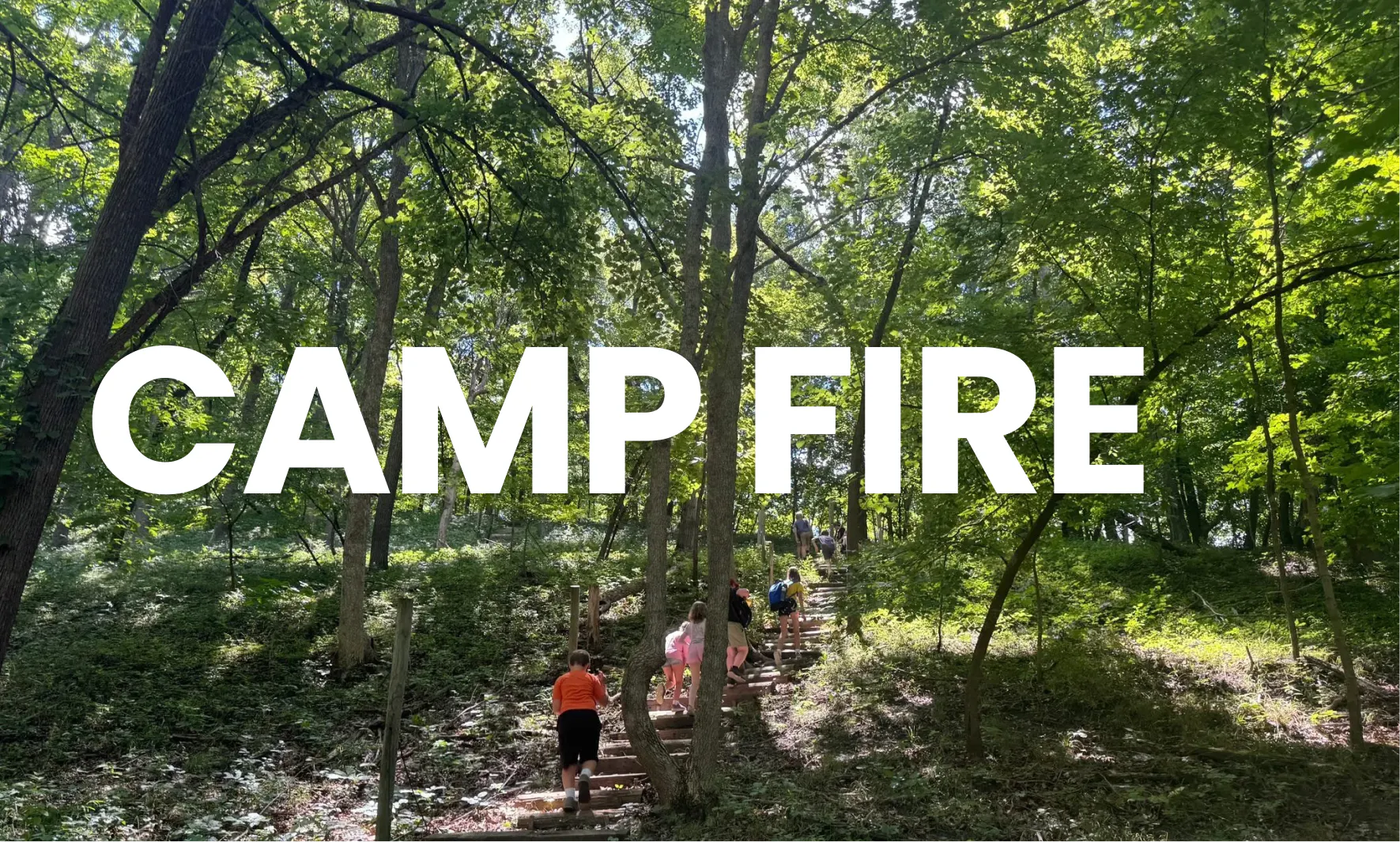
Camp Fire Heart of Iowa, a non-profit youth development organization serving kids across Central Iowa since 1919, faced the challenge of managing maintenance across 60 buildings on 168 acres at their Boone location, plus 5 additional sites, all while operating with the budget constraints typical of non-profit organizations.
Blake Barrett, Facilities Director since 2017, inherited a maintenance system based on sticky notes and reactive repairs. By implementing UpKeep, he transformed Camp Fire Heart's operations into a data-driven program that secures grant funding, justifies staffing decisions, and shifts toward preventative maintenance.
The Challenge: Managing Maintenance Across Multiple Sites
Blake's background spans building houses, managing a small engine shop, and volunteering with Camp Fire Heart since 1998. When he became Facilities Director in 2017, he encountered significant operational challenges:
Sticky Note System
"When I first came in here as the Facilities Director, we had a staff of about 60 people in the summer, and they were constantly leaving sticky notes, and then sticky notes were getting lost."
The problems with this system:
-
Lost maintenance requests across 5 sites
-
No way to track duplicate requests
-
No feedback loop for requesters to know status
-
No documentation of completed work
Seasonal Staffing Complexity
As a summer-focused organization, Camp Fire Heart faces unique challenges:
-
Staff numbers increase dramatically when kids are out of school
-
International staff hired each season create language barriers
-
New seasonal maintenance staff need quick onboarding
-
Identifying tools and locations for new hires is time-consuming
Non-Profit Funding Constraints
"In camping, it's often seen that there is a maintenance guy, and his job's just to go out and fix things."
Blake needed to prove the facilities department was more than just "the maintenance guy":
-
Hard to secure funding for unglamorous systems like septic and HVAC
-
Difficult to justify staffing levels without data
-
No way to distinguish between normal wear-and-tear and preventable damage
-
Couldn't demonstrate ROI to boards and donors
The Solution: UpKeep as the Foundation for Data-Driven Operations
Replacing the Sticky Note System
UpKeep's request system immediately solved communication issues:
"Now it's been great that we've been able to have the ability for people to request, whether it's our staff. We also have volunteers set up that they can request through the email setup. That allows it to make sure that we're not losing any of those requests."
Benefits realized:
-
No more lost maintenance requests
-
Easy to identify duplicate requests
-
Feedback to requesters on work order status
-
Complete documentation of all maintenance activities
Using Data to Identify Problem Areas
Blake discovered UpKeep's ability to categorize work orders revealed critical insights:
"Based on the information that we went into UpKeep, we were able to identify work orders that we classified as negligent work orders. They were not typically caused by wear and tear. This is things like broken windows, somebody broke a bed and it was due to an activity that was going on."
The impact: "It ended up actually being about 150% of my facility's budget on buildings specific to one site."
With this data, Blake could take action: "We were able to sit down and kind of identify those areas that had the highest negligent work orders, and then we actually looked at our staffing. We need to have more staff supervising kids in this area. We need to have less traffic in a certain area."
Securing Funding with ROI Data
UpKeep helped Blake overcome a major challenge: getting donors excited about infrastructure.
"When I go to donors and I'm talking about a septic system or an HVAC system, it's really hard to get people excited about that. I'm able to use some of the data saying that this is our upkeep cost on this unit, and it's costing the camp a whole bunch of money. This is my replacement cost. This is how often my guys are having to go in and work on these specific units."
Result: "That's helped actually gain us some funding. We're currently putting in 4 new HVAC systems."
Onboarding Seasonal and International Staff
UpKeep's features addressed staffing challenges:
"We have the opportunity to hire international staff, and so sometimes we've run into a language barrier. Upkeep for quite a while has been really good about having the language integration into it, which has sped up things a lot."
Historical data helps new staff: "My techs are able to go back and look at historical data, what kind of stuff has typically been done in these areas. When they go in to go work on an asset, they can see previous work orders, which has really helped us out."
How Blake Uses UpKeep Nova
Blake leverages Nova to make operations more efficient and proactive:
Accurate Scheduling
"I really want to be able to schedule my staff in an accurate way where it doesn't feel like I'm overloading their daily work schedule. Nova's been great to be able to go back in, and I can ask Nova and say, how long does this work order typically take over the past however long."
Predictive Maintenance Planning
"Yesterday, I was playing around with it, and I was asking Nova to tell me what are the typical locations that I have the most requests in in the month of February, so that we can try to get ahead of that and get into those areas, and start turning some of it into preventative maintenance rather than reactive."
Asset Management
"As we've been able to get all of our assets plugged in, it's really kind of helping us identify where those areas of high cost are, so that we can start laying those out as either a quicker replacement or timing out some of that stuff, so that way we're not hit with a large capital expenditure right away."
The Results
Career Growth and Role Evolution
"When I first took the job, it was starting as the maintenance guy, and I was very hands-on. I was every day out in the field. But through being able to take and have data and present that, it's allowed me to kind of focus more on the higher-end level."
Blake can now focus on strategic initiatives like roadmaps and master facilities plans rather than day-to-day repairs.
Justified Staffing Expansion
"We've been able to justify hiring other staff based on I can show to my board of directors, this is the actual amount of time that's being taken on these work orders. No matter what we estimate it in at, the actual numbers is what matters. So it's allowed us to expand our staff."
Shift from Reactive to Preventative Maintenance
By identifying patterns in historical data and understanding where issues commonly occur, Blake is moving the organization away from constant firefighting toward planned, preventative maintenance.
Improved Communication with Leadership
"In the facilities industry, it's hard to explain to boards and directors exactly what's going on, so it's been a wonderful tool to be able to take that information and share it out."
Secured Grant Funding
Data-driven presentations helped secure funding for major capital improvements like 4 new HVAC systems—projects that are traditionally hard to fundraise for in non-profit settings.
Looking Ahead
Blake's vision for the next year: "We really want to be able to continue to track all of the data and be able to push more for the grants, getting further away from the reactive maintenance, get more into the preventative, and really be able to work with our team outside of the facilities department as a whole so that way we can all work together."
Blake's Advice to Other Facilities Leaders
"Document, document, document. Once you have good documentation, then you need a way to be able to organize it, be able to review it, and then really make informed decisions around your budgeting, repairs versus replacement, staffing. And Upkeep's kind of been the best tool for us for that."
Conclusion
Camp Fire Heart of Iowa's transformation from sticky notes to data-driven facilities management demonstrates that even non-profit organizations with limited budgets can modernize operations and secure funding through proper documentation and analytics. Blake Barrett proved that facilities management is more than just "the maintenance guy"—it's a strategic function that requires and deserves the right tools.
¿Quieres seguir leyendo?


Equipos / Fabricación
Alto Products pasa del mantenimiento reactivo al preventivo


Equipos / Fabricación
La microtecnología innovadora crea una cultura centrada en la seguridad


Equipos / Fabricación
Columbia Fruit ahorra dinero con un inventario organizado
Más de 4.000 empresas confían en la gestión de operaciones de activos.
Guiando el camino hacia un mejor futuro para el mantenimiento y la fiabilidad
Tu datos de activos y equipos no pertenecen a un silo. UpKeep hace que sea sencillo ver dónde está todo, todo en un solo lugar. Esto significa menos adivinanzas y más tiempo para centrarse en lo que importa.




![[Review Badge] Gartner Peer Insights (Dark)](https://www.datocms-assets.com/38028/1673900494-gartner-logo-dark.png?auto=compress&fm=webp&w=336)