Entrada en el Blog
La función de la tecnología de sensores en la revolución de la mantención preventiva.
Mientras que las tareas de mantenimiento preventivo siempre tendrán su lugar en un programa de gestión de activos integral, las tecnologías de sensores de mantenimiento predictivo de hoy prometen revolucionar la forma en que se maneja el mantenimiento preventivo y elevar aún más el nivel de rendimient


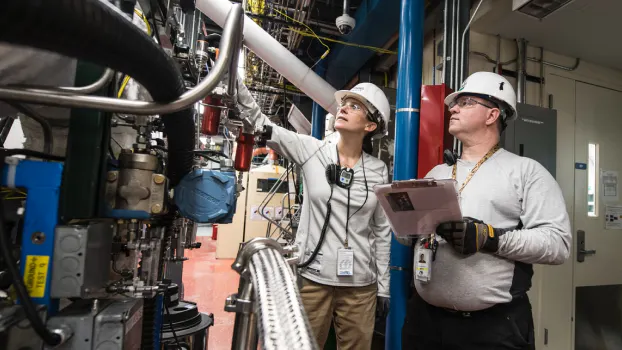
Understanding Condition-Based Maintenance Technologies
Imagine this: all of your production lines are 100 percent optimized and running smoothly all the time. Shortly before one of your critical assets is about to break down, your maintenance team gets an alert that gives them enough notice to schedule downtime and perform the necessary service or repair before affecting production. That world can be a reality with a condition-based maintenance (CBM) program.
Today, many different technologies can help your organization implement a successful CBM program. Understanding these solutions and which ones may be the best fit for your business will be important in helping you get closer to this ideal production scenario.
What is condition-based maintenance?
Condition-based maintenance (CBM) is a proactive approach that leverages real-time data and advanced technologies to predict and prevent equipment failures. Unlike traditional maintenance methods that rely on fixed schedules or reactive repairs, CBM focuses on the actual condition of assets, ensuring maintenance is performed only when necessary. This not only reduces downtime but also optimizes maintenance costs, improves safety, and extends the lifespan of equipment.
This can be achieved using predictive maintenance tools like sensors that provide round-the-clock monitoring of crucial performance data. For instance, sensors can monitor the temperature of a commercial freezer for a food manufacturer. Other conditions like pressure, humidity, vibration and more may all be indicators of potential problems and impending failures in the complex world of manufacturing and production.
Condition-based manufacturing technologies
Here are some of the existing technologies that allow organizations to successfully implement a CBM strategy.
Vibration Analysis
Vibration analysis is one of the most common techniques used in CBM. This technology involves monitoring the vibrations produced by machinery during operation. Changes in vibration patterns can indicate issues such as imbalance, misalignment, or bearing failures. Sensors are placed on critical parts of the machinery to capture vibration data. This data is then analyzed using software that can detect abnormalities or trends that suggest wear or impending failure. Vibration analysis is widely used in rotating equipment like pumps, motors, and turbines.
Infrared Thermography
Infrared thermography uses thermal imaging cameras to detect heat patterns and anomalies in equipment. This technology is crucial for identifying issues such as electrical faults, poor insulation, and friction in mechanical parts. Thermal cameras capture infrared radiation emitted by equipment, converting it into a temperature map. Abnormal heat signatures can indicate problems that require attention. Commonly used in electrical systems, motors, bearings, and process equipment, infrared thermography can detect overheating components before they fail.
Ultrasonic Testing
Ultrasonic testing involves using high-frequency sound waves to detect internal defects in materials or components. This non-destructive testing method is particularly effective in identifying cracks, voids, and other structural anomalies. An ultrasonic transducer sends sound waves into the material, and the reflected waves are analyzed to detect any irregularities within the structure. This technology is often used in pipeline inspections, pressure vessels, and structural components in various industries.
Oil Analysis
Oil analysis, or tribology, examines the condition of lubricants in machinery to assess the health of the equipment. This technique can identify issues such as contamination, wear particles, and degradation of the oil itself. Samples of lubricant are taken from the equipment and analyzed in a lab. The presence of certain particles or chemical changes can indicate specific types of wear or contamination. Oil analysis is commonly used in engines, gearboxes, and hydraulic systems where lubrication is critical to operation.
Acoustic Emission Monitoring
Acoustic emission monitoring is a technique that listens for high-frequency sounds emitted by materials under stress. This method is particularly useful for detecting early signs of cracks, leaks, and other forms of material degradation. Sensors detect and measure the energy released by materials as they undergo deformation. The data is analyzed to identify potential failure points. Used in structural health monitoring of bridges, pressure vessels, and other critical infrastructure, acoustic emissions monitoring can be extremely useful in CBM.
Electrical Signature Analysis
Electrical signature analysis (ESA) monitors the electrical patterns in motors and other electrical equipment. Changes in the electrical signature can indicate mechanical or electrical issues such as rotor faults or power quality problems. ESA tools measure and analyze the electrical signals of a machine, comparing them against known patterns of healthy and faulty conditions. This technology is widely used in motors, generators, and other electrical machinery to detect issues early.
Pressure monitoring
Pressure monitoring tracks pressure levels within equipment over time. Sensors or transducers are installed at critical points within the system, such as in pipelines, hydraulic systems, or pressure vessels. These sensors convert pressure readings into electrical signals, which are sent as real-time data to a centralized system or controller. The collected pressure data is analyzed against pre-set thresholds. If they deviate significantly from the expected range, it may indicate potential issues such as blockages, leaks, pump failures, or other malfunctions.
Machine Learning and AI Integration
The integration of machine learning and artificial intelligence into CBM has revolutionized the way data is analyzed and used for predictive maintenance. These technologies can process vast amounts of data, identifying patterns and making predictions with high accuracy. Machine learning algorithms analyze historical and real-time data from sensors, learning from patterns to predict failures before they happen. AI can also optimize maintenance schedules and recommend actions based on data insights. These can be used across various industries to enhance the predictive capabilities of CBM, leading to smarter and more efficient maintenance strategies.
How to optimize condition-based maintenance
Incorporating CBM into an overall asset operations management (AOM) program will ensure your investment is well spent.
First, find your baseline. Identify your critical assets, the things you can measure for optimal performance, and your failure modes for this equipment. Next, create a potential failure or PF curve, which will help you visualize the health of your assets over time. Then, implement a technology that pulls together the best of maintenance operations and reliability data and processes to help you make the smartest business decisions. Finally, build the right culture for a technology and condition-based maintenance program to be sustainable and successful in the long run. This culture should offer ongoing training to staff technicians and all employees.
Conclusion
CBM technologies are transforming how industries approach asset management and reliability. By leveraging advanced tools like vibration analysis, infrared thermography, and AI, companies can ensure that maintenance activities are timely, cost-effective, and based on the actual needs of their equipment. As these technologies continue to evolve, the potential for even greater efficiency and reliability in industrial operations will only increase. Whether you’re in manufacturing, energy, or any other industry with critical assets, embracing CBM technologies is key to staying competitive and minimizing unexpected downtime.
¿Quieres seguir leyendo?
Artículo
La función de la tecnología de sensores en la revolución de la mantención preventiva.



Artículo
Optimización del Mantenimiento Preventivo | Lo que necesitas saber
Artículo
La función de la tecnología de sensores en la revolución de la mantención preventiva.
MÁS DE 4000 EMPRESAS CONFÍAN EN LA GESTIÓN DE OPERACIONES DE ACTIVOS
Liderando el camino hacia un futuro mejor para el mantenimiento y la confiabilidad
Los datos de sus activos y equipos no pertenecen a un silo. UpKeep simplifica ver dónde se encuentra todo, todo en un solo lugar. Eso significa menos conjeturas y más tiempo para concentrarse en lo que importa.






![[Review Badge] Gartner Peer Insights (Dark)](https://www.datocms-assets.com/38028/1673900494-gartner-logo-dark.png?auto=compress&fm=webp&w=336)