Entrada en el Blog
Por qué una crisis financiera frena el crecimiento manufacturero de EE. UU. más que el crecimiento tecnológico
He tenido una semana estresante. Imagine mi reacción cuando supe a través de los medios de comunicación que el Silicon Valley Bank incumplió de la noche a la mañana. UpKeep era una de las miles de empresas tecnológicas que tenían todos sus depósitos en Silicon Valley Bank. Sin culpa mía, sin malas decisiones comerciales, todo el dinero que tenía mi empresa podría haberse ido.



Not only did I begin to reflect on society’s overall confidence that money is safe in the bank, but I considered what kind of impact financial crises such as this one has on other, less agile, industries such as manufacturing. While I believe that the Silicon Valley Bank crisis could continue to have ripple effects throughout the U.S. economy in the coming weeks, many technology companies with fewer physical assets will adjust their course, weather the storm, and bounce back quickly when times are better. However, I expect the impact on asset-heavy manufacturing companies to be much different.
Manufacturing was particularly hit harder than most industries during the great recession of 2008
Let’s turn back the clock to the period between 2007 and 2009 when the housing mortgage debacle, poor regulations, risky borrowing, and the failure of Lehman Brothers, the fourth largest investment bank, all contributed to the Great Recession of 2008. The U.S. gross domestic product fell by 4.3 percent by fall of 2008, resulting in the deepest recession since World War II.
According to the Bureau of Labor Statistics, the manufacturing sector was particularly hard-hit during the Great Recession, “Manufacturing job losses then accelerated during the December 2007–June 2009 recession and totaled more than 2 million employees, or 15 percent of its workforce, during the 18-month period.”
In comparison, the technology industry slowed down, but some sectors were still adding jobs during this period. According to InfoWorld, “For all of 2008, software services added 86,200 jobs across the U.S. … and engineering and tech services added 26,600 jobs…. Those gains were offset by a 23,100-job decrease in high-tech manufacturing, including computer and peripheral equipment, communications equipment, consumer electronics and semiconductors.” While unemployment was up slightly in high-tech fields, it was still relatively low in the 2 percent range while the overall U.S. unemployment rate was 8.1 percent.
In addition to unemployment impact, a Deloitte report noted that “During the Great Recession, the U.S. manufacturing downturn resulted in a loss of 10 percent of its GDP, compared with only 4 percent for the overall economy.” The technology industry did not suffer as much as the rest of the economy; in fact, many only slowed down their growth and some invested in further research and development during this period. More than 80% of public SaaS companies continued to grow despite the economic contraction.”
Bounceback time after 2008 recession was significantly different
There’s a general belief that the cyclical nature of the economy, the booms and busts, can encourage greater innovation, help clear out companies that probably wouldn’t have made it in the long run anyway, and result in long-term benefits as a whole. Yet, I believe that industries are not created equal when it comes to recovery and bounceback time.
The manufacturing industry, heavy with physical assets, simply cannot pivot as quickly as technology companies. Deloitte noted that “one constant is that manufacturing historically suffers worse than most other sectors. Regardless of cause, historic data suggests that the durable goods sector is more recession-sensitive and bears a higher impact when compared with nondurables and services sectors. Durable businesses tend to hold back on their investments, and their customers tend to hold back on purchasing, during times of uncertainty.”
While recovery does occur, the amount of time it takes for manufacturing to return to pre-recession levels is getting longer. Although the manufacturing sector “posted higher 12-month recoveries compared with the overall economy,” a significant change “is how long it takes manufacturing to return to pre recession levels, a new wrinkle for the industry. In 2000, it took 33 months to reach pre recession levels. In the period after 2008, it took 59 months,” reported Deloitte.
In contrast, Scott Rosenberg of Axios quipped that “while the rest of the U.S. economy reeled from devastating losses in 2008-9, the tech sector looked on sympathetically while wondering to itself, ‘Are things really that bad?’”
Ken Englund, a media and telecommunications leader with Ernst & Young Americas Technology, recently discussed the potential recession that’s currently on the horizon. "Tech companies are very agile, and that's a benefit for them during these times. Now, even with the potential of an economic downturn, tech leaders are looking at ways to anticipate and mitigate recessionary pressures by using it as a time to reset and shift their strategies more toward digital transformation, emerging technologies, and talent retention."
Which will win? Government incentives for manufacturing or the next recession?
During the last weeks, I’ve talked about the billions of dollars the federal government will be injecting into U.S. manufacturing in coming years in order to revitalize the industry and bring it back to America. This week, we see the failure of Silicon Valley Bank, which will likely have a ripple effect throughout the economy. I believe it could eventually reach manufacturing and other industries, possibly resulting in the next recession. If we follow historical patterns, the current financial crisis may have a significant effect on U.S. manufacturing growth despite the reshoring efforts occuring in tandem.
Follow me and read more of my articles and blogs!
¿Quieres seguir leyendo?


Artículo
La Ley de ciencia y CHIPS de $ 52.7 mil millones de 2023 tiene el potencial de recuperar la fabricación de EE. UU.


Artículo
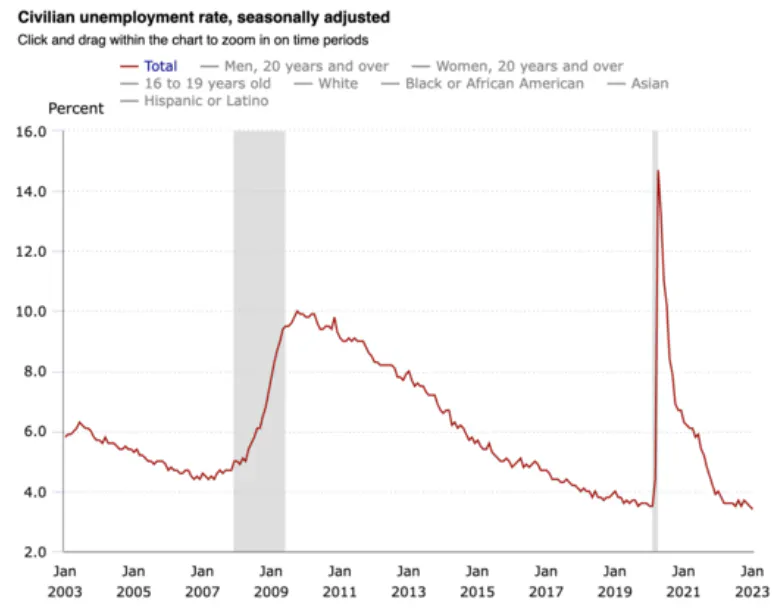
Un regreso a lo real: el estado actual del mercado laboral de EE. UU. en 2023


Artículo
Tres eventos que afectarán las instalaciones y la sostenibilidad en 2023
MÁS DE 4000 EMPRESAS CONFÍAN EN LA GESTIÓN DE OPERACIONES DE ACTIVOS
Liderando el camino hacia un futuro mejor para el mantenimiento y la confiabilidad
Los datos de sus activos y equipos no pertenecen a un silo. UpKeep simplifica ver dónde se encuentra todo, todo en un solo lugar. Eso significa menos conjeturas y más tiempo para concentrarse en lo que importa.






![[Review Badge] Gartner Peer Insights (Dark)](https://www.datocms-assets.com/38028/1673900494-gartner-logo-dark.png?auto=compress&fm=webp&w=336)