Blog Post
How good is your Preventive Maintenance Program?
This article give you some ideas on how to assess your plant’s preventive maintenance program and how to improve it.


There seems to be a lot of confusion about preventive maintenance programs. What is the scope? What results can you expect from a preventive maintenance program? How much should the program cost, and who should be executing it? This article give you some ideas on how to assess your plant’s preventive maintenance program and how to improve it.
It requires experience to assess a preventive maintenance program. You need to have an understanding what best practice is, what other plants have been able to do, and what effect those programs have. Keep this experience factor in mind. Most plants already have some type of preventive maintenance (PM) program, but the question is
“How well is the preventive maintenance program is set up and executed?”
Is the scope of preventive maintenance clear?
IDCON has defined best practices in preventive maintenance using 95 crucial statements as part of our Current Best Practices (CBP) reliability and maintenance assessment model. While there are nine other areas of our reliability and maintenance assessment, we’ll be focused on just the preventive maintenance area for this article (could use post).
Let me point out, to some people’s dismay, that there is never one silver bullet for improving PM, but rather many combined efforts around documentation, execution and follow-up that eventually will yield results.
Here are a few sample key elements from our Current Best Practices (CBP) assessment along with test questions and best practice (BP) examples to help you gauge how well your plant practices measure up.
The term “preventive maintenance program” is not clear in many organizations. Most people in a plant have a general idea of what it is, but it is typically different for different people. Some think about Vibration Analysis (VA), some think about lubrication, others about operator routes or fixed time overhauls.
Example test 1. Do your people understand the scope of a preventive maintenance program?
Interview test: Ask people in maintenance and operations to define what is included in preventive maintenance.
Best Practice (BP) example: We have a definition of “preventive maintenance program” that is documented, understood, and well-communicated across our plant. Having a definition of preventive maintenance is important for good communication in meetings, improvement efforts, and training seminars.
Examples of what should be defined and included in a Preventive Maintenance program scope:
Is Detailed cleaning of equipment?
Is Balancing of impellers?
Is Alignments of shafts?
Is operator inspections?
Is operating practices (how operators run equipment) part of Preventive Maintenance?
Is instrumentation loop checks part of the program?
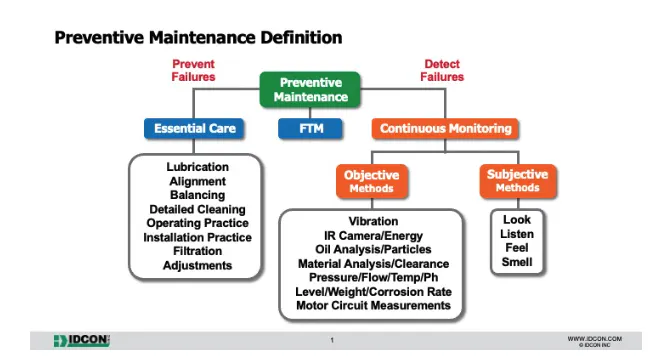
How can we expect to improve a preventive maintenance program if it’s not clear what PM really is? At IDCON, we define PM as essential care and condition monitoring (PM/ECCM) as shown in Image.
Image 1: Preventive Maintenance/Essential Care and Condition Monitoring (PM/ECCM) per IDCON's definition "All actions that can prevent failure or find failures early"*
* This is the definition of “preventive maintenance”. The definition of a “preventive maintenance program” is very similar “All repetitive actions that can prevent a failure or find a failure early”
Example test 2. Does management drive the program forward and follow up on results?
Test: Ask the plant manager, maintenance manager, and operations manager for the PM improvement plan. If there is one, is it specific with timelines?
For example: “Lubrication storage improvement complete by December 2024.” or “Mechanical inspections and shut-down PMs reviewed by March 2025”.
Ask the same group to present Key Performance indicators (KPIs) for preventive maintenance and what actions are taken if the KPIs aren’t satisfactory. Of course, follow executors in the field and see how well inspections and other PMs are done.
Best Practice: Plant management is aware of the strengths and weaknesses of the PM program. The plant, therefore, has specific plans and timelines in place for improvement actions.
The experience of Ian Farrell, a maintenance manager for a papermill in Scotland, illustrates the awareness factor. Farrell, whose company has deployed the IDCON Current Best Practice (CBP) education and training assessment in several plants in the United Kingdom, expressed the experience of interviewing people in the plants during presentation at a maintenance conference.
“We interviewed people in the plants to get a good idea of how well the preventive maintenance program is done. When we asked a person how well PM is done in the plant, the first answer is ‘Yes, we do this all the time.’ After some more discussion and specific questions around PM, the interviewee changes the statement to ‘Well, we probably do this most of the time.’ After more small talk and several cups of coffee and more detailed explanations around PM the interviewee states, ‘I know we definitely, sometimes do it” Once the questions become more specific and the interviewee downgrades the statement to ‘I think we do it.
Time passes and the questions around, alignment standards, condition monitoring routes, and operator involvement make the interviewee think of what good PM really is, and the statement is changed to ‘Somebody told me we did it.’ When we finally have defined what best practices in preventive maintenance are and there is a stack of coffee mugs, the person muses, ‘We used to do it all the time.'”
By first defining what PM is, and then educating and training people in the current state of their actual PM performance, the groundwork for improvement is laid.
Example test 3. Do you have an alignment standard in the preventive maintenance program, and is it followed?
Note. Alignment of shafts may be more or less important depending how much rotating equipment there is.
Test: Ask for an alignment standard and check quality of standard. Go look at equipment for signs of good or poor alignment (see Take a tour of your plant below).
Best Practice: There is a documented, well-defined alignment standard explaining how to set up, clean, check for pipe strain, check for soft foot, etc. More importantly, the alignment standard is understood and followed.
In a world-class reliability and maintenance organization, all alignments are done to 0.002 in. (0.05 mm) for equipment running below 3600 rpm and 0.001 in. (0.025 mm) for equipment running above 3600 rpm.
Take a tour of your plant.
If alignment is done well there are jacking bolts (push bolts) installed on all motors, gears, and other equipment of significance. Precision alignment is a key factor for a functioning preventive maintenance program.
Bases and foundations are in good condition and no more than four shims are used under the motor feet (Image. 2). Overall vibration level is low in the plant (0.1 in./sec unfiltered average). As a tracking indicator, see if alignment records are kept for each alignment job.


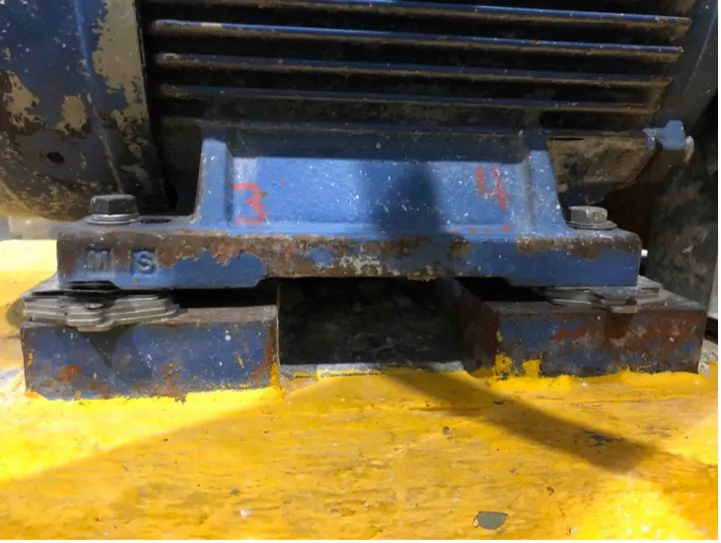
Image 2: Too many shims is a clear sign of poor alignment practices

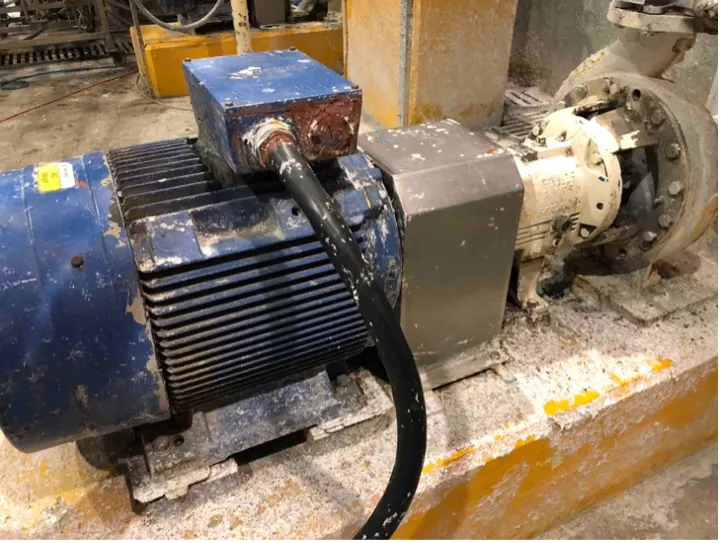
Image 3: No jacking bolts (push bolts) is a sign of poor alignment practices.


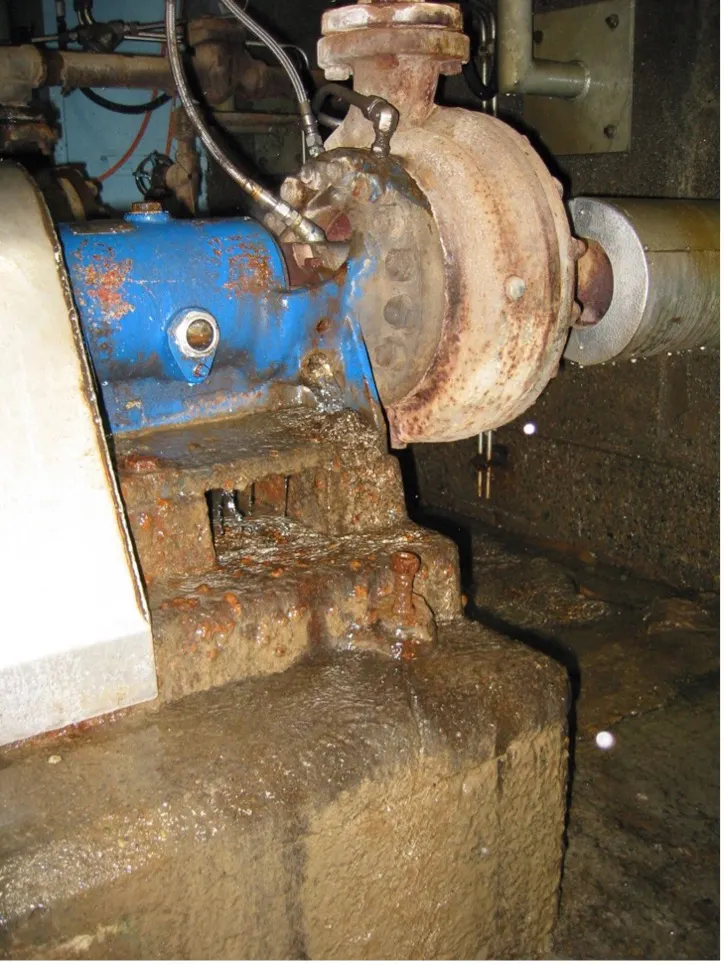
Image 4: Bases and foundations in poor condition will cause poor alignment.
Example test 4. Is there a lubrication standard in the preventive maintenance program, and it is followed?
Test: The preventive maintenance program should include a lubrication standard that covers storage, handling, filtering, and cleanliness of lubricants. Again, do a plant tour and check for handling practices, storage, and lubrication execution.
Best Practice: There is a well-documented lubrication standard. More importantly, the standard is followed.
The cleanliness standard for each piece of equipment should match the clearances in the equipment’s lubricated surfaces. For example, a hydraulic unit may need to be filtered down to 3 microns (200 beta) and a gearbox to 12 microns (75 beta).
To reach the right cleanliness levels of lubricants, oil and grease must be stored, handled, and filtered correctly. Below are some examples:


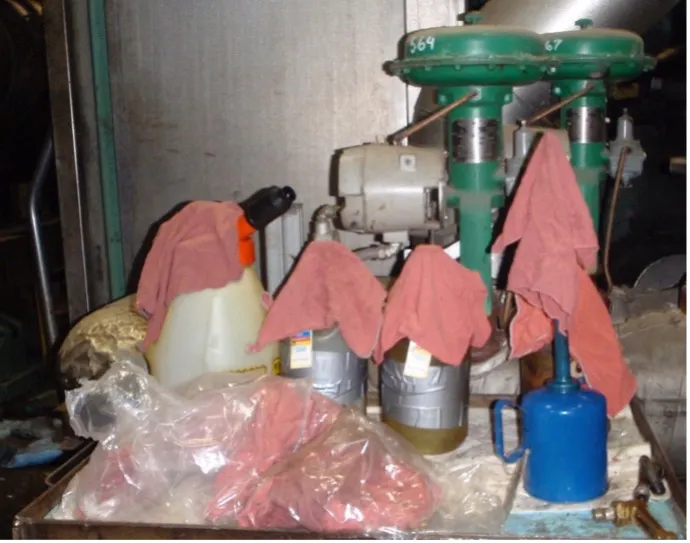
Image 5: Open lubrication containers is a sign of poor lubrication practices.


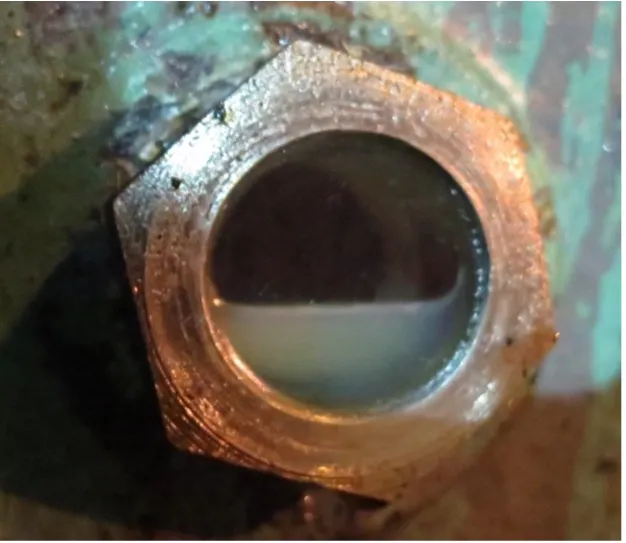
Image 6: Excessive water in the oil is a sign that the preventive maintenance program needs improvement.


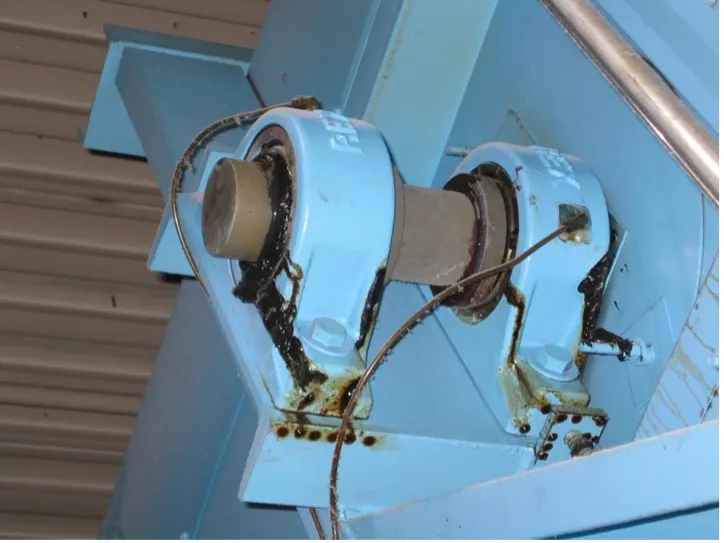
Image 7: Over-greased bearings is a sign of poor lubrication practices.

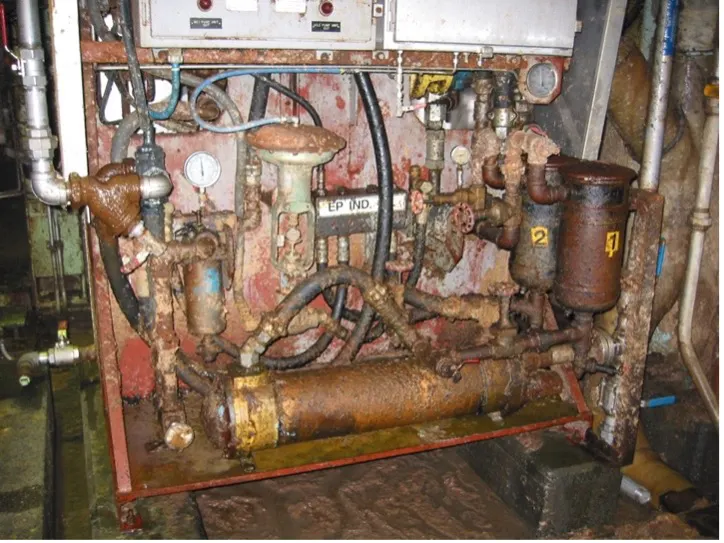
Image 8: Poorly maintained hydraulic units and lubrication systems is a sign of poor lubrication practices.

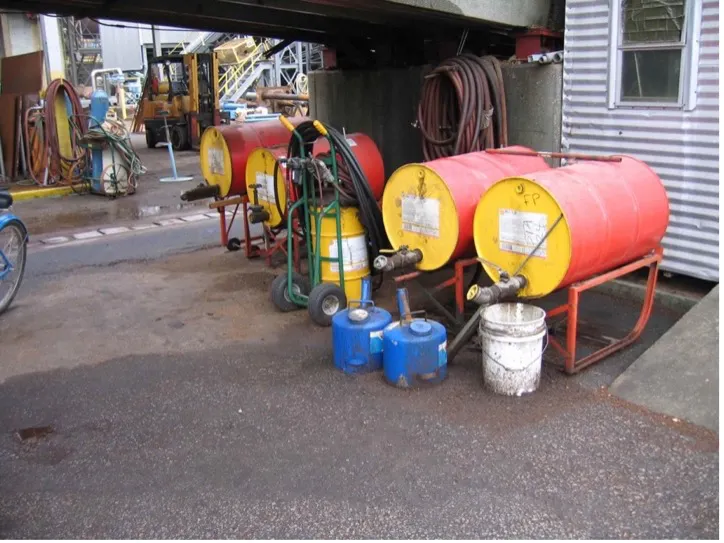
Image 9: Poor lubrication storage is the cause of many bearing breakdowns.
Example Test 5. Are inspections in the preventive maintenance program (condition monitoring) well documented and executed.
Test: Go through the current inspection lists, check the level of detail, and make sure the route is correctly executed. Another idea is to look at work orders and discuss with the team how many of the break downs that could be prevented and/or found early.
Best Practice: A well-functioning preventive maintenance program has inspection routes for all mechanical, electrical, and instrumentation equipment (where it is cost effective to have inspections). Inspections are documented and completed according to schedule. The plant is using an inspection list (paper or handheld). The lists describe exactly what to do for each inspection. The inspections are a combination of measuring condition and subjective inspections (look, listen, feel, smell) inspections.
Most inspections are completed while equipment is operating because we do not want to waste valuable shutdown/offline time on inspections that could be done on the run. Inspections can usually be done better when equipment is operating. For example, a pump cannot really be inspected well when it is down since there are no vibration, no operating pressures, and no seal water flow.
To see if your plant is performing according to world-class reliability and maintenance standards, take an inspection list (if you do not have inspection lists, it is time to develop them), and walk the route with the inspector.
For example, check the following:
Do we have condition monitoring routes covering all necessary inspections?
Do we use simple inspection tools such as a stroboscope, infrared thermometer, vibration pen, industrial stethoscope, bright flashlights (500,000 candela), and inspection mirrors?
Can we inspect couplings, belts, and chains on the run, or do guards make it impossible (Fig. 3)?
Are inspections being done? If inspection have been done oil glasses will be clean enough to see oil levels, bolts will be clean enough to check, gauges will be clean enough to read etc.
Is the inspector trained in basic inspection techniques?
It is common to see mechanical inspection such as “check motor”, but more detailed inspections are needed. Here is an article covering detailed inspections and inspection frequency
To summarize
Clearly define what the Preventive Maintenance program is for your plant
Ensure that plant leadership understand and promote best practices in preventive maintenance
Take a tour of your plant and look for evidence of both good and bad practices in your program.
A well-functioning preventive maintenance program is critical to improve reliability in a plant. But it is easy to overlook equipment fundamentals in the day-to-day environment of a plant.
Here are some practical implementation tips for a preventive maintenance program
About the Author:
Torbjörn Idhammar is the President and CEO of IDCON INC, a reliability and maintenance management consulting firm. Mr. Idhammar has provided Reliability and Maintenance improvement advice to plants and mines around the world.
He is a featured columnist for U & D Magazine, a contributing editor for Paper360 magazine and website. Torbjörn is the author and editor of IDCON’s Condition Monitoring Standards books.
Mr. Idhammar received his MS in Mechanical Engineering from Lund University in Sweden, his BS in Industrial Engineering from NC State University and is a Certified Asset Management Assessor (CAMA).
4,000+ COMPANIES RELY ON ASSET OPERATIONS MANAGEMENT
Leading the Way to a Better Future for Maintenance and Reliability
Your asset and equipment data doesn't belong in a silo. UpKeep makes it simple to see where everything stands, all in one place. That means less guesswork and more time to focus on what matters.






![[Review Badge] Gartner Peer Insights (Dark)](https://www.datocms-assets.com/38028/1673900494-gartner-logo-dark.png?auto=compress&fm=webp&w=336)